Four truckloads of metal tubes crucial to efforts to rescue 33 workers trapped underground in a Chile mine arrived on site Sunday, a government spokesman said.
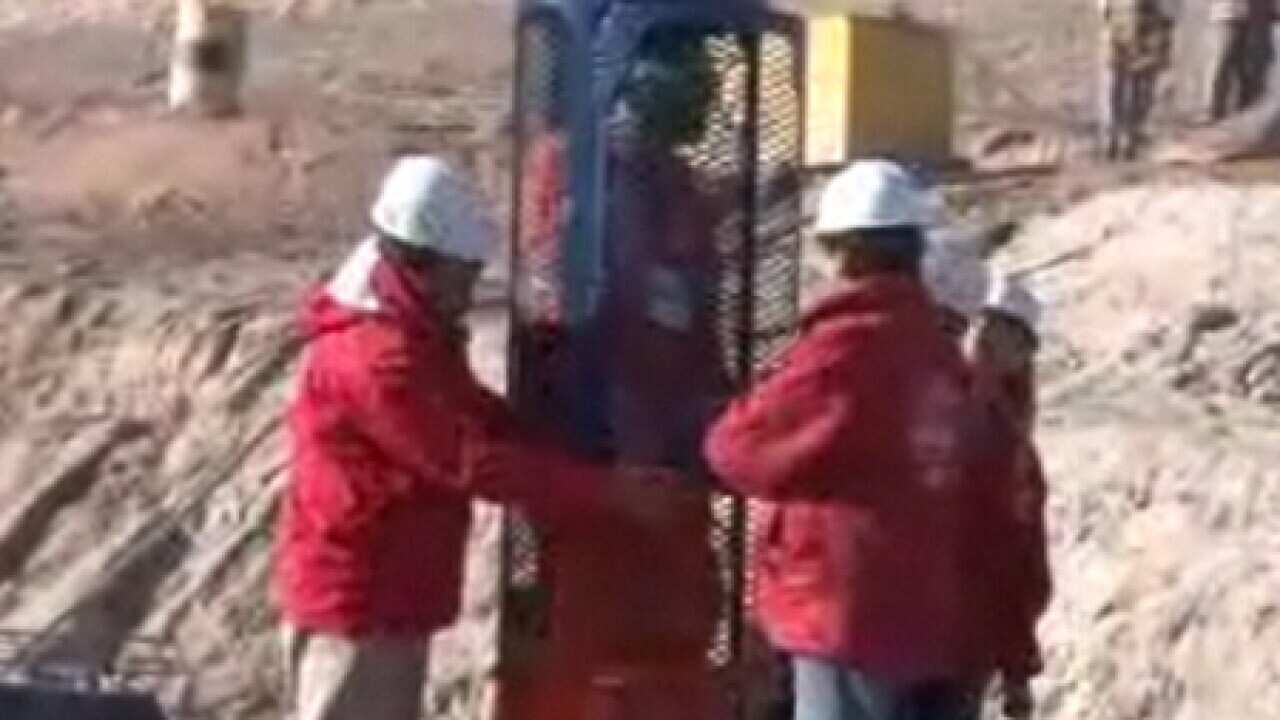
The arrival of the tubes comes shortly after a special steel cage designed and made by the Chilean navy to help rescue the 33 men trapped for a record seven weeks underground.
Measuring 2.5 metres and weighing 250 kilograms, the cage is the first of three that will be used to hoist the men up through a 60-70 centimetre wide shaft.
News that makes sense
Your trusted source for staying up-to-date with the world around you. Get free daily news updates and analysis, straight to your inbox.
"Four trucks have arrived, with 72 tubes" from Argentina, Interior Ministry adviser Cristian Barra told a briefing.
The tubing -- about 10 meters (30 ft.) long per unit, 61 centimeters (24 in) in diameter and two centimeter (.8 in) thick -- was to be used to reinforce the shaft being dug once one reaches the trapped miners.
Once reinforcement has been done to protect the miners' exit they will be brought up to the surface in a specially made metal lift being built by the Chilean navy.
Hopes buoyed on surface
Despite the long wait until rescuers can begin pulling the men one by one -- by early November at the soonest -- the arrival of a first cage Saturday buoyed hopes in the makeshift campsite that sprung up after the August 5 cave-in.
It was the first of three capsules that will be used in the penultimate phase of the rescue, marking the end of a grueling underground ordeal that already has lasted nearly two months.
An Austrian-made hoisting system of pulleys and cranes will bring the cage slowly up the rescue shaft.
Engineers said each trip will take from one to one-and-a-half hours, with the entire rescue lasting more than 24 hours.
Should a miner hit a snag during the ascent, he will be able to lower himself slowly back down to the shelter, with the help of wheels on the sides of the shaft.
Equipped with a helmet and gloves, each miner will also have water reserves, food, oxygen and a constant line of communication with rescue workers. Medical experts will monitor his heart rate and breathing constantly.
Meanwhile, three drilling machines continued tunneling their way down to the men, now waiting 700 meters (2,300 feet) below ground.







