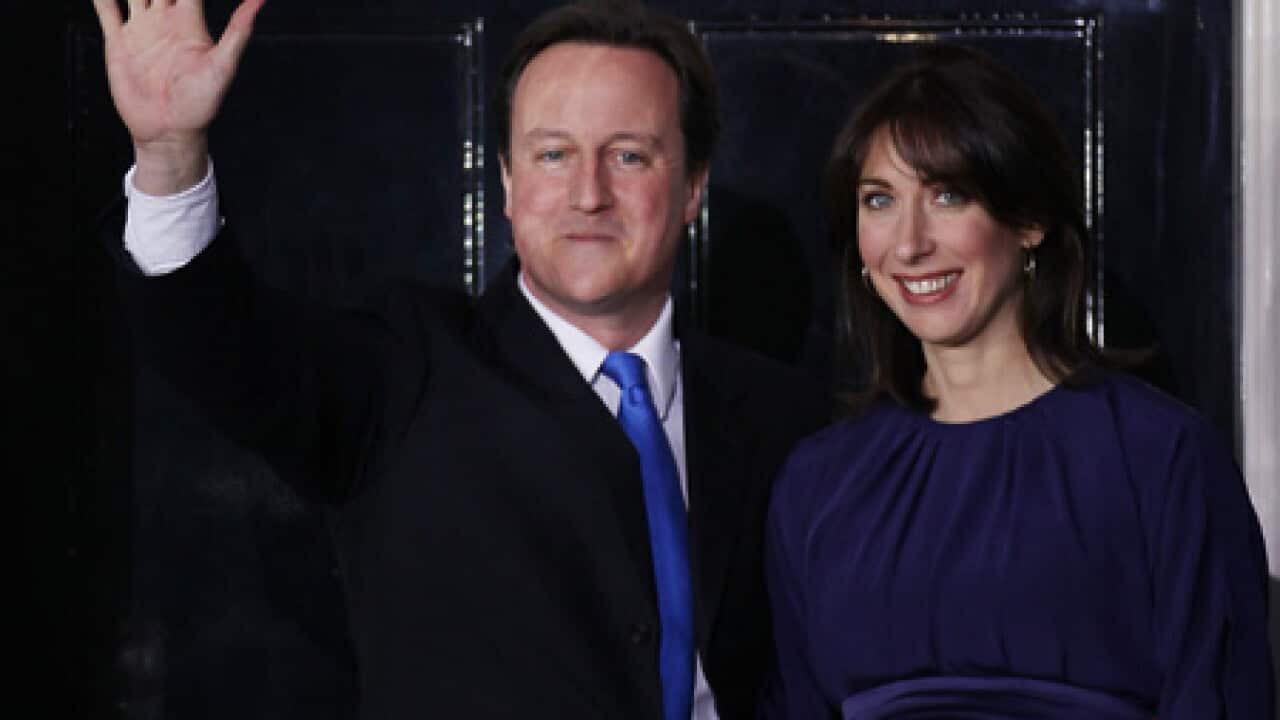
David Cameron has finally been confirmed as the new Prime Minister of the UK, taking his party to office after 13 years in opposition.
The Conservative leader said he will front a coalition with the Liberal Democrats, who, after days of uncertainty, have chosen to side with the centre-right party, instead of the governing Labour Party.
Lib Dem leader Nick Clegg said his party overwhelmingly accepted the deal to work with the Conservatives.
The 43-year-old Cameron- who becomes Britain's youngest prime minister for some two centuries, with a pregnant wife - was appointed after Gordon Brown admitted defeat, following five days of political limbo.
News that makes sense
Your trusted source for staying up-to-date with the world around you. Get free daily news updates and analysis, straight to your inbox.
Clegg was named deputy premier, while other appointments included George Osborne as chancellor - facing daunting economic challenges including a eurozone crisis - and William Hague as foreign minister.
The country now faces being ruled by its first coalition government since World War II.
'A proper and full coalition'
Less than an hour after Brown's speech Cameron arrived at the palace with his wife for a ceremony with the queen known as the kissing of hands. A statement from Buckingham Palace confirmed he had been asked to form a government.
In last Thursday's general election, the Conservatives won 306 seats in the 650-member House of Commons - 20 short of a clear majority of 326 - followed by Labour on 258 and the Lib Dems on 57.
Heading into 10 Downing St for the first time, Cameron addressed the world's media.
'I am to form a proper and full coalition between the conservatives and Liberal Democrats', he said.
But he began with a tribute to his predecessor.
'This country is more compassionate than a decade a go', Cameron began, before complementing Gordon Brown for his 'long record of public service.'
He stressed the problems ahead, speaking of the 'hard and difficult things to do'.
'We have a divided party where no party has majority'.
After days of uncertainty, pressure had been mounting on Liberal Democrats to choose the Tories (Conservatives), or Labour.
Cameron said he wants to 'put aside common differences' to work hard in the common interest.
Liberal power for first time in almost 90 years
Clegg - who was leading a Liberal party into British government for the first time since David Lloyd George left power in 1922 - was among five Lib Dem cabinet ministers in the new government, Downing Street said.
Nick Clegg said he is hoping for the 'new form' of politics he's always wanted, adding he was acutely aware of the hopes he was carrying for the almost seven million people who voted for his party.
Earlier Tuesday, Cameron had piled pressure on Clegg's party to decide which way to jump after he offered a referendum on their touchstone issue of electoral reform.
Critics say the deal between the centre-right Conservatives and centrist Lib Dems is an unlikely alliance, since they have strongly differing views on issues like Europe, defence and immigration.
But between them, they have enough to secure a majority in the House of Commons which Labour and the Lib Dems, seen as more natural bedfellows, did not.
Labour's 'rainbow coalition' could not have worked
Brown had announced he was quitting just an hour-and-a-half before Cameron walked through the famous 10 Downing Street front door.
He wished Cameron well as he departed from top-level politics, while acknowledging the personal weaknesses - such as poor presentational skills and impatience - which hampered his three-year premiership.
"Only those who have held the office of prime minister can understand the full weight of its responsibilities and its great capacity for good," Brown said.
On Monday, Brown announced he would stand down to facilitate working with the Lib Dems in a coalition.
But talks between Labour and the Lib Dems failed, and to the possible ire of progressive Lib Dems, Clegg has sided with the Conservatives.
MP Dianne Abbott told the BBC afterwards that 'the rainbow coalition' required for a left-wing alliance to govern- with Labour, the Lib Dems, and a host of smaller parties- could not have worked. She said unelected Labour associates such as Lord Mandelson had been attempting to drive the process, not grasping the significance of Labour's poor showing at the polls.







