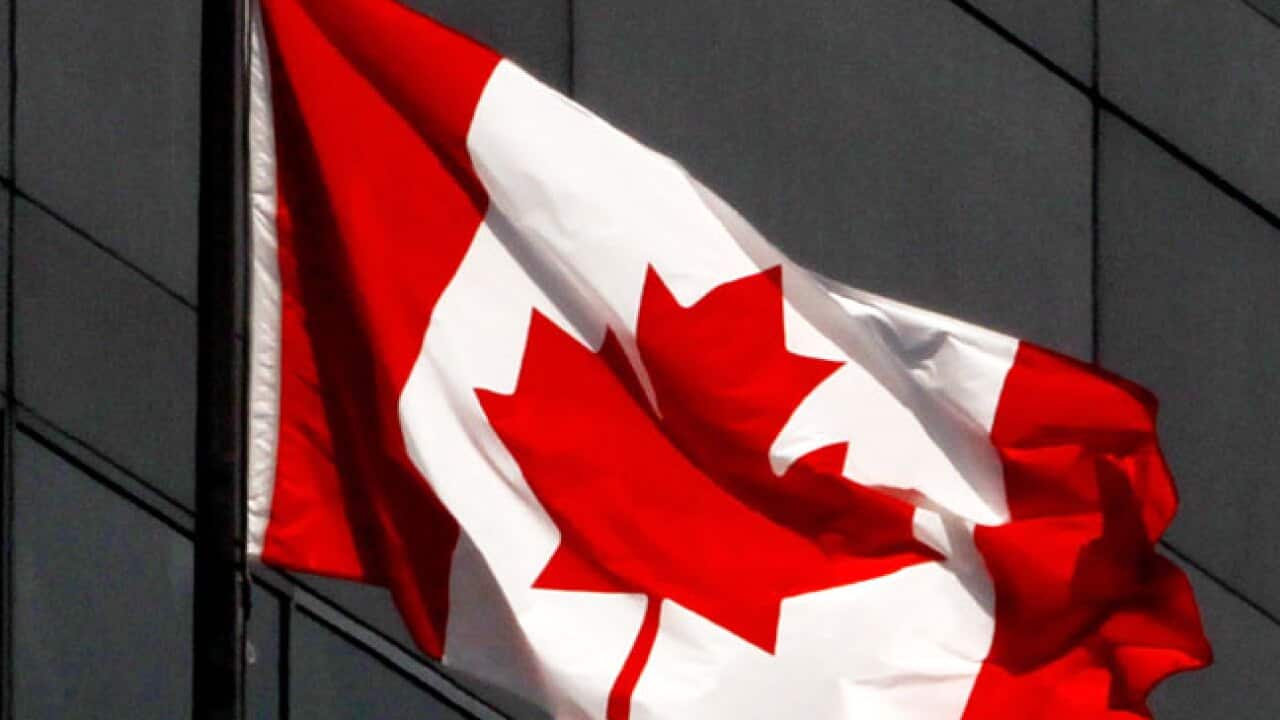
Canada's government teetered on the brink of collapse after a key opposition party rejected a make-or-break budget, raising the prospect of elections.
Minutes after Conservative Prime Minister Stephen Harper's government presented its plan to slash a record deficit in half, the leftist New Democratic Party said it would not support the deal.
Harper offered nearly one billion dollars worth of social spending in an effort to shore up support from the opposition party and keep the government in power.
News that makes sense
Your trusted source for staying up-to-date with the world around you. Get free daily news updates and analysis, straight to your inbox.
But the New Democrats response was immediate and unambiguous.
"The New Democrats will not support the budget as presented," leader Jack Layton said.
"Nothing in this budget has persuaded me that Stephen Harper has changed his ways and is prepared to work with others in Parliament to give middle-class families a break," he added.
To pass the budget, Harper's minority government needs the support of at least one of three opposition parties.
For weeks the main opposition Liberals and the separatist Bloc Quebecois have vowed to try to defeat the government and force a fourth election in seven years.
That opposition transformed the New Democrats, the fourth party in the House of Commons, into kingmakers or breakers.
Harper's budget sought to meet New Democrat demands by offering tax credits for home retrofits to make them more energy efficient, as well as for family caregivers, child art classes, and volunteer firefighters.
It would also boost support for seniors and forgive a portion of student loans for doctors and nurses who agree to work in remote areas of the country, also New Democrat demands.
The ruling Conservatives insisted the budget was a good deal for Canada.
"We met with the opposition when we were pulling together the budget. We listened to their demands and included them in the budget," Prime Minister Stephen Harper's spokeswoman Sara MacIntyre told AFP.
"We think the budget is in the best interest of Canadians and would ask the opposition to have another look at it and pass it," she said. "This is a good budget."
The first vote on the budget is scheduled for Friday. If it is defeated, Canadians can expect to head to the polls in early May.
Flaherty declined to consider any amendments to the document put forth by opposition parties, saying flatly: "No chance."
"Canada is emerging from the global recession as one of the world's top-performing advanced economies," the minister said. "But our continued recovery is by no means assured."
"We need to stay on track," he added.
Flaherty reaffirmed his five-year plan to balance the federal budget by 2015, after posting a record deficit of CAN$55.6 billion (US$55.7 billion) during the last recession.
This year's deficit is now projected to be 25 percent lower than in fiscal 2009-2010 and to shrink another 25 percent next year as the government trims spending across all departments, closes tax loopholes and winds down CAN$60 billion (US$61 billion) in stimulus spending.
Ottawa is expecting to post a CAN$29.6 billion (US$30.2 billion) deficit for the year ending March 31, 2012 and a CAN$4.2 billion (US$4.3 billion) surplus in fiscal 2015-2016.
The Canadian economy, meanwhile, is forecast to slow less than previously expected and grow 2.9 percent this year, the government said.
It had predicted in September the economy would grow at a rate of 2.5 percent in 2011 and lowered its outlook in February, but since then the economy has surged.
Private sector economists cited by the finance department see the prospects for stronger global growth, particularly in the United States, and higher commodity prices benefiting the Canadian economy.
However, European debt, volatile oil prices and Japan's catastrophic earthquake and tsunami on March 11 are weighing on the global recovery, the government warned.







