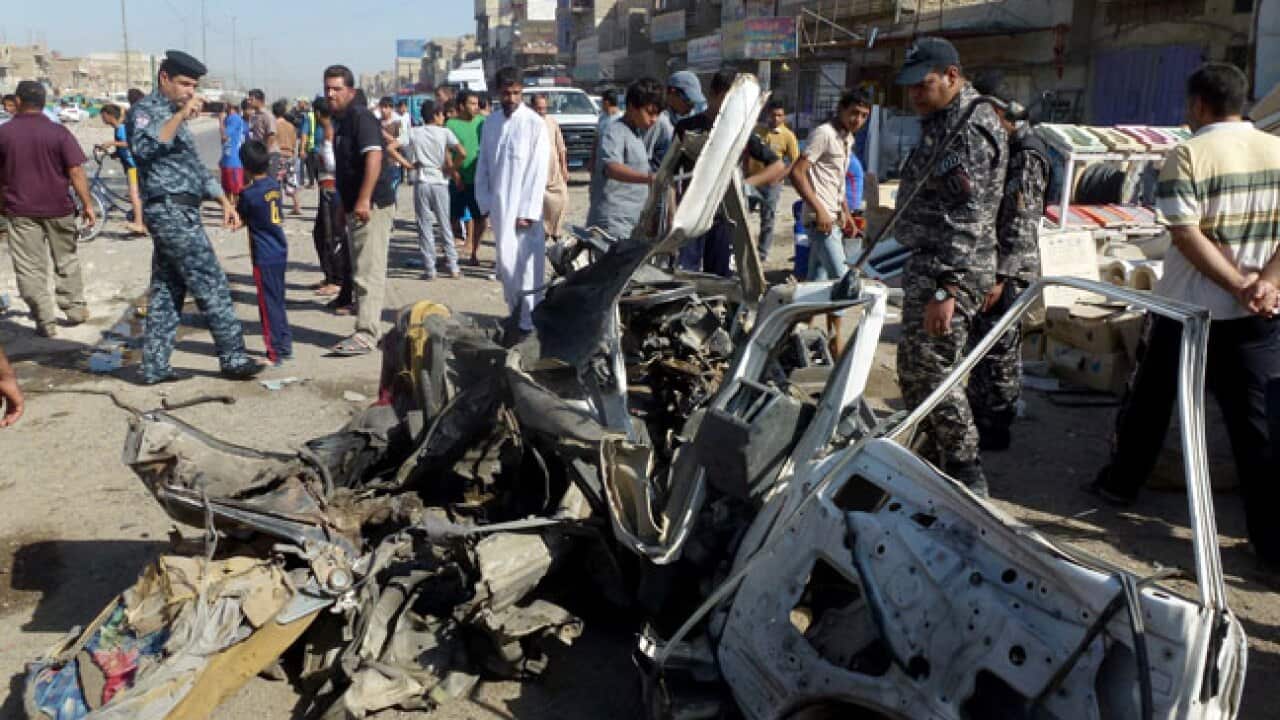
More than 3,000 people have been killed in violence since the beginning of the year, according to AFP figures based on security and medical sources -- a surge in unrest that the Iraqi government has so far failed to stem.
On Monday, 11 car bombs hit nine different areas of Baghdad, seven of them Shiite-majority, while another exploded in Mahmudiyah to the south of the capital.
News that makes sense
Your trusted source for staying up-to-date with the world around you. Get free daily news updates and analysis, straight to your inbox.
Two more car bombs exploded in Kut, while two hit Samawa and another detonated in Basra, all south of Baghdad.
The attacks wounded at least 226 people.
The Monday violence came a day after attacks killed 14 people, among them nine Kurdish police who died in a suicide bombing in the northern town of Tuz Khurmatu.
Militants have carried out two highly-coordinated operations in recent days, highlighting both their growing reach and the rapidly declining security situation.
Late on Wednesday, some 150 militants attacked the northern town of Sulaiman Bek, drawing security forces away from the main highway in the area.
About 40 militants then broke off, set up a checkpoint on the highway, and executed 14 Shiite truck drivers.
The highway killings were reminiscent of the darkest days of Sunni-Shiite sectarian bloodshed in Iraq in 2006-2007, when thousands of people were killed because of their religious affiliation or forced to abandon their homes under threat of death.
Lingering tensions between Sunnis and Shiites have been inflamed by persistent violence in Iraq and the civil war in neighbouring Syria, and there are growing fears that the country is slipping back towards all-out sectarian conflict.
And on the night of July 21, militants launched brazen assaults on Abu Ghraib and Taji prisons, sparking clashes that lasted for some 10 hours.
At least 500 prisoners, including senior Al-Qaeda members, escaped during the unrest, while at least 20 security forces members and 21 inmates were killed.
Iraq has faced years of attacks by militants, but analysts say widespread discontent among members of its Sunni Arab minority that the government has failed to address has fuelled the surge this year.
Iraq's Sunni Arabs accuse the Shiite-led government of marginalising and targeting their community, including through unwarranted arrests and terrorism charges.
Protests broke out in Sunni-majority areas at the end of 2012 and are still ongoing.
In addition to the major problems with security, the government in Baghdad is also failing to provide adequate basic services such as electricity and clean water, while corruption is widespread.
Political squabbling has further paralysed the government, which has passed almost no major legislation in years.







