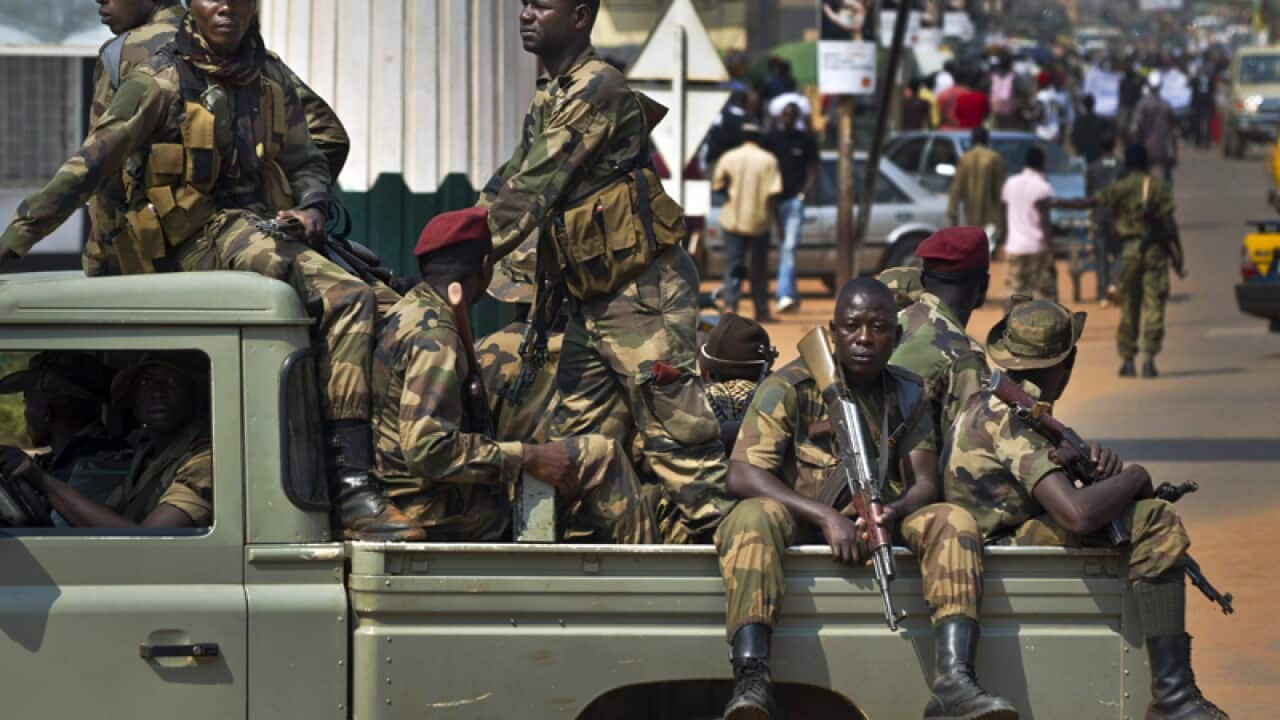
Central African Republic rebel groups have signed a ceasefire deal with President Francois Bozize who agreed to set up a government of national unity and call new elections.
The accord was announced after three days of talks in the Gabon capital between the government and Seleka rebels who launched an offensive on December 10.
The rebels swept aside the impoverished country's army, but stopped just short of the capital Bangui.
News that makes sense
Your trusted source for staying up-to-date with the world around you. Get free daily news updates and analysis, straight to your inbox.
The government and rebels signed a ceasefire accord. The two sides and Central African Republic's political opposition also signed two political accords allowing for the appointment of a prime minister from the opposition and setting out other power-sharing details, according to the United Nations.
The talks were organized by the the Economic Community of Central African States (ECCAS) which had sent troops to the troubled country as Bozize faced mounting pressure.
Chad's President Idriss Deby, current ECCAS head, said the opposition and Bozize should start work on the transitional government "from tomorrow".
Under the accord, Bozize will be allowed to finish his mandate which ends in 2016 but he cannot replace the new prime minister during the transition period. Bozize has said he will not stand for a new term.
The agreement also calls for the withdrawal of "all foreign military forces" except those sent by the ECCAS countries. Seleka made this demand specifically to secure the withdrawal of about 200 South African troops sent in December.
The UN Security Council welcomed the signature of the ceasefire, in a statement, which "emphasized the necessity of an expeditious implementation of these agreements and called on all parties to implement them in good faith."
The 15-nation council "urged all parties to allow safe and unhindered access to peoples in need of humanitarian assistance as quickly as possible" and for all civilians held by armed groups to be released.
The violence in the country of some five million has affected more than 300,000 children, with child soldiers recruited and some girls forced to act as sex slaves, according to UN agencies.
The United Nations withdrew non-essential staff and the dependents of all workers in December as rebels neared Bangui.
The UN humanitarian department, OCHA, has voiced serious concern about the plight of civilians amid reports of widespread looting and violence.
The UN's World Food Programme, which has suspended its operations in the country, says hundreds of tonnes of food have been stolen from warehouses across the country.
Central African Republic has been notoriously unstable since its independence from France in 1960.
Bozize took power in a coup in 2003 and has since won two elections.
The rebels accused Bozize of failing to uphold earlier peace deals and had called for him to face war crimes charges at the International Criminal Court.
They also said he planned to modify the constitution to allow him to seek a third term in 2016.
Up to 500 soldiers from Gabon, Democratic Republic of Congo, Chad and Cameroon were sent after troubles in 2008. These troops have begun to pull out of the country.
Nearly 600 French troops are stationed in Bangui, officially to ensure the safety of the estimated 1,200 French nationals in the country.







