
In brief
- Videos circulating globally of the Tibet-Nepal flood disaster cannot be found on Chinese social media platforms.
- The disaster has cast a spotlight on the tight controls over information from Tibet.
A natural disaster may not seem inherently political. But in Tibet, even footage of a flood can be sensitive.
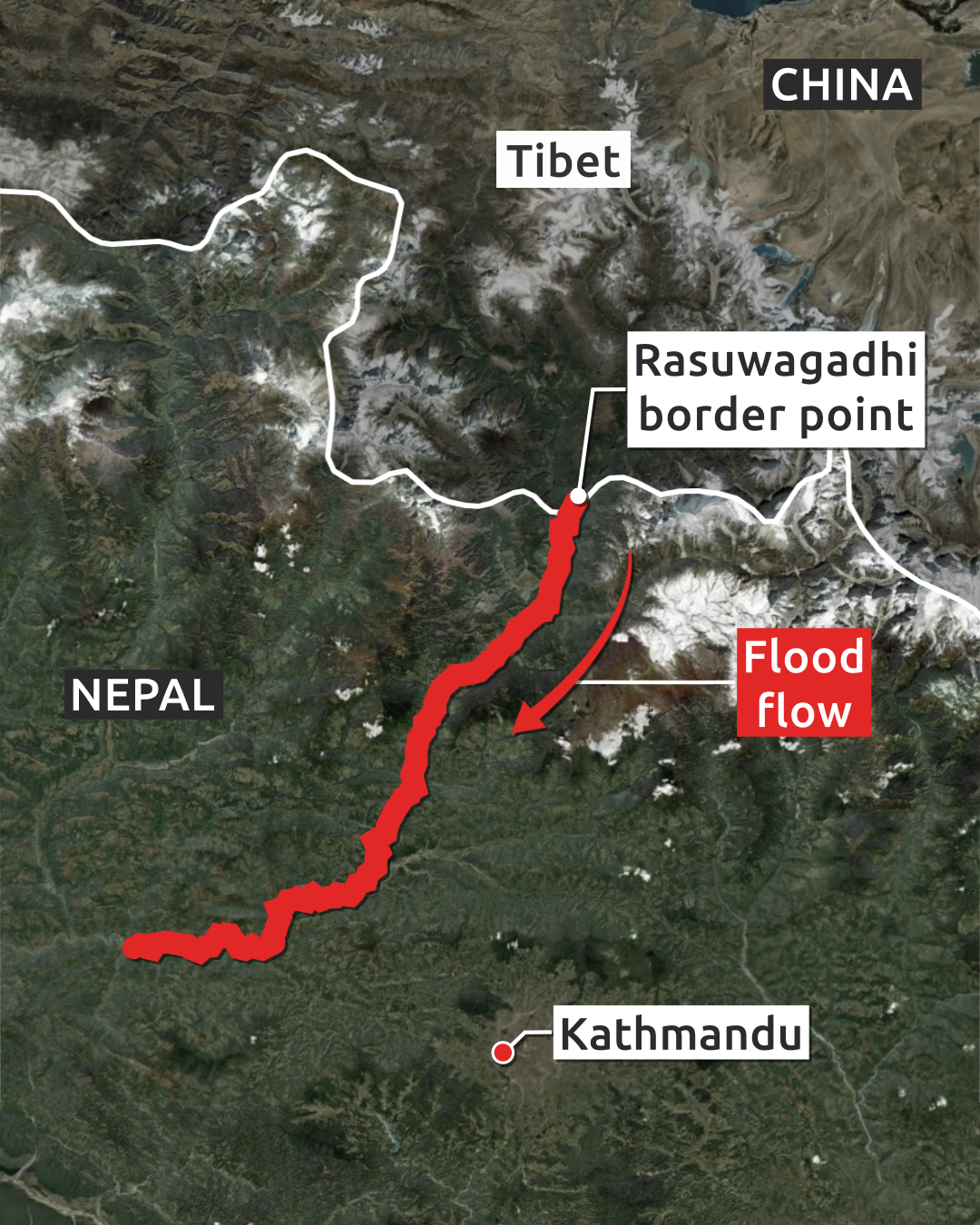
As videos circulated widely on social media and in news reports last week, showing a devastating torrent of mud, water and debris tearing through a border post between Tibet and Nepal, correspondents in Beijing began to point out a striking absence: in China, the footage was nowhere to be seen.
The apparent censorship highlights the extraordinary sensitivity surrounding Tibet, one of the most tightly controlled regions under Chinese control, and the long and highly contested history stretching back hundreds of years.
Tsering Yangzom, a member of the Tibetan community in Newcastle, NSW, told SBS News her uncle works in the flood-affected region of Tibet, but she's been unable to contact him since the disaster and appears to have been blocked.
She suspects he may be concerned their communications are being monitored, but she's also "really, really worried" about whether he was affected by the deadly floods.
News that makes sense
Your trusted source for staying up-to-date with the world around you. Get free daily news updates and analysis, straight to your inbox.
Normally, she says they speak briefly and intermittently on the Chinese messaging app WeChat, sometimes using coded language to protect her uncle.
"If he says the weather is good, then we can talk a little bit more about the normal life," said Yangzom, who says she changed her name after leaving left Tibet as a child.
"But if he says the weather is not good and rainy or something ... that means that I can't talk much."

Human Rights Watch's Australia director, Daniela Gavshon, told SBS News censorship and self-censorship are pervasive in Tibetan areas.
"These information controls make it even harder to get accurate information, for families to locate loved ones, or to develop a good understanding of the disaster, its scale, its impact, and the response."
A brief history of China and Tibet
Tibet, isolated both geographically and diplomatically, sits atop a vast area of mountains and plateaus and is often referred to as the "roof of the world".
For centuries, it has had a complicated relationship with China. Beijing maintains that Tibet has been part of China since ancient times, while Tibetans say it had long been independent with its own unique culture, religion and language.
In 1950, troops from China's newly established communist government invaded Tibet and defeated Tibetan forces, in a move the Chinese government described as part of the "peaceful liberation" of the region.
The following year, Tibetan representatives signed an agreement recognising Chinese sovereignty over Tibet, while promising the region autonomy. Tibetan leaders say they were forced into this agreement.
Tensions over Chinese rule grew in the following years, leading to an uprising in 1959 in the Tibetan capital, Lhasa. Thousands are believed to have died during China's suppression of the uprising, and Tibet's spiritual and then-political leader, the Dalai Lama, fled to India, where he has lived in exile ever since.
In 1965, China formally established the Tibet Autonomous Region, which continues to exist today, though its autonomy is highly disputed.
Human rights groups and the Tibetan government-in-exile continue to accuse Chinese authorities of seeking to erase Tibetan religious practice, language and cultural expression, exercising total political control over the region, repressing dissent and blocking the flow of information in and out of Tibet.
Access to the region is tightly controlled, making reporting from within Tibet extremely difficult.
The BBC's China correspondent, Laura Bicker, said she has often found it easier to contact sources in North Korea than in Lhasa.
Why censor a flood?
According to various international media organisations, videos filmed and uploaded by local residents showing the disaster have been censored on Chinese social media platforms.
On Chinese social media platform RedNote, SBS Chinese was unable to find the widely viewed CCTV footage showing the flash flooding engulfing the Rasuwagadhi border crossing between Tibet and Nepal.
Chinese state media has, however, shown vision of recovery efforts.
"For China, everything is inherently political when it comes to Tibet," Zoë Bedford, executive officer of the Australia Tibet Council, told SBS News.
"What they're afraid of is people hearing Tibetan voices. They're afraid of people understanding the extent of China's mega-development in Tibet and how much they have been interfering in the environment."
Feng Chongyi, associate professor in China Studies at the University of Technology Sydney, said many Tibetans and Nepalese people blame the Chinese government, which has funnelled billions into developments in the region in a bid to harness its vast hydropower potential and resources.
"The Chinese government, of course, do not want that kind of opinion or discussion to spread to the international community," he told SBS News.
SBS News has approached the Chinese embassy for comment.
The Tibetan Plateau region, sometimes called the world's "Third Pole", has the world's largest ice mass outside the Arctic and Antarctic.
The Himalayan region is particularly vulnerable to a warming climate, with destabilising glaciers increasing the risk of sudden and catastrophic floods like the ones last week that have killed hundreds of people and left thousands more unaccounted for.
The disaster was triggered by a glacier collapse, which Chinese authorities and international experts have linked to climate change.
Just three months before the disaster, officials from China and Nepal met to discuss strengthening cooperation to monitor floods, weather and glacier-related hazards.
But two Nepali officials told the Reuters news agency they didn't receive as much information as they wanted from China on glacier risks and water levels, heightening fears that insufficient data sharing could make it harder to anticipate and prepare for natural disasters.
On Saturday, the Chinese embassy in Nepal posted a statement on X responding to accusations on Nepali social media that it had failed to warn Nepal of the mudslide disaster.
It said China faced significant challenges in monitoring risks in the vast, remote Himalayan region and had always shared "important information with the Nepali side in a timely manner".
For the latest from SBS News, download our app and subscribe to our newsletter.







