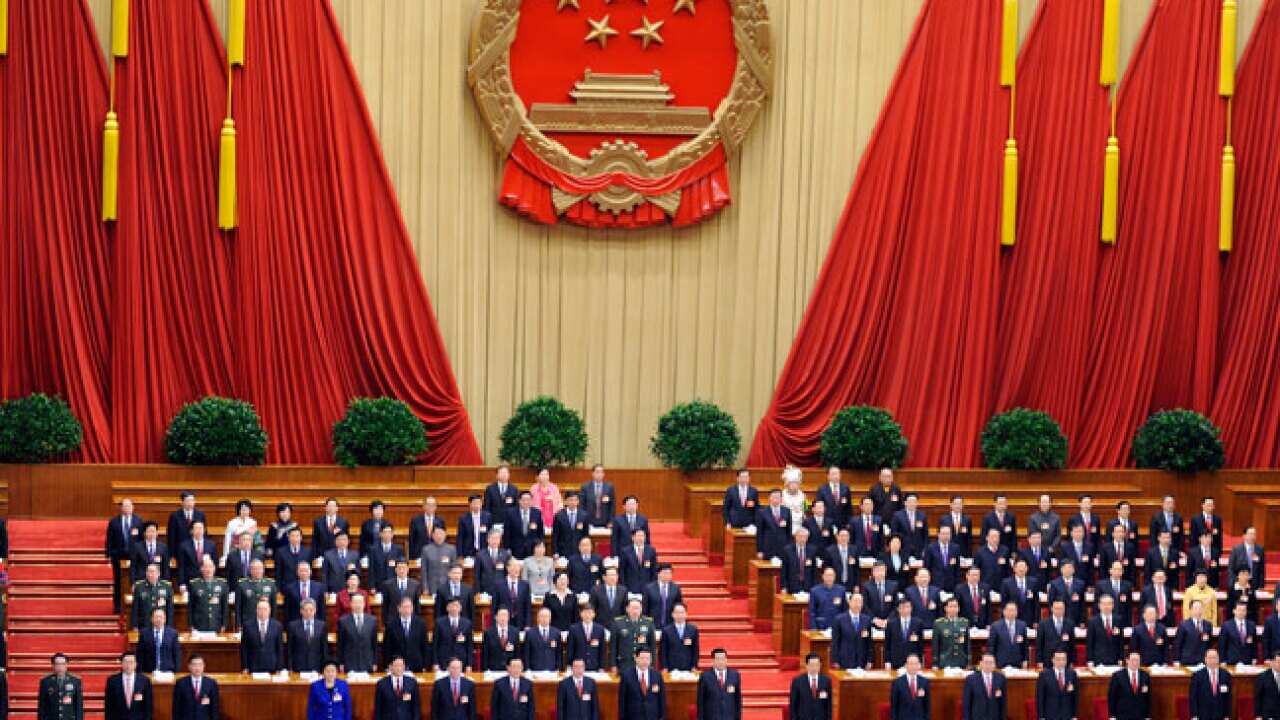
Premier Wen Jiabao acknowledged "great resentment" in China over a range of issues including growing income disparity and corruption, and vowed his government would act to address them.
In a speech to open the annual 10-day session of the nation's rubber-stamp parliament, Wen was to admit his government had "not yet fundamentally solved a number of issues that the masses feel strongly about".
These included high consumer and housing prices, "significant problems concerning food safety and rampant corruption", and people being illegally kicked off their land to make way for rampant property development.
China will "effectively solve problems that cause great resentment among the masses", according to the speech.
The National People's Congress convened amid an increase in tension after those and a range of other issues helped spark unrest across the Arab world.
News that makes sense
Your trusted source for staying up-to-date with the world around you. Get free daily news updates and analysis, straight to your inbox.
Key among these issues is inflation and Wen was to pledge that continued efforts to contain rising prices of food, housing and other essentials would remain the communist leadership's "top priority".
"Recent prices have risen fairly quickly and inflation expectations have increased," he told the NPC's roughly 3,000 delegates.
"This problem concerns the people's well-being, bears on overall interests and affects social stability. We must therefore make it our top priority in macroeconomic control to keep overall price levels stable."
China announced last month that January inflation remained stubbornly high at 4.9 per cent despite a series of measures taken to dampen price rises, including three interest rate hikes in the past four months.
The consumer price index, the main inflation gauge, had hit a more than two-year high of 5.1 in November. High prices have a history of sparking unrest in China, with its hundreds of millions of people scraping to get by.
Wen indicated the government's macroeconomic battle would continue, saying "We will implement a prudent monetary policy".
After decades of blistering export-dependent growth that has made China's economy the second-largest in the world, Beijing now wants to follow a more sustainable, environmentally-friendly path via higher domestic consumption.
The ruling Communist Party also wants to reassure the more than 200 million migrant workers who have helped fuel China's economic boom - but are seen as a potential source of social unrest - that they have not been forgotten.
Such migrants are at the core of concerns over what Wen called a "large income gap" - an issue raised repeatedly in his speech.
Wen repeated China's annual eight per cent economic growth target for 2011 - a goal that is surpassed each year. Last year, the economy grew 10.3 per cent.
But he also reiterated a pledge made last Sunday that China would aim for seven per cent annual growth under a new economic plan for 2011-2015 that aims for more balanced development that leaves fewer people behind.
Officials had long set the eight per cent expansion as the minimum required to keep the economy growing fast enough to stave off social unrest.
The urgency of addressing touchy social issues has been underlined in the past two weeks by mysterious internet calls for weekly Sunday "strolling" rallies in major Chinese cities.
They have largely fizzled under smothering security but the heavy police presence at designated rally sites across the country has indicated the official concern over dissatisfaction with the government.
A mix of similar hot-button issues - combined with a lack of democracy - sparked popular uprisings in Tunisia, Egypt, Libya and elsewhere in the Arab world.
China's parliament is essentially powerless and approves whatever is submitted to it by the ruling Communist Party, which uses the annual session to outline its concerns and the overall policy direction for each year.







