China, the world's biggest polluter, plans to "go green" in the next five years, emphasising energy efficiency and the battle on its choking pollution in its plans to revamp the economy, experts say.
The so-called 12th five-year plan - already approved by Communist Party leaders - is expected to be reviewed and rubber-stamped by delegates to the National People's Congress, which opens its annual session on Saturday in Beijing.
"We must not any longer sacrifice the environment for the sake of rapid growth and reckless roll-outs," Premier Wen Jiabao said on Sunday, warning that doing so would result in unsustainable growth and the depletion of resources.
China's total carbon dioxide emissions, which it finally admitted last year are the largest in the world, increased by 32.5 per cent between 2006 and 2009, according to the US Energy Information Administration, a government agency.
Beijing has already launched an ambitious program to develop clean energy and shut down factories that fail to meet emissions targets.
News that makes sense
Your trusted source for staying up-to-date with the world around you. Get free daily news updates and analysis, straight to your inbox.
It also wants to reduce its energy consumption per unit of GDP, or carbon intensity, by 40 to 45 per cent by 2020 based on 2005 levels - essentially a vow of greater energy efficiency, but not an absolute cap on emissions.
According to consultants APCO Worldwide, which specialise in government policy, the government's new economic blueprint could include new carbon emission goals to push the process forward.
"I think this plan is greener than the last," said Roger Somerville, a Beijing-based APCO expert.
"It's not so much that the Chinese government has become a Greenpeace supporter, but ... they are trying to change what they can do to generate economic growth," he added.
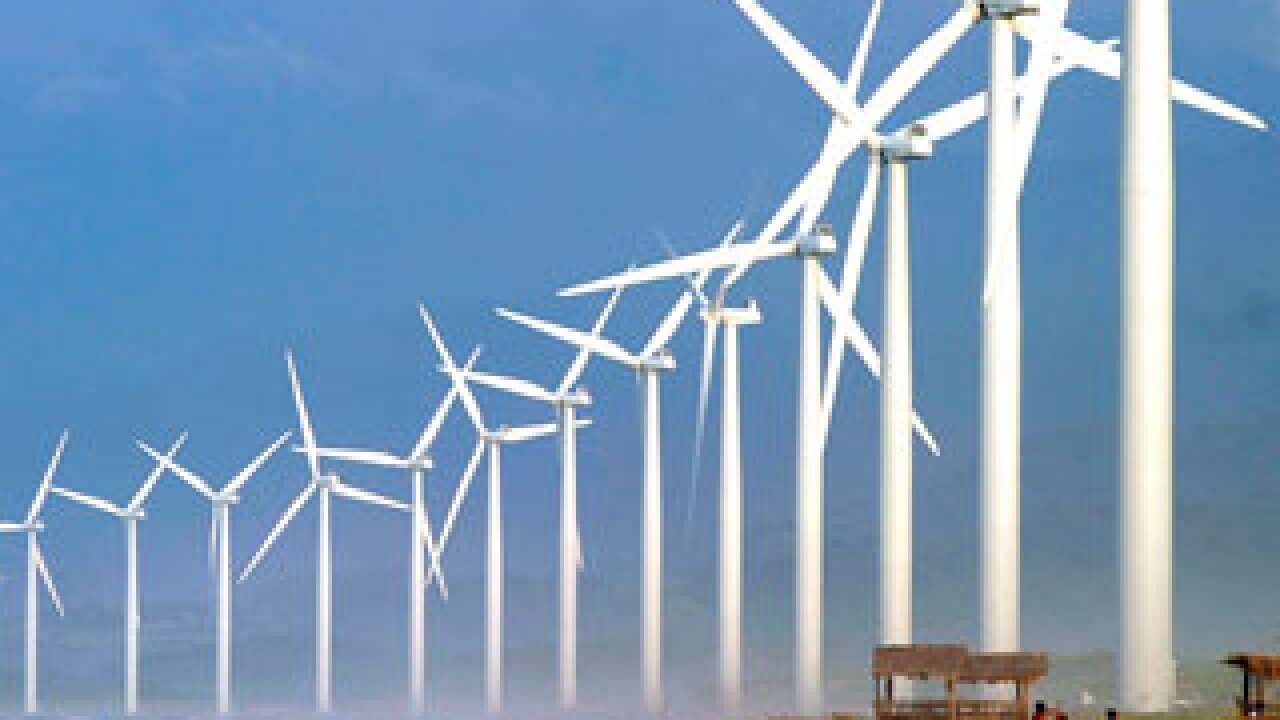
"They are looking at things like a low-carbon economy and they are seeing ... the creation of high-value jobs and economic growth in the future," he said, pointing to strong Chinese investment in the solar and wind power sectors.
Yolanda Fernandez Lommen, chief economist at the Asian Development Bank in Beijing, also highlighted plans to restructure the economy, focusing more on services "whose carbon footprint is much smaller" and job growth is strong.
A carbon tax, however, is not expected to be included in the new five-year plan. Officials have recently hinted that such a tax would only be launched around 2013, according to APCO.
The government also wants to step up its fight against pollution, which is threatening the health of China's 1.34 billion people on a daily basis after 30 years of rapid industrialisation.
On Monday, the country's minister of environmental protection, Zhou Shengxian, warned that pollution-related public health scares had put social stability - a key concern of the government - at risk.
"In China's thousands of years of civilisation, the conflict between humankind and nature has never been as serious as it is today," Zhou said in an essay on the ministry's website.
The China Daily newspaper reported that the government has set a target of reducing emissions of lead, mercury, chromium, cadmium and arsenic by 15 per cent from 2007 levels over the next five years.
Experts say the five-year plan could also put in place a limit on the production of coal, which provides China with more than two-thirds of its energy and is highly polluting.







