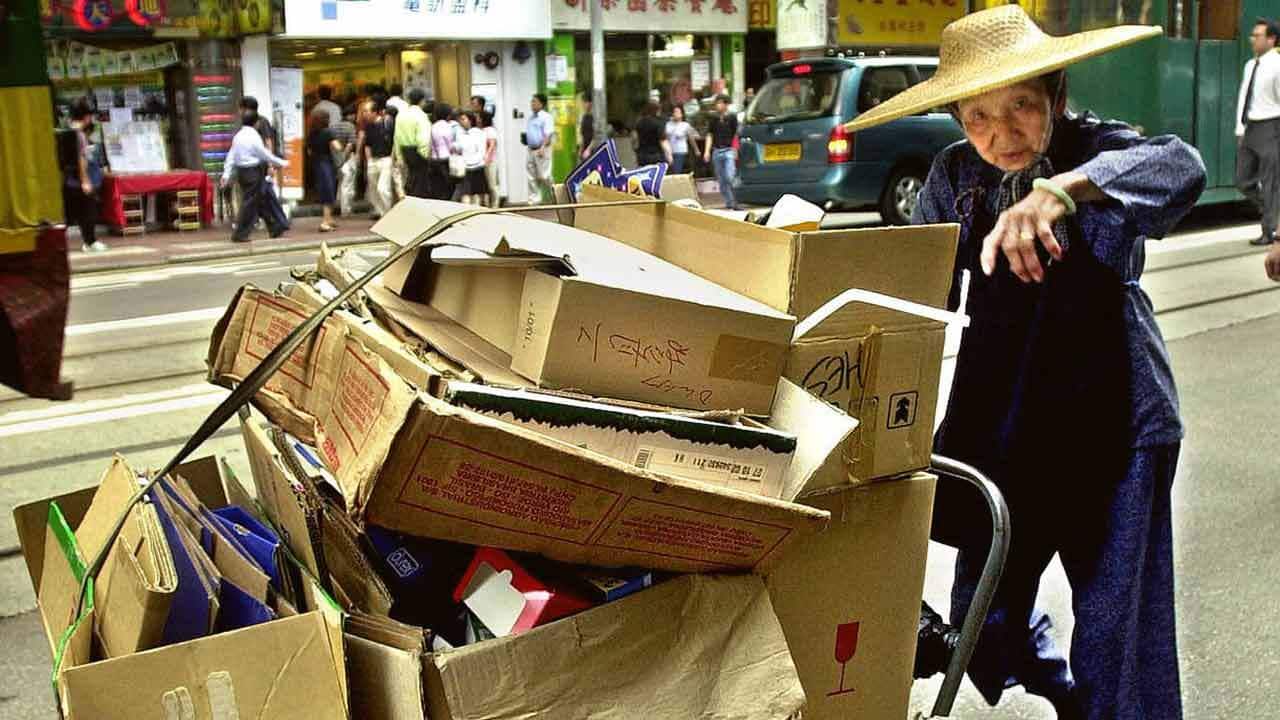
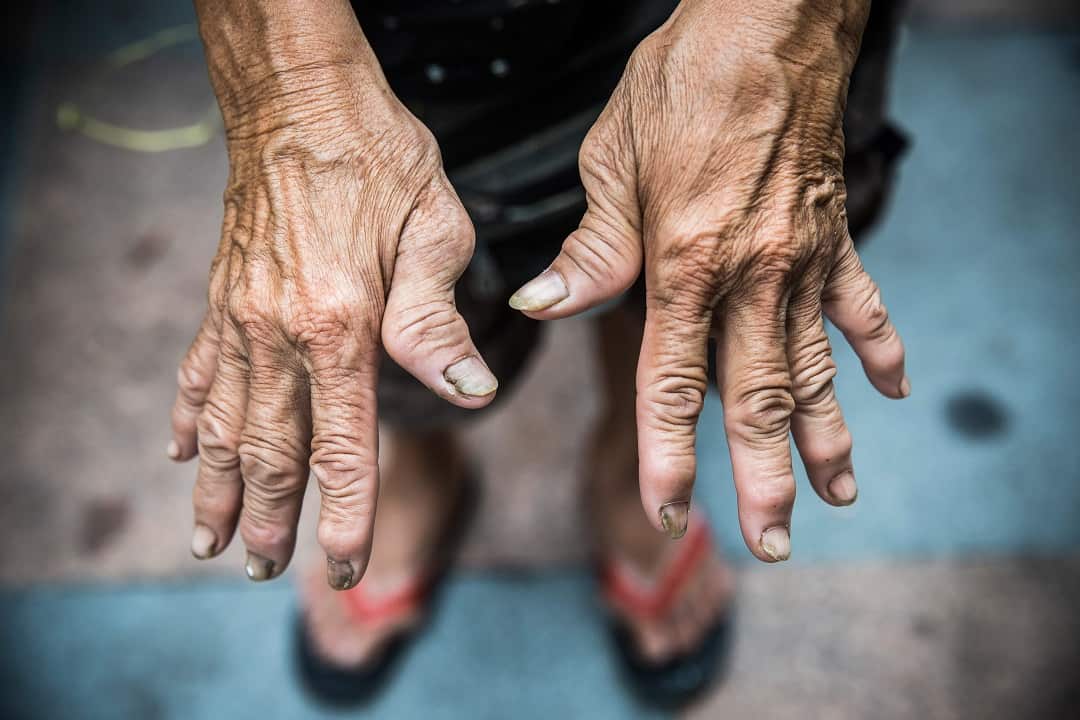
Her fingers are bent from 20 years of collecting cardboard from Hong Kong's streets, but Au Fung-lan says she has no desire to give up the gruelling work.
At 67-years-old she is one of around 2,900 collectors, mainly women over the age of 60, whose frail figures are a familiar sight, guiding trolleys loaded with cardboard through a city clogged with traffic and people.
They pick up discarded packing boxes from shops, markets and residential buildings, selling them for a few dollars to recycling depots, where cardboard is more valuable than plastic.
The depots then ship it abroad - up to 95 per cent of it to mainland China in 2016, according to local authorities - as Hong Kong has no recycling plants of its own to convert it into usable materials.
News that makes sense
Your trusted source for staying up-to-date with the world around you. Get free daily news updates and analysis, straight to your inbox.
However, as China closes the door to imported rubbish, even from semi-autonomous regions such as Hong Kong, Au's livelihood is under threat.
Beijing no longer wants the country to be a global trash can and has already started phasing out taking solid waste - a process it expects to complete by 2020.
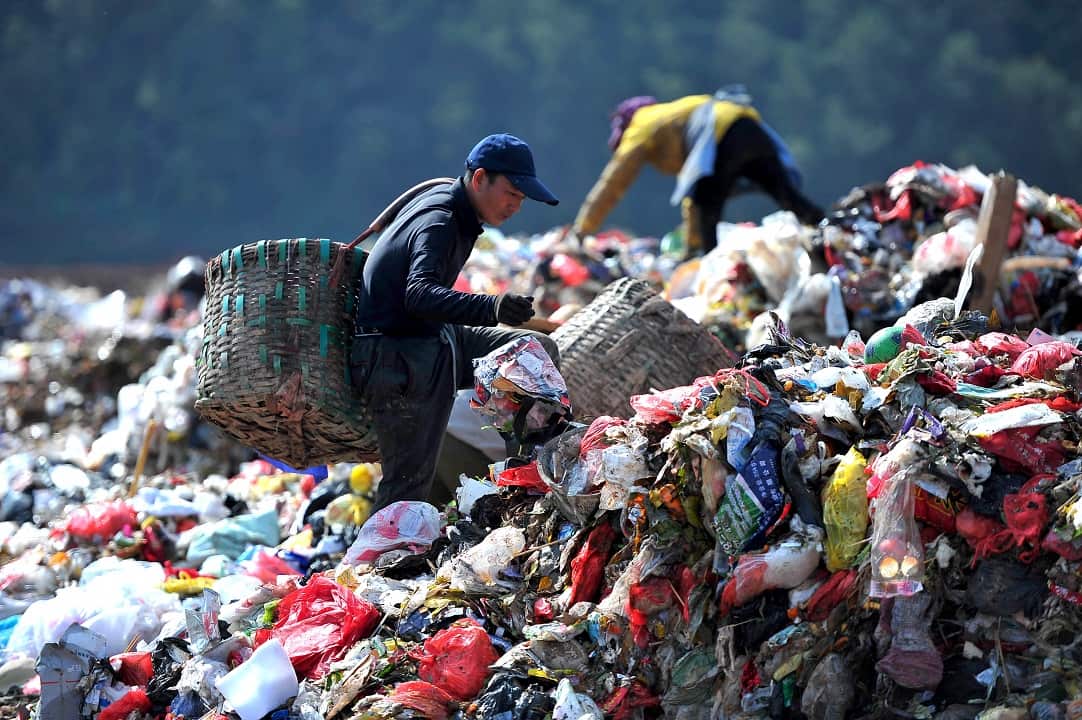
Pragmatic Au says she tries not to think too much about her work drying up.
She continues to put in 14-hour days so she can afford a carer for herself and her 77-year-old husband, also a cardboard collector, when they finally decide to give up work.
"Some people think our work is arduous and look down on us. They say: 'You are so old, go home and enjoy life. Why collect cardboard?'" Au told AFP.
"But if I can still work, I don't want to rely on others."
Risky business
Au turned to cardboard collecting after being laid off as a factory worker and courier.
She has three grown-up children with jobs but does not want to depend on them for help.
By working from pre-dawn until dusk, she earns up to HK$300 (around $38) daily, selling 300 kilograms of cardboard at HK$1 (13 US cents) per kilo.
It is a phenomenal work rate and much higher than the average collector who makes around HK$47.30 a day, according to concern group Waste Pickers Platform (WPP).
Au attributes her bent fingers to years of tearing cardboard with her hands to flatten it.
She has been hit by a car twice, injuring her shoulders and feet as she pushes her trolley along a busy road to the local depot in the residential neighbourhood of Kwai Fong.
Her trolley and cardboard have also been confiscated several times by government hygiene inspectors.
But she says she enjoys what she calls the freedom of working for herself.
"I'm not afraid. I do it every day," she says.
As unofficial freelance workers, collectors like Au have no legal recognition or employment rights.
China's imminent waste ban could wipe out this informal economy, which NGO workers say is key to some of the city's elderly.
Eighty per cent of the collectors are over 60, with the oldest in their 90s. Eighty per cent are women and around a third work at least an eight-hour day, according to WPP.
Many are doing it to supplement their pensions and savings in a city where the wealth gap is growing - the cost of living in Hong Kong ranked fourth highest in the world in 2018, according to the Economist Intelligence Unit.
"Cardboard collecting is part of a sub-economy activity which supports grassroots residents' livelihoods," says WPP spokesman Tang Wing-him.
Waste crisis
WPP estimates at least 193 tonnes of waste paper is delivered to recycling depots by the elderly collectors each day.
Jacky Lau, director of a local business association for the waste and recycling industry, said the China ban could not only wipe out work for collectors like Au, but would be devastating for the cities' depots too.
Some people think our work is arduous and look down on us. AU FUNG-IAN
If those businesses were forced to close there could be a "waste paper crisis" in Hong Kong as rubbish piles up, eventually ending up in landfill sites, he told AFP.
The city relies on landfills to dispose of most of its waste but they are already overloaded.
Lau says he hopes Hong Kong will still be allowed to export some waste to China, given its status as a Special Administrative Region of the country. Other countries are not an option due to the cost of shipping, according to Lau.
He also urged the Hong Kong government to speed up a plan to build a local recycling plant to process waste paper.
With the future uncertain, Au and her husband at least have a roof over their heads - they own an apartment they bought in the 1970s, which gives them some security.
But it also precludes them from receiving government subsidies, except for a small monthly allowance for the over 70s, which Au's husband receives on top of his pension as a former bus driver.
Au's children have urged her to give up cardboard collecting, but she sees it as an investment in her future.
"I told them: 'If you think I bring shame on you, then don't call me Mum when you see me,'" she told AFP.
"They kept quiet after that."







