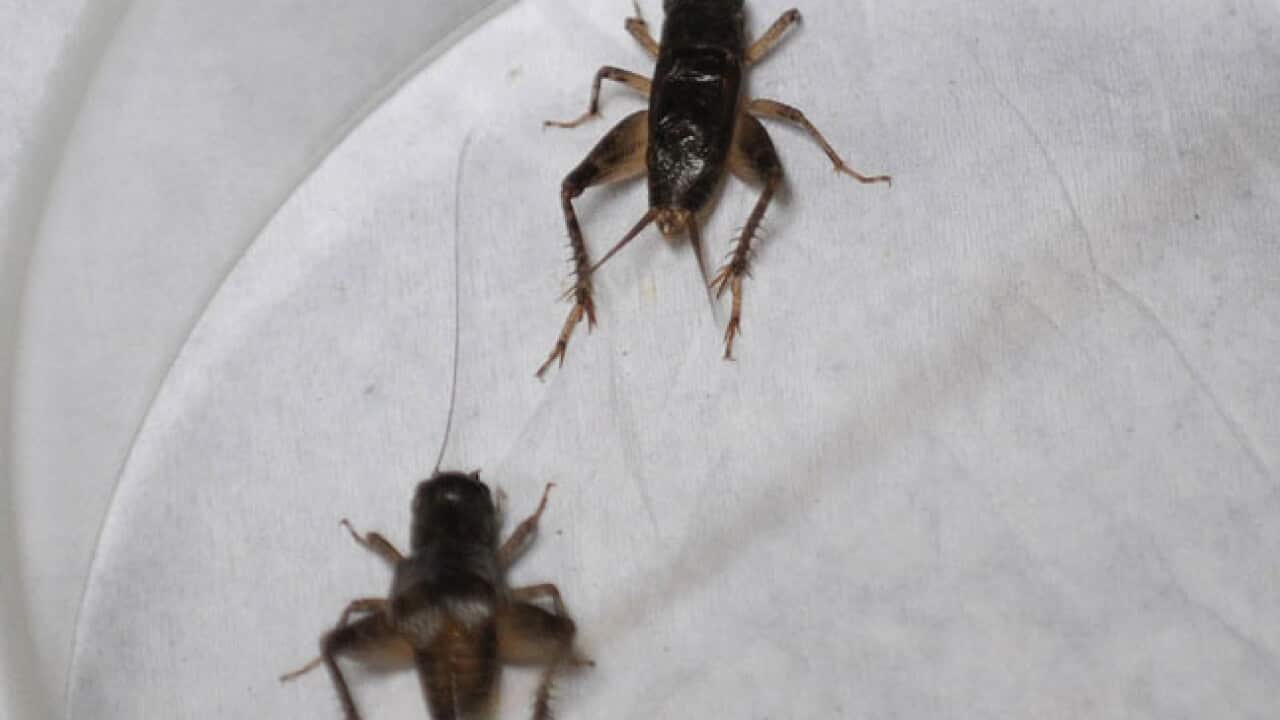
Chivalry is not dead - if you are a cricket, that is.
Scientists have found that some of the male insects will apparently put the lives of their mating partners ahead of their own.
When a mated pair is out together, a male will allow a female priority access to the safety of a burrow, even though it means a dramatic increase in his own risk of being eaten, according to infrared video observations of a wild population of field crickets.
Rolando Rodriguez-Munoz, of the University of Exeter, who conducted the study, said the findings indicated "chivalrous" behaviour was not necessarily just a human trait born of good breeding.
"Many people probably think that 'chivalrous' behaviour is exclusive of humans or closely related mammals, linking it in some way to education, intelligence or affection," he said.
News that makes sense
Your trusted source for staying up-to-date with the world around you. Get free daily news updates and analysis, straight to your inbox.
"We show that even males of small insects, which we would not define as intelligent or affective, can be 'chivalrous' or protective with their partners.
"Perhaps it shines a light on the fact that apparently chivalrous acts may have ulterior motives.
"Did Sir Walter Raleigh throw his cape on to a muddy pool in front of Queen Elizabeth just because he was a nice guy? I think not."
The results of the study, published in the journal, Current Biology, go against the usual interpretation of male guarding behaviour as an attempt to manipulate females and prevent them from mating with rivals.
The male crickets in this case are rewarded for their risky behaviour, however, as their extended stays with females win them more offspring, the researchers said.
But the findings do suggest that conflict between the sexes is not inevitable, they said.







