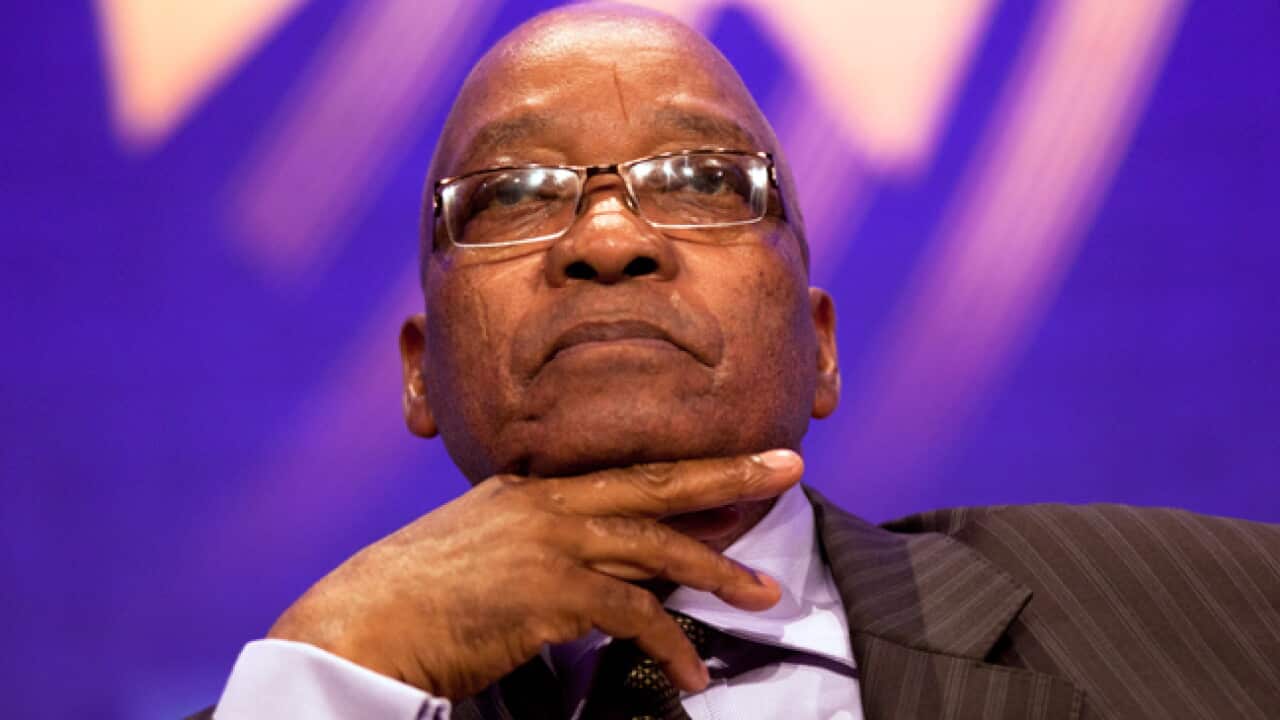
South African President Jacob Zuma has spoken out on the first day of the UN Climate Summit, urging states to look beyond their national interests in order to find a global solution to climate change.
"For most people in the developing world and Africa, climate change is a matter of life and death," he said.
"In these talks, states, parties will need to look beyond their national interests to find a global solution for the common good and benefit of all humanity."
News that makes sense
Your trusted source for staying up-to-date with the world around you. Get free daily news updates and analysis, straight to your inbox.
Talks began on Monday amid calls for action to head off worsening drought, floods and storms but also to fears of a bust-up just two years after a near-fiasco in Copenhagen.
Topping the agenda in Durban is the fate of the Kyoto Protocol, the only worldwide pact with targets for curbing heat-trapping emissions, whose first round of pledges expires at the end of 2012.
RIFTS EMERGE
But the mood has been soured by rifts over how to share the burden of emissions curbs, while the global economic crisis casts a long shadow over the climate fund.
UN climate chief Christiana Figueres said the 12-day talks must urgently shore up public confidence.
"This conference needs to reassure the vulnerable - all those who have already suffered and all those who will still suffer from climate change - that tangible action is being taken for a safer future," she said.
Divisions within the UN Framework Convention on Climate Change (UNFCCC) are pitching rich against poor, rich against rich and poor against poor.
Wealthy countries that are parties to the Kyoto Protocol are baulking at developing-country demands to renew their emissions vows beyond 2012.
Such a move, they argue, would be folly so long as China, which as a developing economy has no specified targets under Kyoto, and the United States, which abandoned the treaty in 2001, are not bound by similar constraints.
CANADA WITHDRAWS FROM KYOTO
"We will not make a second commitment to Kyoto," Canada's environment minister, Peter Kent, said in Ottawa as he called for a "new international agreement" encompassing all major emitters.Canadian broadcaster CTV said Canada would formally withdraw from Kyoto next month.
The European Union is the last bloc in the developed world to champion Kyoto.
It is willing to take on a second round of pledges, but on one condition: all major emitters should endorse the completion of a legally binding global climate pact, perhaps by 2015, into which Kyoto could be subsumed.







