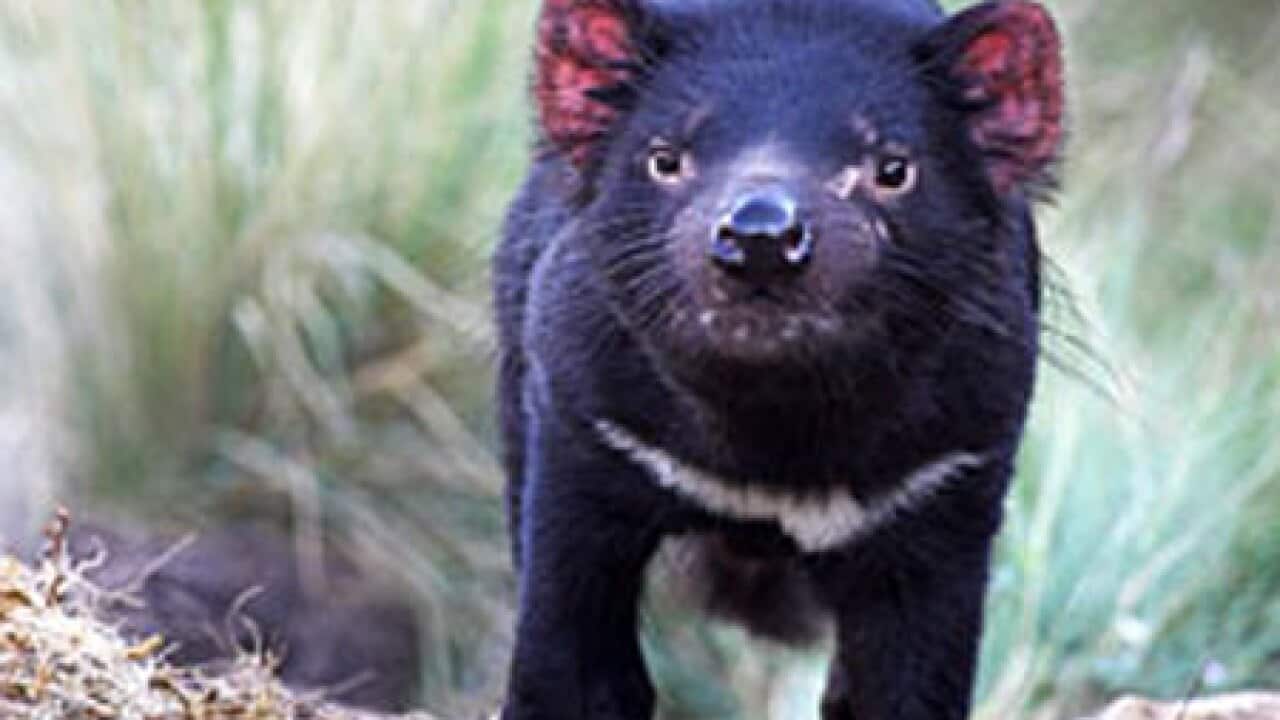
The news could be a key step in the race to save Australia's snarling marsupial from impending extinction.
Tasmanian devils spread a fast-killing cancer when they bite each other's faces; Since the disease's discovery in 1996, their numbers have plummeted by 70 per cent.
News that makes sense
Your trusted source for staying up-to-date with the world around you. Get free daily news updates and analysis, straight to your inbox.
Last spring, Australia listed the devils - made famous by their Looney Tunes cartoon namesake Taz - as an endangered species.
There is no treatment, and little hope of finding one until scientists better understand what is fuelling this bizarre "devil facial tumour disease".
So an international research team picked apart the cancer's genes, and discovered that it apparently first arose in cells that protect the animals' nerves.
Hopes for vaccine
The surprise finding, reported in Friday's edition of the journal Science, has led to development of a test to help diagnose this tumour.
Next, scientists are hunting the mutations that turned these cells rogue, work they hope could one day lead to a vaccine to protect remaining Tasmanian devils, or perhaps treatments.
"The clock's ticking," lead researcher Elizabeth Murchison of the Australian National University said. "It's awful to think there could be no devils here in 50 years because they're dying so quickly."
The devils, known for powerful jaws, fierce screeches and voracious consumption of prey, are the world's largest marsupial carnivores. They do not exist in the wild outside Tasmania.
What triggered this cancer, which causes tumours that grow so large on the face and neck that the animals eventually can't eat?
It did not jump from another species, said Murchison.
Tasmanian devils, for unknown reasons, are prone to various types of cancer.
Genetic mutations
This tumour's genetic signature suggests that probably no more than 20 years ago, mutations built up in some animals' Schwann cells - cells that produce the insulation, called myelin, crucial for nerves - until the first devil fell ill with this new type.
Those mutations went far beyond a typical cancer.
When one sick animal bites another, it transplants living cancer cells that form a copy of the first animal's tumour.
Murchison's team tested 25 tumours gathered from devils in different parts of Tasmania, and found the tumours were essentially identical to one another.
It's one of only two forms of cancer known to spread this way, Murchison said; the other is a sexually transmitted cancer in dogs. (That is quite different from people's transmission of a few cancer-causing viruses, such as the human papillomavirus that causes cervical cancer.)
The researchers created a diagnostic test, based in part on a myelin-related protein called periaxin that was present in all the facial tumours but not in other cancers.
Also, the team compiled a catalogue of Tasmanian devil genetic information.
Among the next goals is to determine which of those genes most influence the spread and severity of this cancer.







