By Steffen Lehmann, University of South Australia
The current state of worldwide urban development is depressing. We are not moving towards environmentally sustainable design and reduced consumption quickly enough.
There have been dire warnings about the implications of global climate change and a strain on the full range of resources from fuel to food. But there are neither regulations nor political will to make the changes to meet the growing challenges for urban communities for the next 20 years and beyond.
How much longer can we sustain the high-consumption lifestyle we are used to?
News that makes sense
Your trusted source for staying up-to-date with the world around you. Get free daily news updates and analysis, straight to your inbox.
Who's consuming? And what happens to the waste?
To get the full picture on consumerism we need to understand inter-connected global systems of production and consumption.
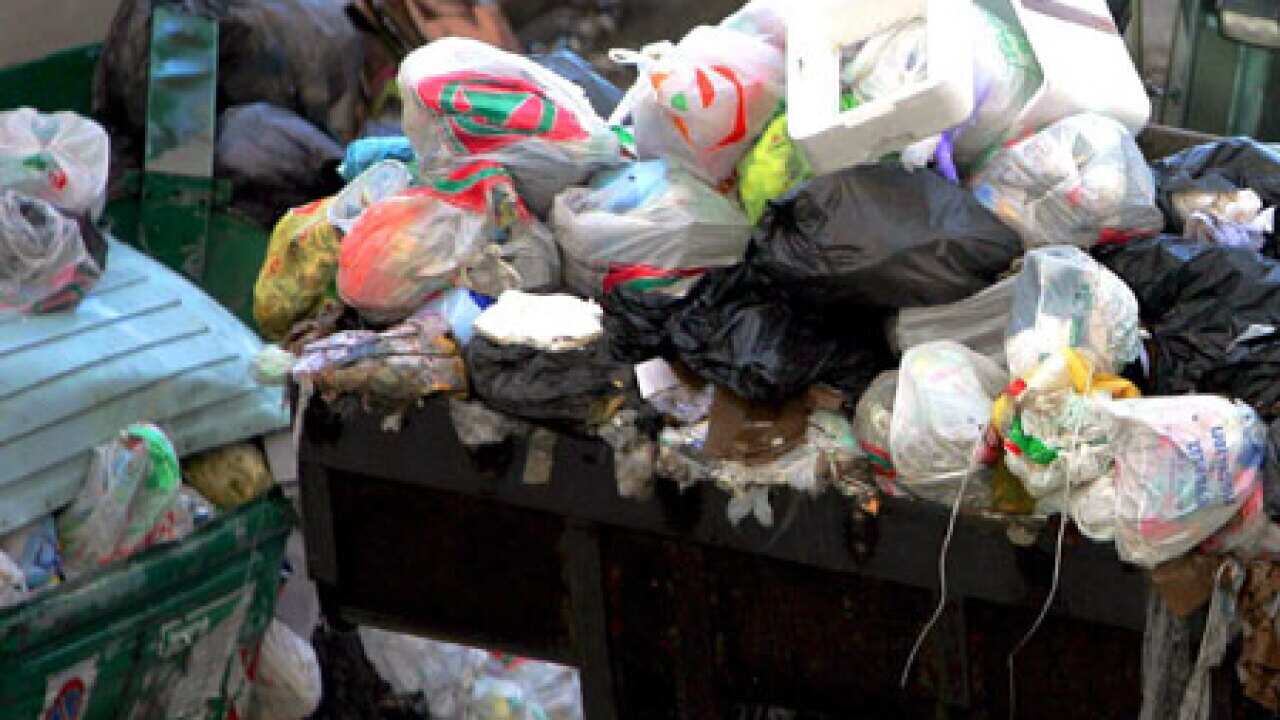
Globally, consumption patterns are unequal and wasteful. It has just 5% of the world's population, but the US consumes 30% of the world's resources and creates 30% of the world's waste. It is not alone in wastefulness: a small slice of the world's population consumes most of the resources and produces most of the greenhouse gas emissions.
Material resources are depleting at such a rate that we are likely to soon face shortages in materials we currently dump in landfill – lead, copper, cadmium, wolfram (tungsten) and zinc, to name a few.
In this context, plastic waste and toxic e-waste are another ticking time bomb. Why are electronics breaking so fast and why are they cheaper to replace than repair?
In 1960, cultural critic and consumerism theorist, Vance Packard, published in his pioneering book The Waste Makers, a critique of planned obsolescence.
He pointed out that consumers who learn that the manufacturer invested money to make the product obsolete faster might turn to a producer (if any exists) that offers a more durable alternative. We need to support a move towards more single-material, recyclable components in all industry sectors.
Building without waste – here and abroad
We have also ignored the impact of our continued demand for goods made overseas using carbon-intensive processes, leading to an overall increase in global emissions.
The new China-Australia Centre for Sustainable Urban Development (CAC_SUD) at the University of South Australia is working to develop application-focussed research for Australia and for the Chinese government and municipalities.
We hope to embed notions of sustainable consumption with architects, designers and urban planners, who all face different challenges depending on where they are in the world.
Choosing sustainable building materials and systems goes beyond considering durability. We need to take life cycle analysis and supply chain into account, and specify the most appropriate materials for a project – the least polluting, most easily recyclable, most energy efficient (least embodied energy) – and from sustainable sources.
Australia, China and other countries in the Asia-Pacific region have far to go to catch up with the resource recovery, recycling and end-of-life policies in other countries. Japan, Germany, Scandinavia and the US state of California have been early-embracers and are now ahead in policy and implementation.
Designing zero waste cities
We can't achieve zero waste through behaviour change in the area of resource recovery and recycling alone.
Our research shows it is simply not enough.
South Australia's drink container recycling scheme was a success story but has been around since 1977 and is reaching its limit. And its ban on free plastic shopping bags in 2009 has not stopped plastic bags being dumped in public places, parks and beaches.
We need to refocus on avoiding waste creation in the first place and re-think the way we design and construct products, buildings and cities to facilitate re-use and disassembly at their end of life.
This change of focus makes the concept of zero waste both powerful and controversial. From a purely economic point of view, producing waste is unproductive. But reversing the existing, wasteful business system and manufacturing practices is not a fast, easy or cheap process.
If we can begin at the beginning and design waste out of the picture, we can recover not only the final product, but also the energy, materials and time embodied in the product or building.
The zero waste ethos is a big call, radical in its ramifications, and it requires more than a top-down, government-imposed approach. To be successful, zero waste needs to be embraced and implemented by citizens and community groups, business and industry.
It is already technologically possible to build a zero-waste and zero-carbon-emission city.
The question is – are we willing to do so and transform from consumers to citizens?
Steffen Lehmann receives funding from the Australian Government, various State Governments and City Councils. He is affiliated with the Zero Waste sd+b Centre, the China-Australia Centre for Sustainable Urban Development, the UNESCO Chair in Sustainable Urban Development for Asia and the Pacific and the CRC for Low Carbon Living.








