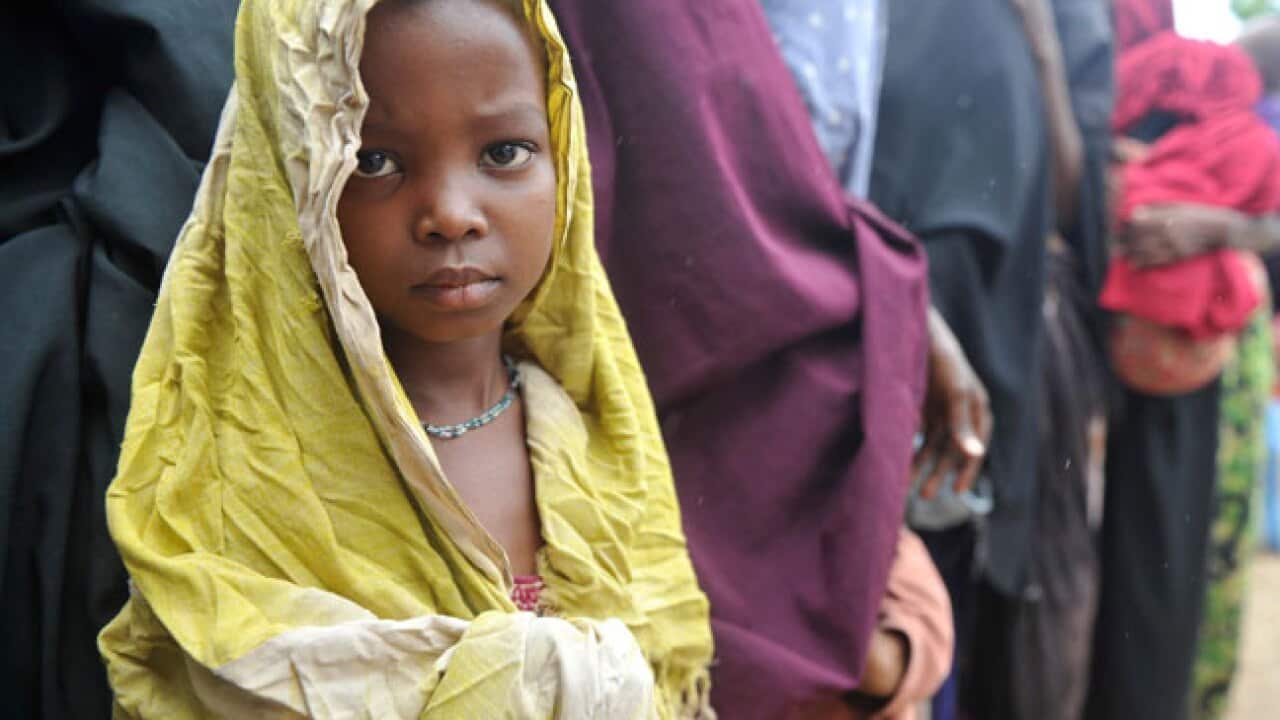
There are times when the dislocation between domestic politics and global reality become too much to bear. For example, Turkey or Jordan dealing with Syrian refugees is in fact a 'refugee crisis'.
But, yesterday was a corker. Foreign Minister Bob Carr announced he was delaying the scale-up to 50 cents in every 100 dollars of government revenue going to foreign aid by two years because “you can't borrow money to spend on aid” and further spending has to be “sustainable”. Minister Carr also announced our embassy in Budapest will close and we will delay opening the post in Dakar, Senegal.
It's a heavy price to pay to bring the budget back to black.
News that makes sense
Your trusted source for staying up-to-date with the world around you. Get free daily news updates and analysis, straight to your inbox.
The fact is, in a globalised world and in our neighbourhood, Australian foreign policy and development assistance is not a luxury choice or an act of charity; it's a shrewd, hard-headed investment. Our economic well-being is not in the hands of Mr Swan or Mr Hockey. We live in a connected world where Chinese infrastructure demands mean your kid gets a job. West Africa may be a site of conflict, but it is also a place of opportunity.
We know this, deep down. So why does the government think that aid and diplomacy are such a soft target for budget cuts, especially when Australia's only hope in the global economy is to understand more about our world and region, not less. It's because Australian voters let them. But, we are only hurting ourselves with this pattern. And every time, our international reputation takes a beating.
Why were we trying to raise foreign aid spending to a proportion of 0.5 per cent of gross national income anyway, and why by 2015? Because Australia promised we would raise our contribution to 70 cents in every $100 in 2000, along with the rest of the world. We cannot unilaterally decide that the Millennium Development Goals decided on by the United Nations will be delayed. They end in 2015. That was the whole point of the exercise, to set targets and deadlines to halve global poverty. If we miss the deadline, we break our promise as the major donor to the region. The UK and Nordics achieved the goal, we will not. Now that's an epic fail.
Yesterday, via Twitter, Mr Carr did confirm an increase of $500 million in foreign aid. But, this is because in December 2012 cuts and deferrals of A$375.1 million were made from the Australian aid program, redirecting funds earmarked for overseas poverty alleviation to pay for the costs of the domestic asylum seeker program, including mandatory detention. In the last budget the delays in aid meant funding was cut by A$2.9bn over four years – this was 17 per cent of net budget cuts even though aid makes up only 1.4 per cent of the overall budget. If the aid budget increases because of that, does that make us a good aid donor? The rest of the world, and most of us in our calmer moments, know the answer to that.
You could say domestic spending comes first and if the economy cannot handle it, well then it is not 'sustainable' as Mr Carr posits. Poppycock. Don't let the government keep setting up a false idea of helping the poor at home comes at the expense of helping the poor in our neighborhood. Governments constantly make choices. All our political parties agreed to set aid targets so that aid could be more effective. This just makes good sense and saves money in the long run. In the Asian century which we are so keen to be a part of, yesterday's announcement is an own goal.
Instead, the goal should be to spend a very small percentage of income on aid in recognition of global poverty rates that affect us all. The idea is, if your economy shrinks, you pay less aid as a percentage of the whole. You only pay what you can afford as a rich nation. Our nominal gross domestic product growth has been revised down, causing the budget hole. But our real GDP growth as Mr Swan will trumpet tonight, is around 3.25 per cent; we have an unemployment rate of 5.5 per cent; an inflation rate of 2.5 per cent and an official cash interest rate of 2.75 per cent. To everyone outside looking in, we look pretty darn good. The region will not understand our internal politics of domestic surplus. Most of us don't either. The UK has had all kinds of real issues, but met its aid target of 0.7 per cent. That's leadership.
If our aid was ineffective, or the bureaucracy couldn't handle the changes, that would be a reasonable argument too. But, there's been an independent review of the aid program everyone agreed with, a plan and an external audit by the OECD which gave the Australian aid program a big tick just last week. So that won't wash either.
The fact is, dollar for dollar, investing in understanding our world and helping our neighbours is what is going to keep our kids safe, secure and able to thrive. That's what budgets and politics are meant to be for. Outcomes not games.
Dr Susan Harris Rimmer researches and teaches international aid and development, and diplomacy at the Australian National University's College of Asia and the Pacific.







