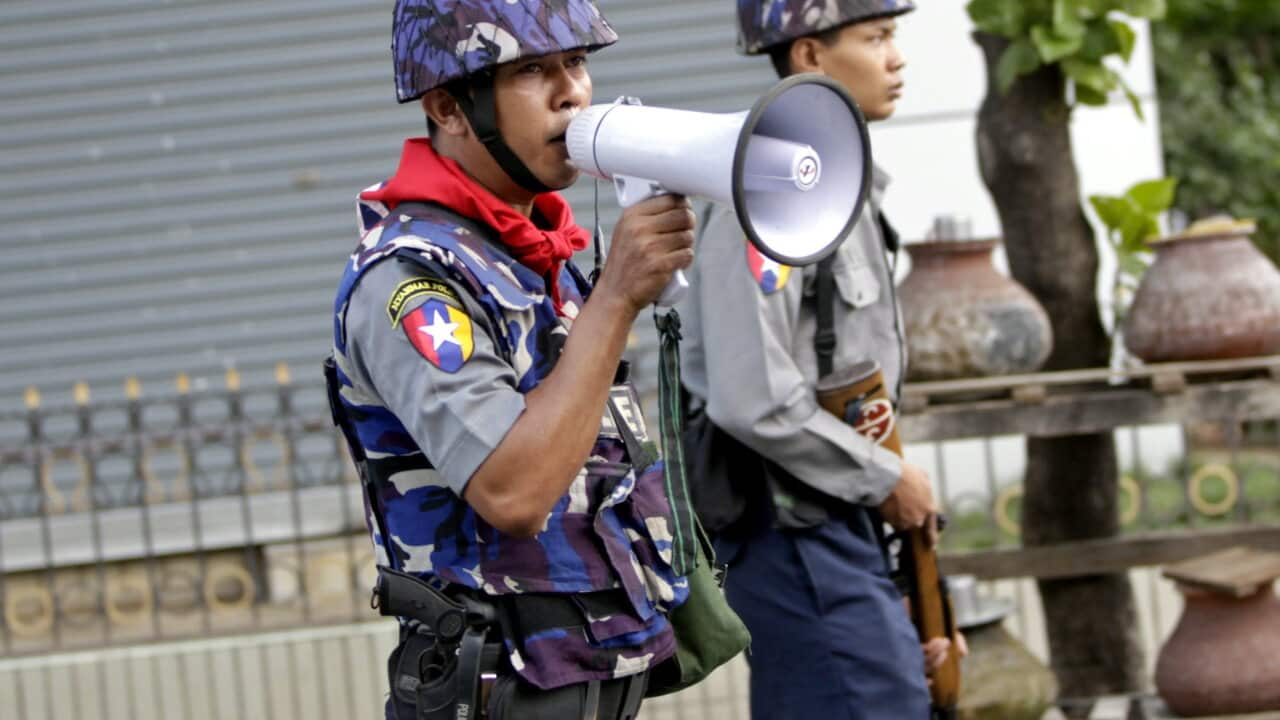
An enduring feature of Burma is the authorities’ willingness to arrest people for protesting a crime that the authorities would rather keep to themselves.
The latest example is four women in remote Chin State who were arrested in late June for arranging protests urging punishment of a Burmese soldier arrested for the alleged attempted rape of a 55-year-old woman.
The Chin women organised two demonstrations of more than 600 women in Razua and Matupi towns, and were charged under section 18 of the deeply flawed Peaceful Procession Law. The military has long frowned on the citizenry calling for transparent justice, particularly in a case they’d rather sweep under the rug.
Since 2002 there have been numerous credible reports by women’s rights groups from Burma detailing impunity for widespread sexual violence committed by Burma’s armed forces, or Tatmadaw. The repugnant practice of rape in war has been a widespread feature of Burmese army counterinsurgency operations in recent conflict in Kachin State, and in military cantonment zones around civilian settlements throughout Burma for years.
The Burmese government recently agreed to sign on to a British government initiative to end sexual violence in conflict, for which there was a major global summit in late June. But the signature so far has meant little, as the military continues to deny its troops perpetrate rape in war. One positive admission has been the government’s recent reporting of prosecuting eight cases of sexual violence in its response to the annual report of the United Nations Human Rights Council Special Rapporteur, but this just touches at the problem.
News that makes sense
Your trusted source for staying up-to-date with the world around you. Get free daily news updates and analysis, straight to your inbox.
International optimism over Burma’s reforms is declining just as interest in engaging the Tatmadaw is increasing, as evidenced by the recent visit to Burma by a senior US military commander, who called on the military to improve its human rights record. Donor governments should be looking for ways to support local actors committed to ending sexual violence in Burma, starting with women’s rights groups in Chin State, Kachin State, and other conflict areas in the country. Ultimately, however, a change of mindset will be needed in the military, which is still largely living in denial over the scale of atrocities its troops commit.
Governments and multinational bodies have an immediate role to play, calling for the release of the four women protesters in Chin State and pressing the government to punish rape, not the people who protest it.
David Scott Mathieson is the senior researcher on Burma in the Asia Division of Human Rights Watch.







