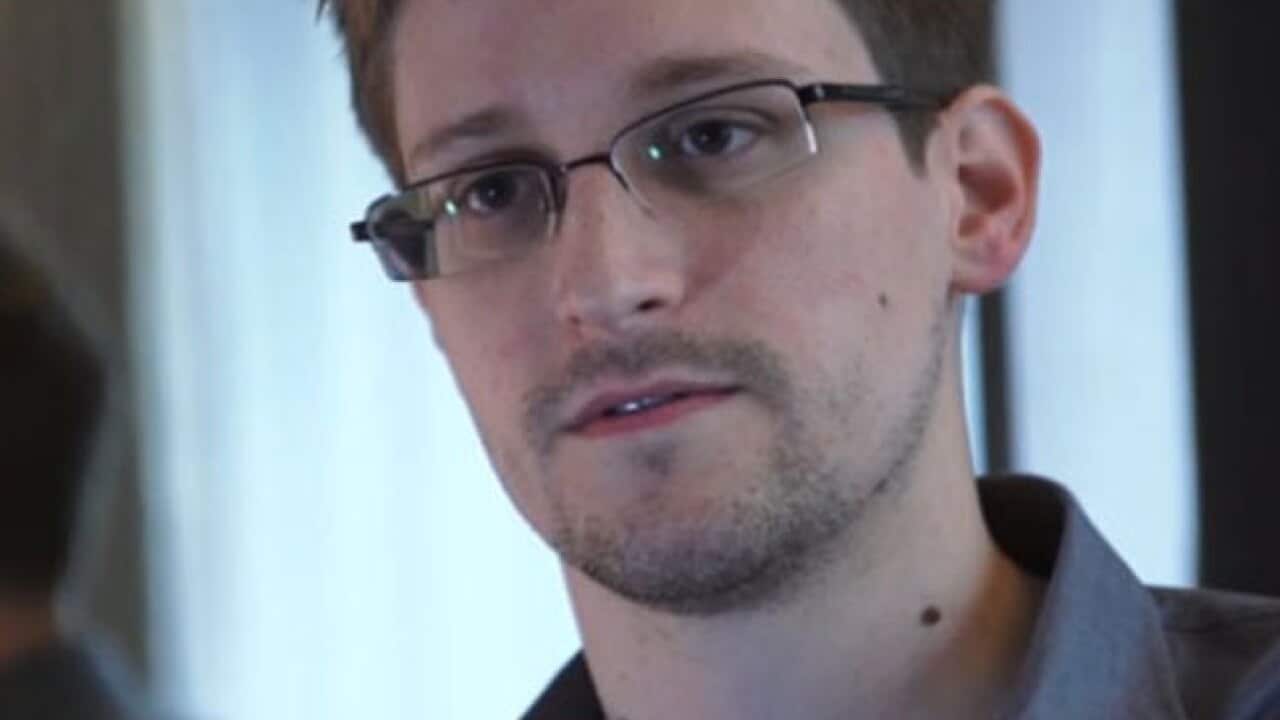
With his decision to flee to Hong Kong, Edward Snowden, the whistleblower behind the bombshell leak that exposed a highly classified US intelligence program, has taken a serious legal risk, one that may very well result in his extradition to the United States to face charges.
Though formally under Chinese sovereignty, Hong Kong maintains its own extradition agreement with the United States. And if Snowden is to avoid being sent back to the United States (Republican lawmakers are already calling for his extradition), he may have to convince a judge that he is being persecuted for his political beliefs.
In doing so, he is taking a huge gamble. In 1997, the British government handed over sovereign control of Hong Kong to China, and just prior to the transfer the Clinton administration negotiated -- with the consent of Beijing -- an updated extradition treaty with Hong Kong. That agreement includes a provision allowing either side to deny an extradition "if the offence of which that person is accused or was convicted is an offence of a political character."
Crucially, the agreement between the United States and Hong Kong does not define what constitutes a political crime, and according to Julian Ku, a professor of international law at Hofstra University, there is scant precedent in Hong Kong to indicate how its courts would rule on the question of whether Snowden's prosecution would be "of a political nature."
"Obviously, he's in a better position than if he had committed murder, but [the legal strategy] is not necessarily a winner for him," Ku says.
News that makes sense
Your trusted source for staying up-to-date with the world around you. Get free daily news updates and analysis, straight to your inbox.
The United States and Hong Kong have a long-standing and successful relationship in exchanging suspects. If U.S. prosecutors and diplomats are able to cast his indictment as an ordinary criminal prosecution, the courts are likely to approve his extradition.
The Snowden leaks have now been referred to the Justice Department, and U.S. prosecutors have several options available to them. According to Ku, prosecutors may avoid charging Snowden under the Espionage Act -- which could be considered a political prosecution by courts in Hong Kong -- and indict him under a different statute.
Among the crimes listed on the U.S.-Hong Kong agreement as within the bounds of extradition, one offense in particular stands out: "the unlawful use of computers."
"My best guess is that if the U.S. government makes the request and they're smart about it, the courts have a hard time finding it as a political offense," Ku says.
In short, Snowden's legal strategy depends on convincing a judge that he is the victim of political persecution, a legal strategy that has little precedent in Hong Kong (Reuters, which notes that Hong Kong authorities can hold Snowden for 60 days while U.S. officials prepare a formal extradition request, reports that Snowden could also argue that his alleged criminal act is not considered a crime in both countries). Taken together with the fact that Snowden could have fled to a country without an extradition treaty with the United States -- or followed in the footsteps of Julian Assange and sought asylum in Ecuador -- Snowden's decision is extremely perplexing.
Snowden's flight to Hong Kong has added a geopolitical dimension to his case and sparked speculation in the media that his fate will be decided by Beijing. Unfortunately, this speculation may be based on a misreading of the extradition agreement. While the treaty includes language that allows both Hong Kong and the United States to decline extradition for reasons relating to "the defence, foreign affairs or essential public interest or policy" of China and the United States, it appears to state that this exception only applies to the extradition of American citizens to Hong Kong and Chinese citizens to the United States (see Article 3).
This language has been used to imply that China has the ability to bulldoze Hong Kong's court system, but the island's judiciary has consistently demonstrated a remarkable degree of independence, even after China's assumption of sovereignty over the territory. Not only is Hong Kong's judicial system modeled on the British system, but many of its judges are British holdovers.
The Clinton administration also expressly negotiated a new treaty with Hong Kong prior to the handover in order to maintain an important operational aspect of the island's sovereignty. In a letter to the Senate introducing the treaty, then-Secretary of State Madeleine Albright explained that extradition decisions would be made by Hong Kong's courts, not Beijing.
According to Ku, that promise has largely been delivered on, and there has been very little if any interference from Beijing on issues relating to extradition. Still, the temptation to interpret Snowden's potential extradition as a great power standoff in the making remains. Here's Josh Marshall with a nice summary of that argument:
"But the decision to go to China inevitably colors his decision and sets up what could be a very uncomfortable diplomatic stand-off. I've seen people linking to the current US-Hong Kong extradition treaty. Call me naive but I think this is going to come down to how Beijing wants to play this. If they don't want a fight over this, Snowden's toast. If they like the optics of it, I don't think it matters what that extradition treaty says. China's a big enough player and the US has enough other fish to fry with the Chinese, that the US is not going to put the bilateral relationship on the line over this guy. And the Chinese might relish granting asylum to an American running from the claws of US 'state repression'.
But before we get ahead of ourselves, consider a recent instance of China getting involved in Hong Kong's affairs. Late last year, Hong Kong's supreme court referred a case to Beijing involving a dispute over whether domestic workers should have residency rights there, launching a hail of criticism from liberals in Hong Kong. (Note also that China did not choose to get involved in the case but that it was referred to authorities in Beijing -- another unlikely step that, according to Ku, would probably have to be taken in order for Chinese officials to get involved in the Snowden case.)
Just as China is trying to repair relations with the United States, would it really want to poke Washington in the eye? Doing so could also provoke anger in Hong Kong -- and all in exchange for what might ultimately prove a hollow diplomatic victory and a stale source of information. That doesn't sound like smart politics.
© Foreign Policy, 2013







