By Timothy Lynch, University of Melbourne
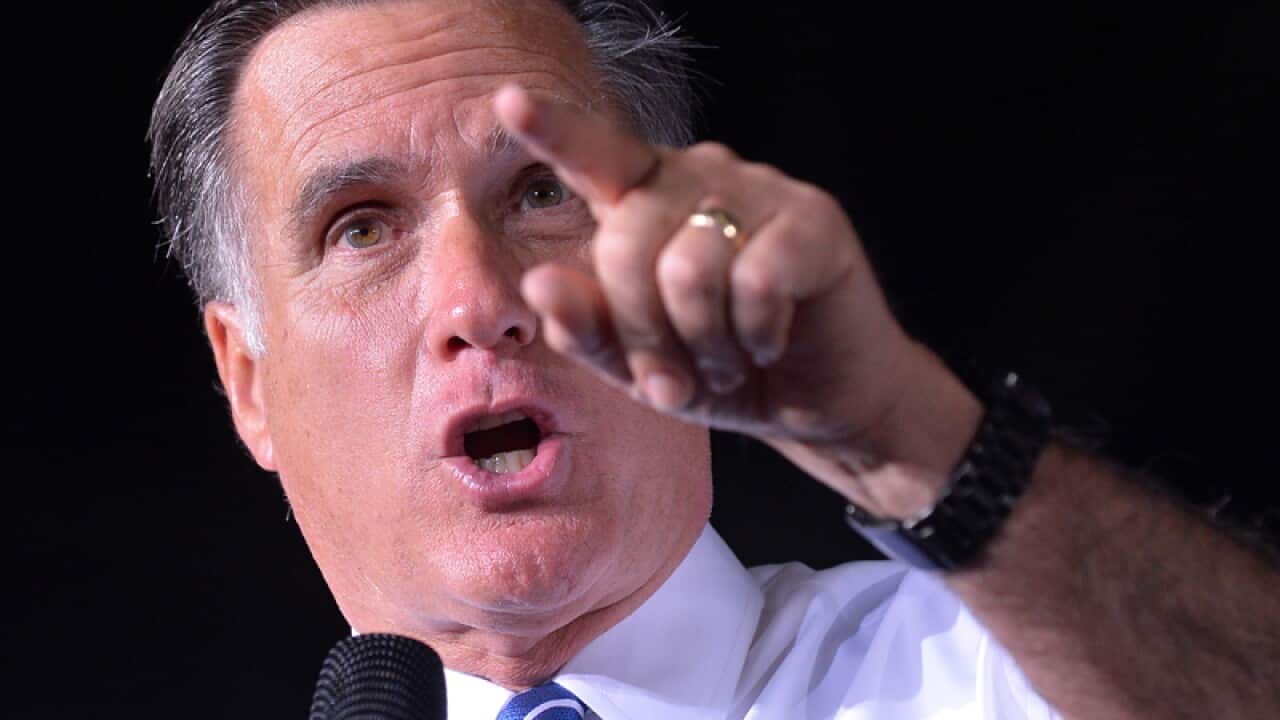
Romney won the first presidential debate (on a 12-round boxing score card I scored it 115 to 105). He did so, in part, because he was so good, in part, because Obama was so poor. Most incumbents perform poorly in the first debate – see Reagan in 1984 (and he then won in a landslide – so Obama can clearly make up the ground he seemed so willing to cede in Denver.
How do we account for the surprising distance between both men on Wednesday evening?
1) Match fitness. Romney has been debating some very able opponents for the last 18 months; Obama has not. Romney dispatched Newt Gingrich and Rick Perry – primarily in debate with them. Obama, unlike Julia Gillard and David Cameron, gets no regular opponent to debate in a formal setting. It showed. His mock debating partner has clearly been pulling punches. Get a new one.
2) Desire. Romney has been running for president for at least the last six years. This was his moment. He performed much, much better than at his nominating convention. Obama wants a second term but was enervating in defense of that proposition, especially compared to the man we saw in 2008. A playing-safe, running-down-the-clock strategy only partly explains this puzzling absence of desire.
News that makes sense
Your trusted source for staying up-to-date with the world around you. Get free daily news updates and analysis, straight to your inbox.
3) Issues. We are used to progressives haranguing conservatives, with numbers, morality, equality, history … This did not happen in Denver. Instead, Obama seemed cowed, looked down (watching the debate in split screen is highly instructive). The challenger seemed much more in control of his brief. Even if parts did not add up he made them sound as if they did. He was especially good in explaining why Massachusetts' healthcare legislation represented the best of American federalism and Obamacare the worst of federal government overreach.
4) Why didn't Obama cite this Romney gaffe? He was content to imply Romney was part of the 'well-to-do,' 'corporate jet,' 'Donald Trump' set but elided his challenger's seeming dismissal of 47 per cent of the nation. Instead, the president was playing defence for most of the ninety minutes. Romney got to present his plan essentially unmolested. I was amazed at times. The challenger got to deliver his best line of the campaign – 'Look, I've been in business for 25 years. I have no idea what you're talking about' – the incumbent was mute.
5) Romney is no Romulan, after all. Instead he was variously warm, deferential, funny and human. After the debate, he was clearly the candidate that most people would want to have a beer with. The Obama attack ads were suddenly exposed as caricatures. Romney was not the man they depict.
Does this matter?
YES: Remarkably Romney has presented himself as not just a component economic manager but as a human being. If he can sustain this persona through November 6 he may well squeak a narrow victory. Expect the polls to tighten to a dead heat. In October 1980, Reagan turned an almost ten-point poll deficit into an eight-point election victory in November. His debate with President Carter was the turning point in that process. Perhaps it will be Romney's too?
NO: Obama possesses remarkable powers of recovery. He cannot possibly be as poor a second time around and Romney can't be any better. The president also has more historical precedent on his side. Incumbents that face no significant primary challenge from within their own party always get re-elected – unlike Jimmy Carter and George H.W. Bush, the last two one-termers, Obama was the clear choice of his party this year. And if the polls do close, this will create a greater sense of urgency among Democrats who voted in 2008, motivating them to come out and vote this time round. If they don't, Obama is sunk.
But the game's afoot – in a way many did not predict before Obama's low performance at high altitude.
Timothy Lynch does not work for, consult to, own shares in or receive funding from any company or organisation that would benefit from this article, and has no relevant affiliations.








