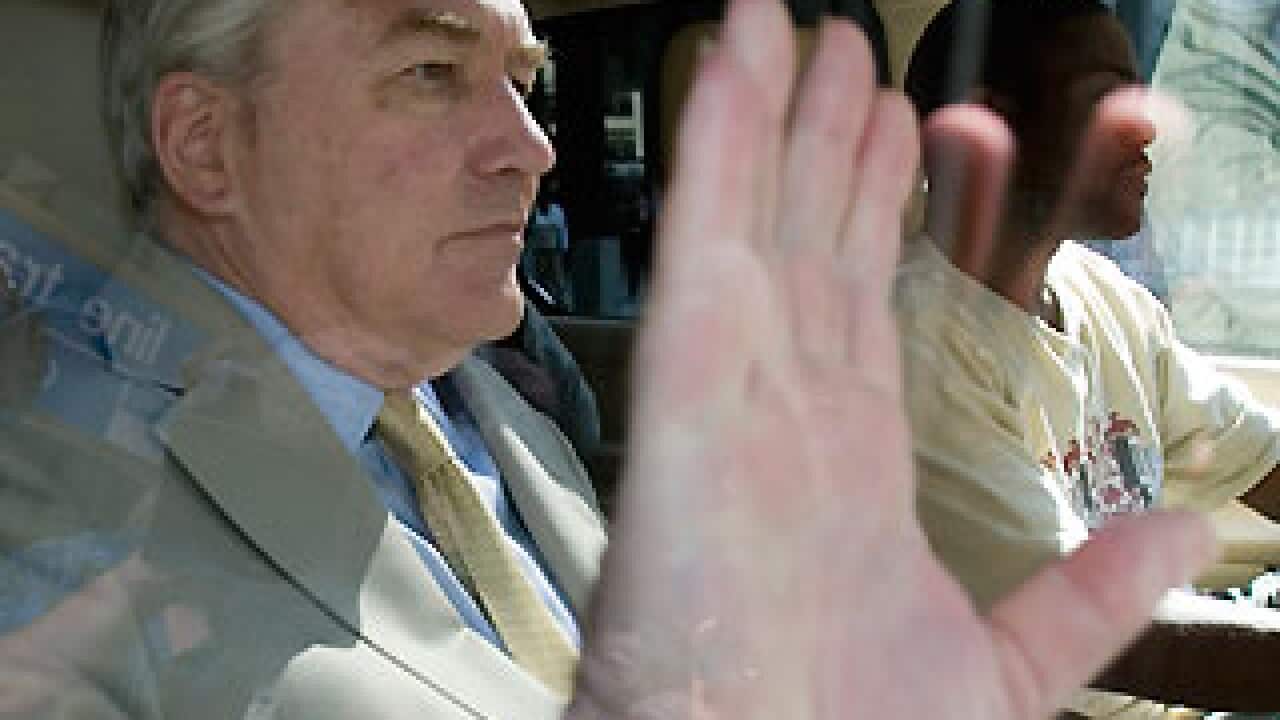
The ruling comes weeks after the US Supreme Court kicked Black's fraud conviction back to a lower court.
Black was convicted along with three other former executives from the media empire Hollinger International, which once controlled Fairfax in Australia, of swindling the company's shareholders out of $US6.1 million ($A7.03 million).
News that makes sense
Your trusted source for staying up-to-date with the world around you. Get free daily news updates and analysis, straight to your inbox.
Last month, the Supreme Court weakened the "honest services" law that was central to Black's fraud conviction. The justices left it up to a lower court to decide whether the conviction should be overturned. That decision has not yet been made.
Black also was convicted of obstruction of justice after jurors saw a video of him carrying boxes of documents out of his offices, loading them into his car and driving off with them. The documents were sought by government investigators.
A call to Black's lawyer, Miguel Estrada, was not immediately returned.
A federal Bureau of Prisons spokeswoman said Black, 65, remained in prison on Monday and it was unclear when he might be released.
Before the Supreme Court ruling, prosecutors had said Black should remain in prison because the high court's decision wouldn't affect the obstruction of justice count.
A spokesman for the US attorney's office in Chicago said officials wouldn't comment.
Hollinger International once owned the Chicago Sun-Times, The Daily Telegraph of London, The Jerusalem Post and hundreds of community papers in the US and Canada. It also owned a 25 per cent stake in John Fairfax Holdings before quitting as majority shareholder in 1996.
The "honest services" law has been criticised by defence lawyers as the last resort of prosecutors in corruption cases that lack the evidence to prove that money is changing hands.
It also has been called vague, subjecting people to prosecution for mistakes and minor transgressions in the business and political worlds. But watchdogs consider it key to fighting white-collar and public fraud.
The Justice Department said at the time of the Supreme Court ruling that prosecutors would continue to urge that honest services convictions for Black and others be upheld.
The court's decision made headlines all over the world, in large part because of the names of those sitting in prison as a result of the law, including Black, former Enron boss Jeffrey Skilling, disgraced lobbyist Jack Abramoff and California Congressman Randy "Duke" Cunningham.







