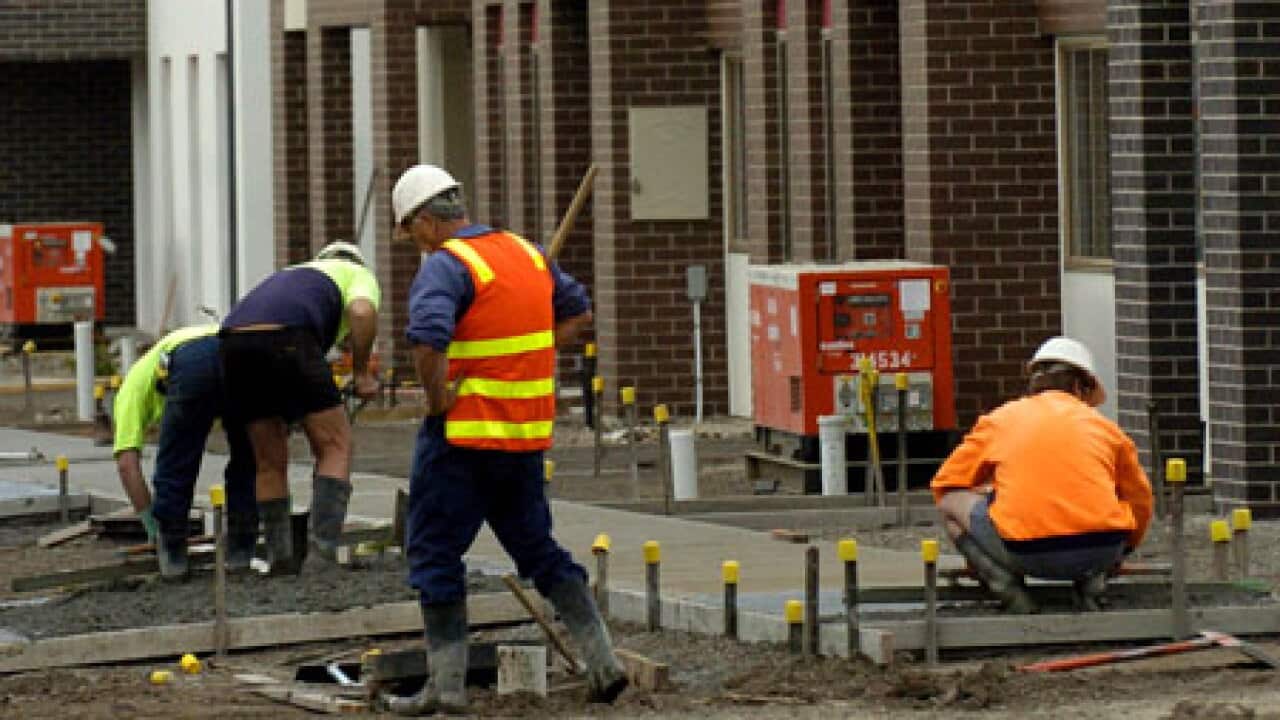
The value of non-residential construction increased by 2.1 per cent to $109.3 billion in the year to March, the Housing Industry Association's (HIA) latest Construction 100 report found.
"The construction sector fared better than expected in 2009/10 following the aftermath of the global financial crisis and its impact on the economic climate," the report, released on Wednesday, said.
News that makes sense
Your trusted source for staying up-to-date with the world around you. Get free daily news updates and analysis, straight to your inbox.
"Fortunately, the strength of East Asia's appetite for our resources and the substantial injection of economic stimulus cushioned the fall of what could have been a much weaker period."
HIA chief economist Dr Harley Dale said the market had outperformed early projections of a slump in non-residential construction activity.
"A significant boost to engineering activity drove the growth in non-residential construction in 2009/10," Dr Dale said.
"If you look back to the beginning of the 2009/10 year, there was a lot of rhetoric around that Australia was on the brink of recession."
"As we have seen, engineering construction has been pretty good and non-residential building has looked better than people expected."
The value of engineering activity increased by 5.4 per cent to $76.4 billion.
Non-residential building work fell by 4.7 per cent to $32.9 billion, while multi-unit construction fell by 4.3 per cent to $10.9 billion.
"The mining sector is leading Australia's economic recovery and it is also accounting for an astonishing proportion of overall construction activity," Dr Dale said.
"The renewed mining up-cycle has also ensured a massive pipeline of work to be done over the forward estimates."
Dr Dale said the community sector experienced the largest gain in value, with a 51.2 per cent increase, reflecting the federal government's Building the Education Revolution program.
"On the other hand, the outlook for non-residential building activity remains quite lean once you remove the education and health sectors," Dr Dale said.
Civil Engineering was the fastest growing market segment among the top 100 construction companies in Australia.
The largest non-residential construction company was Kellogg Brown and Root, which won contracts worth nearly $11 billion, according to the report.
Western Australia overtook Queensland as the leading state for non-residential construction starts, with a 39.6 per cent share of total work commenced worth $62 billion.
New South Wales came in second with $29.8 billion worth of work, while Queensland fell back to third place with 17.5 per cent of the work.
Victoria's share fell to 14.9 per cent, South Australia's share was five per cent followed by Tasmania with 1.4 per cent.
Western Australia remained on top for engineering construction, with its share of total work commenced nearly doubling to 50 per cent from 29 per cent in 2008/09.
Queensland recorded the second highest share of engineering construction work with 17 per cent.







