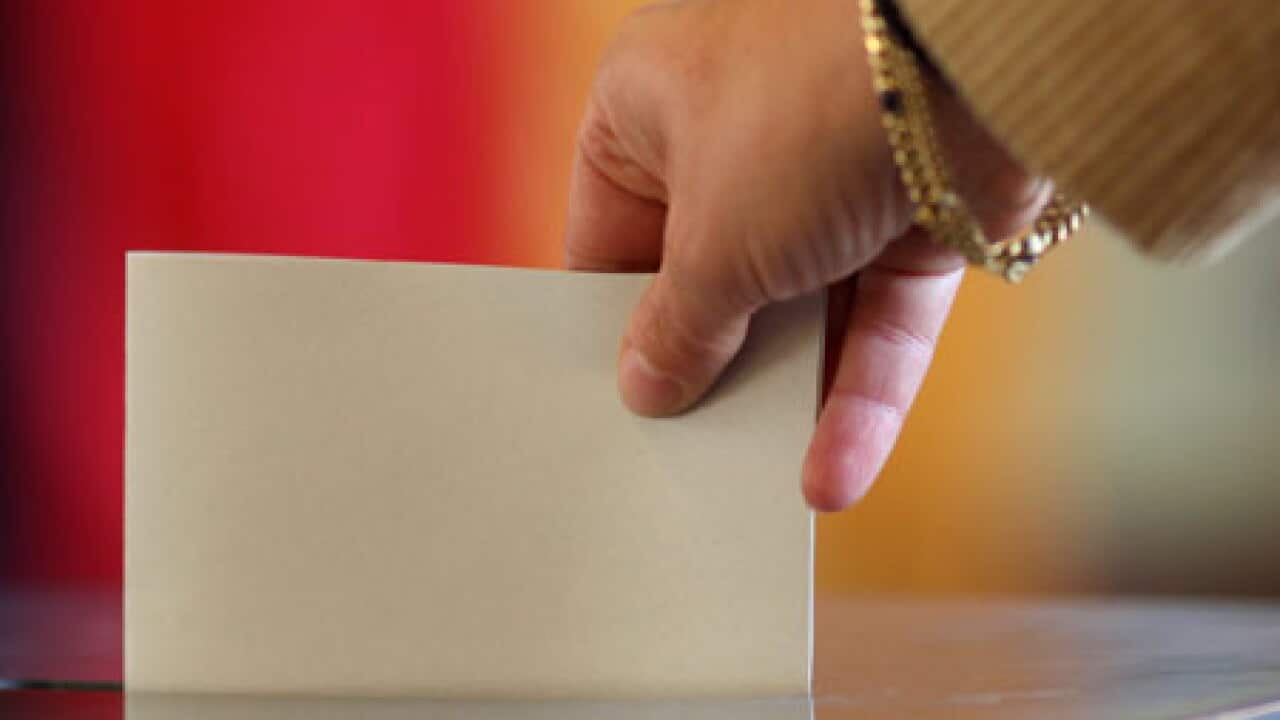
The federal opposition has voted against Labor's push to reverse contentious coalition changes to the amount of time allowed for electoral role alterations after an election has been called.
The Rudd government wants to restore the seven-day period during which people can enrol to vote or change their enrolment details following the issue of a writ for an election.
The period was controversially shortened by the previous Howard government after the 2004 election.
News that makes sense
Your trusted source for staying up-to-date with the world around you. Get free daily news updates and analysis, straight to your inbox.
Labor also wants to repeal the requirement that provisional voters provide evidence of identity at polling booths.
The opposition voted against the government's legislation in the lower house on Wednesday, arguing it could open the door to electoral fraud.
But the parliamentary secretary to the prime minister, Anthony Byrne, said that suggestion was not supported by the Australian Electoral Commission (AEC).
"The AEC advises that there is no evidence of wide-scale electoral fraud, which has been mentioned on an ongoing basis by those opposite," he told parliament.
"The coalition's primary interest seems to be keeping people off the electoral role - not strengthening Australia's electoral integrity."
Earlier, Labor backbencher Jill Hall said the opposition wanted to disenfranchise people who would likely vote Labor.
The AEC estimates more than 27,000 provisional votes were excluded at the 2007 election because of the Howard government's tougher identity requirements.
Despite the coalition's No vote on Wednesday, Labor used its numbers in the lower house to pass the Electoral and Referendum Amendment (Close of Rolls and Other Measures) Bill 2010.
The draft laws now go to the Senate, where the government will need the support of the entire crossbench to get its way if the coalition maintains its opposition.
Labor's legislation would also enable pre-poll votes lodged in an elector's home division to be counted as ordinary votes on election night. The coalition does not oppose that change.
Mr Byrne said it would reduce the possibility of an election result being delayed until pre-poll votes were counted.
About 15 per cent of Australians voted early in 2007.
A further amendment - moved on Wednesday - would allow blind and vision impaired Australians to vote at the next federal election by way of secret ballot.







