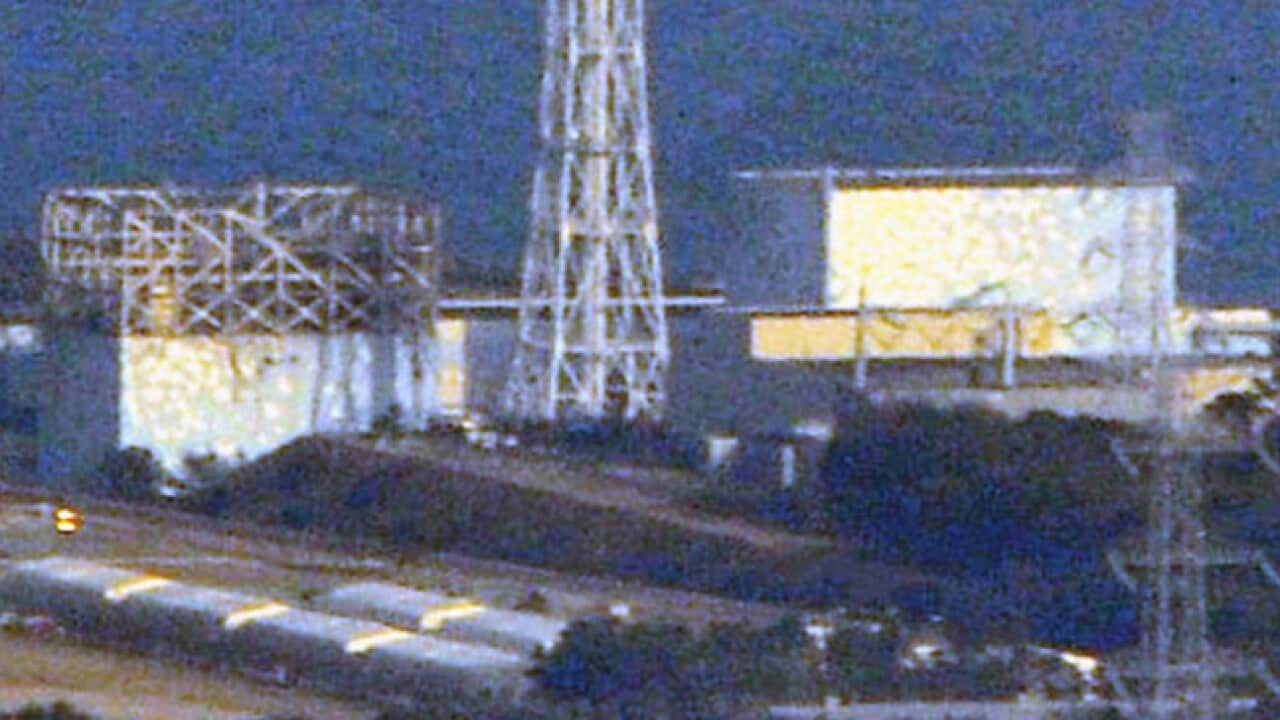
Australian experts have urged calm over Japan's nuclear crisis, saying none of the protected nuclear cores within the damaged plants appear to have been breached.
References to a meltdown of Chernobyl-like proportions were also unhelpful, they said, because the Japanese plants were of a fundamentally different design to those hit by the 1986 disaster.
This meant the mistakes that had led to the Ukrainian crisis could not be repeated.
"What's the worst consequence that could happen? Well, my view is that words like meltdown are not helpful," Australia's John Price, a former member of the safety policy unit of the UK's National Nuclear Corporation and now a consultant, told a news conference on Tuesday.
"Once the shutdown occurred, even on the first day, we were really not talking about meltdown ... what we're talking about is overheating and damage of the cladding of the core. "(And) at the moment, the fundamental nuclear protection hasn't been violated at any of these reactors."
News that makes sense
Your trusted source for staying up-to-date with the world around you. Get free daily news updates and analysis, straight to your inbox.
Dr Price said about 14 nuclear plants were involved in the Japanese emergency, most of which had gone through a graduated shutdown and were now safely under control, although there was continuing trouble at three plants (Fukushima Daiichi Units 1-3).
All were boiling water reactors - meaning they produce steam that turned a turbine - and he said even when their nuclear reaction was switched off it took "days, weeks and months" for this heat to dissipate.
He said the plants in most trouble had experienced a major failure of their inbuilt cooling systems - the result of earthquake damage and power outages - and so seawater was being pumped on to the core in an continuing and makeshift cooling effort.
Dr Price said one plant - unit 2 - was of most concern because the seawater may not be sufficiently reaching and therefore cooling it.
Should there be an explosion, though, several layers of containment are built into the plant's design.
This was in contrast to Chernobyl, where the Soviet-built facility had no such mechanisms.
When an operator error triggered an explosion, radioactive material was blown into the atmosphere.
Dr Price was joined by Associate Professor Gerald Laurence, a radiation safety consultant to Adelaide and Flinders universities, and Peter Burns, former chief executive of the Australian Radiation Protection and Nuclear Safety Agency.
"If it very difficult to assess the potential hazzard," Dr Laurence said.
"However, what information we do have suggests that it is far from being the same sort of excursion that occurred at Chernobyl over 20 years ago, and indeed that would have been unlikely given the very different model of reactor."
Dr Burns said the explosions and fires at the damaged plants would have released some radioactive gases - likely iodine 131 and cesium 137 - although the "consequences of those are not as great as if some of the more potent fission products from the fuel were released".
"Questions revolve around (whether) the primary containment vessels have been breached or are they intact? and it would appear that they are all intact at the moment," Dr Burns said.
He also said continuing monitoring of background radioactivity levels in Australia showed no abnormalities, although even the Chernobyl disaster was not of a scale to register here.







