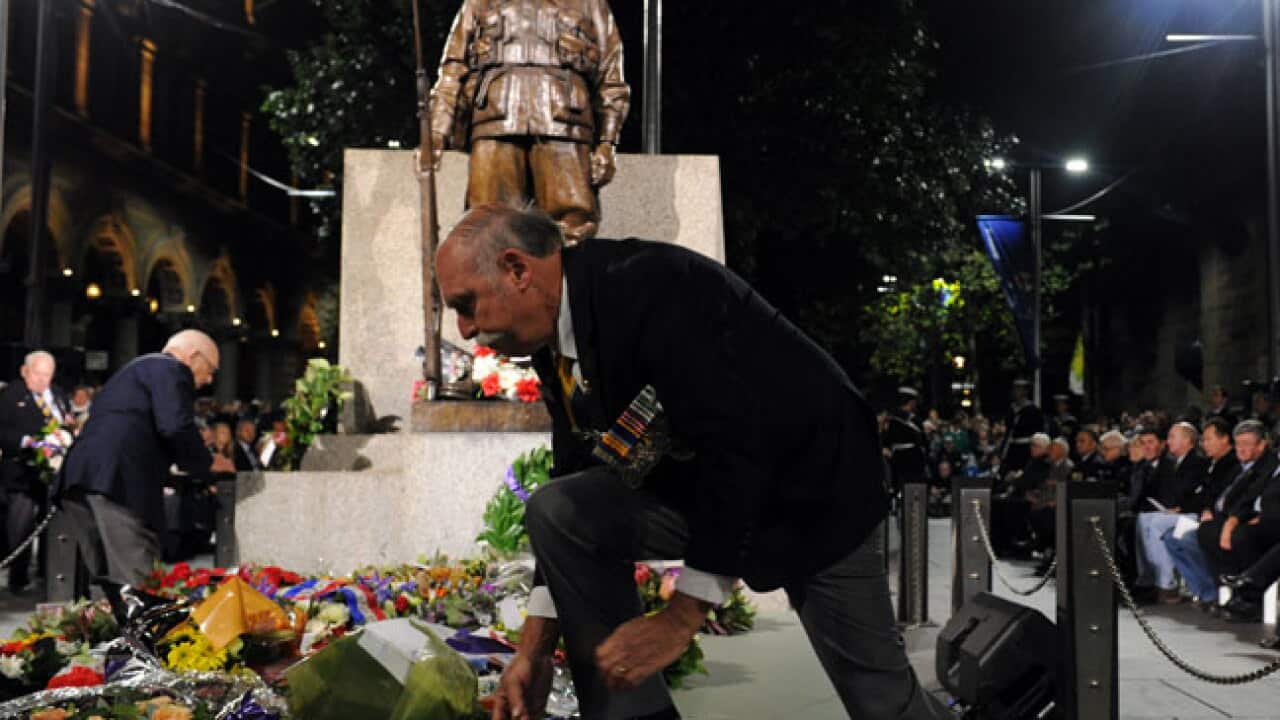
Thousands watched in the pre-dawn silence as representatives of Australia's war heroes paid their respects in an Anzac Day ceremony mirrored in cities around the country this morning.
Among them were descendants of those who fought at Gallipoli in World War I, past and present Australian soldiers and government officials.
Retired teacher Muzaffer Orel laid a wreath at the Martin Place Cenotaph in Sydney for the first time.
News that makes sense
Your trusted source for staying up-to-date with the world around you. Get free daily news updates and analysis, straight to your inbox.
Mr Orel was born in Turkey but migrated to Australia in 1971.
"We were opposite sides of the trenches in World War I," he says.
"My grandfather was not called in, because he was physically not fit to fight, but naturally, my home town was occupied by French people."
He hopes his presence will represent a "bridge of peace" between two cultures with a shared history.
"Although both sides say they all fought for what they thought was right... coming and looking from the Australian window, I feel both diggers and mehmets [Turkish soldiers] who fought deserve respect."
"I wish there was an alternative way of avoiding war. War is a horrible thing."
Participation in Anzac Day events is organised through the Returned & Services League (RSL). The rules over who is allowed to participate vary from state to state, or city to city, depending on which branch of the RSL is organising the events.
Bob Batty, Secretary of the Sydney Anzac Day March organised through NSW RSL says participation by the descendants of those who fought against Australia is a complex issue.
"That sort of varies. Turkey were allies of ours in Korea, so they're allowed to march. We were sort of enemies nearly 100 years ago."
The same rules don't apply to those descended from German and Japanese soldiers. "I'd be shot if I said they were allowed to march," says Mr Batty.
He doesn't see that restriction being lifted any time soon. "Not while the present generations are around."
However, that rule isn't relevant to those who have served in Australian defence forces.
The overriding rule, explains Mr Batty, is that "if they've served in our defence systems, they're allowed to march."
"We have all kinds of backgrounds in our defence force."







