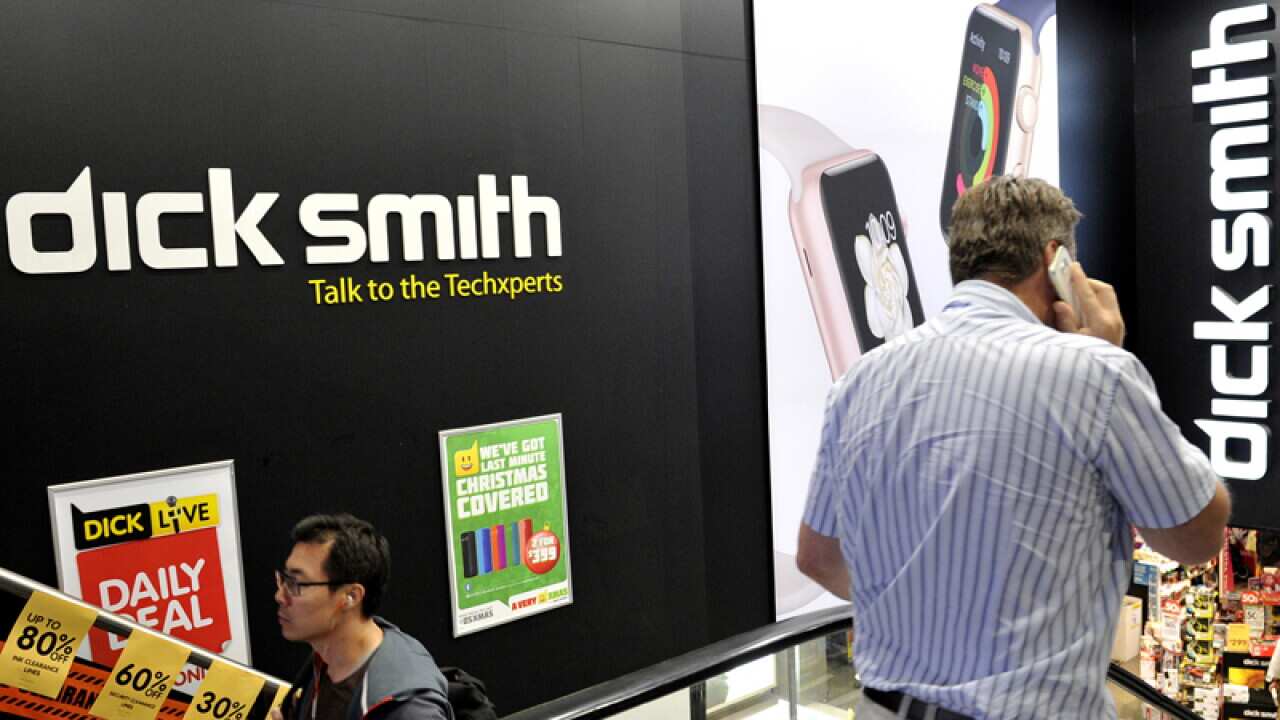
Dick Smith creditors have voted to wind up the electronics retailer in a bid to recoup losses but many remain unlikely to see any of the $260 million-plus owed to them by the collapsed business.
Administrator McGrathNicol will take over as liquidator of 10 companies within the Dick Smith group after creditors voted in favour of liquidation at a low-key meeting in central Sydney on Monday.
Dick Smith creditors face a shortfall of between $240 million to $275 million, administrator Joe Hayes told the meeting.
McGrathNicol, which was appointed administrator on January 4, will now focus on the task of recovering money for creditors.
Mr Hayes faced only one question, on whether McGrathNicol had looked into the assets of the directors of Dick Smith.
News that makes sense
Your trusted source for staying up-to-date with the world around you. Get free daily news updates and analysis, straight to your inbox.
He said receivers, who are working on behalf of Dick Smith's lenders, had looked at the directors and there were many questions to be answered.
As administrators, McGrathNicol has not delved into the assets of directors, but are likely to as liquidators.
Most of the meeting was taken up by Mr Hayes explaining the findings of McGrathNicol's recently released report into the collapse of Dick Smith.
The report estimated $101.6 million at best can be recovered from the sale of stock and other assets.
Secured creditors such as banks are expected to receive a partial return on their exposure, while unsecured creditors and shareholders are not expected to get any money back, Mr Hayes said .
Employee entitlements have been paid in full to more than 3,300 former Dick Smith staff.
Dick Smith's demise came as management focused on store expansion and revenue at the expense of sustainable growth, the administrators said.
The company was making purchasing decisions based on rebates paid by suppliers instead of customer demand.
Rebates were paid for marketing of the product and would often be booked as a profit in one quarter, and stock would later be written off after it failed to sell, administrators said.
This caused a build-up of stock and by October 2015, Dick Smith had $180 million in "active" inventory, which led to a major financial writedown.
The administrators believe Dick Smith may have been insolvent at least by December 23, 2015 - before the board called them in on January 4.
In addition Dick Smith was expanding its store count despite online shopping rising in popularity.
Dick Smith had 394 stores at the time of its collapse, compared to 205 stores for rival Harvey Norman, Mr Preston said.







