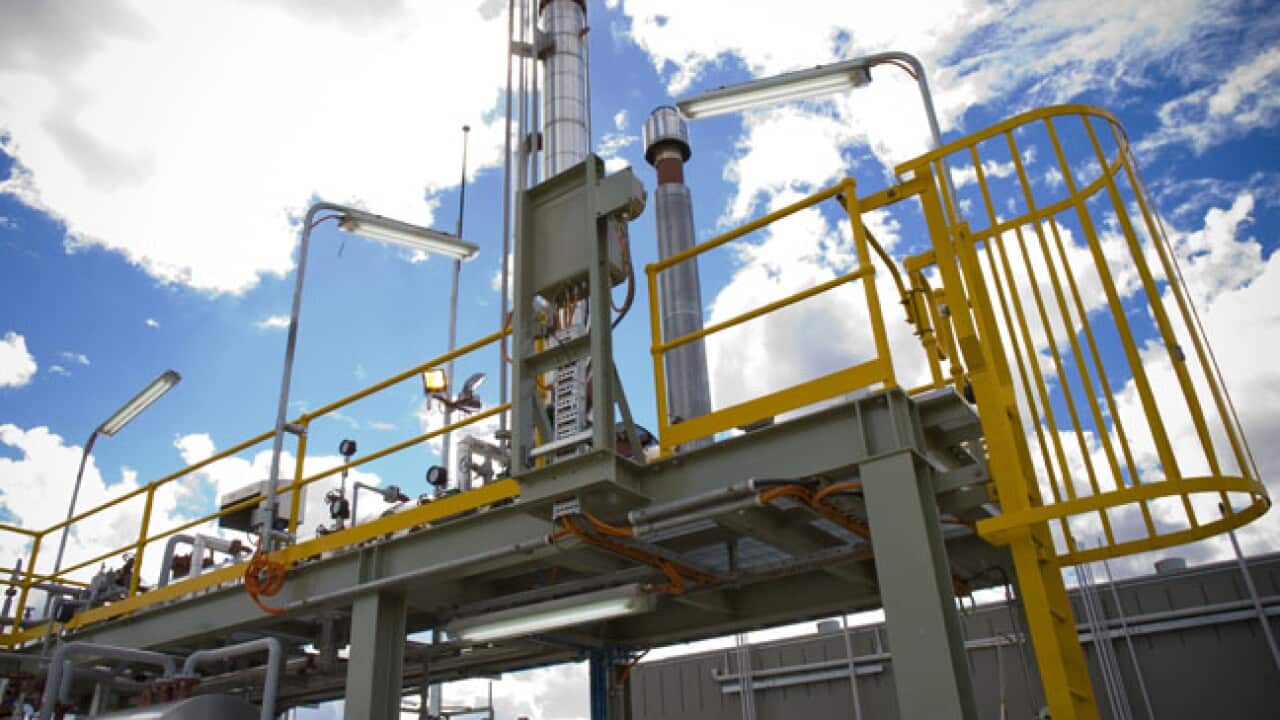
A northeast Ohio well used to dispose of wastewater from oil and gas drilling almost certainly caused a series of 11 minor quakes in the Youngstown area since last spring, a seismologist investigating the quakes says.
Research is continuing on the now-shuttered injection well at Youngstown and seismic activity, but it might take a year for the wastewater-related rumblings in the earth to dissipate, said John Armbruster of Columbia University's Lamont-Doherty Earth Observatory in Palisades, New York, on Monday.
Brine wastewater dumped in wells comes from drilling operations, including the so-called fracking process to extract gas from underground shale that has been a source of concern among environmental groups and some property owners.
Injection wells have also been suspected in quakes in Arkansas, Colorado and Oklahoma, Armbruster said.
Thousands of litres of brine were injected daily into the Youngstown well that opened in 2010 until its owner, Northstar Disposal Services LLC, agreed on Friday to stop injecting the waste into the earth as a precaution while authorities assessed any potential links to the quakes.
News that makes sense
Your trusted source for staying up-to-date with the world around you. Get free daily news updates and analysis, straight to your inbox.
After the latest and largest quake on Saturday at 4.0 magnitude, state officials announced their beliefs that injecting wastewater near a fault line had created enough pressure to cause seismic activity.
They said four inactive wells within an 8km radius of the Youngstown well would remain closed.
But they also stressed that injection wells are different from drilling wells that employ fracking. Armbruster said on Monday he expects more quakes will occur despite the shutdown of the Youngstown well.
"The earthquakes will trickle on as a kind of a cascading process once you've caused them to occur," he said. "This one year of pumping is a pulse that has been pushed into the ground, and it's going to be spreading out for at least a year."
The quakes began last March with the most recent on Christmas Eve and New Year's Eve each occurring within 100 metres of the injection well.
The Saturday quake in McDonald, outside of Youngstown, caused no serious injuries or property damage.
Youngstown Democrat Robert Hagan on Monday renewed his call for a moratorium on fracking and well injection disposal to allow a review of safety issues.
"If it's safe, I want to do it," he said in a telephone interview. "If it's not, I don't want to be part and parcel to destruction of the environment and the fake promise of jobs."
He said a moratorium "really is what we should be doing, mostly toward the injection wells, but we should be asking questions on drilling itself".
A spokesman for Governor John Kasich, an outspoken supporter of the growing oil and natural gas industry in Ohio, said the shale industry shouldn't be punished for a fracking byproduct.
"That would be the equivalent of shutting down the auto industry because a scrap tyre dump caught fire somewhere," said Kasich spokesman Rob Nichols.
He said 177 deep injection wells have operated without incident in Ohio for decades and the Youngstown well was closed within 24 hours of a study detailing how close a Christmas Eve quake was to the well.
The industry-supported Ohio Oil and Gas Association said the rash of quakes was "a rare and isolated event that should not cast doubt about the effectiveness" of injection wells.
Such wells "have been used safely and reliably as a disposal method for wastewater from oil and gas operations in the US since the 1930s," the association's executive vice president, Thomas E Stewart, said in a statement on Monday.
Environmentalists are critical of the hydraulic fracturing process, called fracking, which utilises chemical-laced water and sand to blast deep into the ground and free the shale gas.
Critics fear the process itself or the drilling liquid, which can contain carcinogens, could contaminate water supplies, either below ground, by spills, or in disposed wastewater.
Permits allowing hydraulic fracturing in Ohio's portion of the Marcellus and the deeper Utica Shale formations rose from one in 2006 to at least 32 in 2011.







