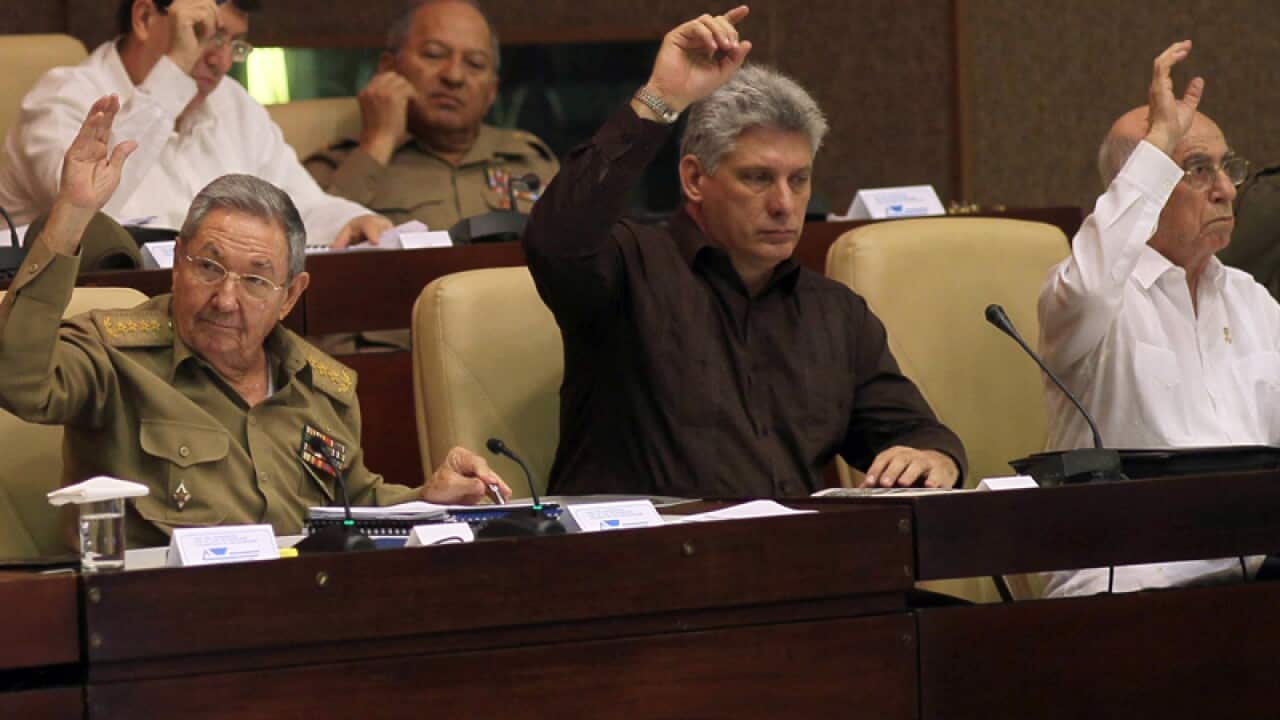
Cuban lawmakers have approved a law aimed at making Cuba more attractive to foreign investors, a measure seen as vital for the island's struggling economy.
Meeting in an extraordinary session, parliament replaced a 1995 foreign investment law that has lured less overseas capital than the island's Communist leaders had hoped.
Cuba's GDP expanded 2.7 per cent last year, below targets and weak for a developing country.
Government officials say the economy needs five to seven per cent annual growth to develop properly.
"Cuba needs from $US2 billion ($A2.17 billion) to $US2.5 billion a year in direct foreign investment to advance its socialist socio-economic model, prosperous and sustainable," said Marino Murillo, a vice president and the czar of President Raul Castro's economic reforms.
News that makes sense
Your trusted source for staying up-to-date with the world around you. Get free daily news updates and analysis, straight to your inbox.
"Not using those sources would retard national development," Murillo told lawmakers in comments broadcast on state television, where news of the approval was announced.
Murillo said Cuba will especially look for agricultural investment.
Foreign media were not given access to the closed-door meeting.
Some details of the legislation emerged in official media in recent days. Among other things, it would cut taxes on profits by about half, to 15 per cent, and make companies exempt from paying taxes for the first eight years of operation.
An exception would affect companies that exploit natural resources, such as nickel or fossil fuels. They could pay taxes as high as 50 per cent.
Meanwhile, many foreigners doing business with the island would be exempt from paying personal income tax.
Washington DC's 52-year-old economic embargo on Cuba prevents most US trade with the island and includes sanctions to discourage foreign outfits from doing business with Havana.
Cuban officials promise there will be no nationalisations of property, as happened after the 1959 Cuban Revolution, except in cases of national interest and only with compensation.
The investment law is a fundamental part of Castro's package of reforms, begun in 2008 with the stated goal of "updating" Cuba's economic model.
Hundreds of thousands of Cubans are now legally working independently of the state in a nascent private sector, though authorities say they are not abandoning socialism.
Former Cuban Central Bank economist Pavel Vidal said foreign investment has averaged 20 per cent less than forecast in the years since Castro's reforms began.
In a recent report, he wrote that the investment law represents "the last opportunity for the reform to come close to the growth goals planned through 2016".







