This audio is voiced by AI and may occasionally mispronounce words.
Share your feedback and help us improve this feature. Read more about how we use AI at SBS here.
Veronica Vazquez has always had curly hair, but she hasn't always embraced it.
Growing up in the countryside, she says her curls made her stand out.
"Everyone had straight blonde hair. I remember going to school, getting water from the bubbler and flattening all my hair down because it was just too much," she tells SBS News.
Inheriting her curls from her Spanish father, Vazquez says her mother, who is of Malaysian heritage, didn't have the tools or knowledge to style and manage curly hair.
Now a mother herself, she has watched her nine-year-old daughter, Ivory, who also has curly hair, face the same challenges of standing out among her peers at school.
News that makes sense
Your trusted source for staying up-to-date with the world around you. Get free daily news updates and analysis, straight to your inbox.
She says she's determined to break the cycle and empower her daughter to feel confident about her appearance.
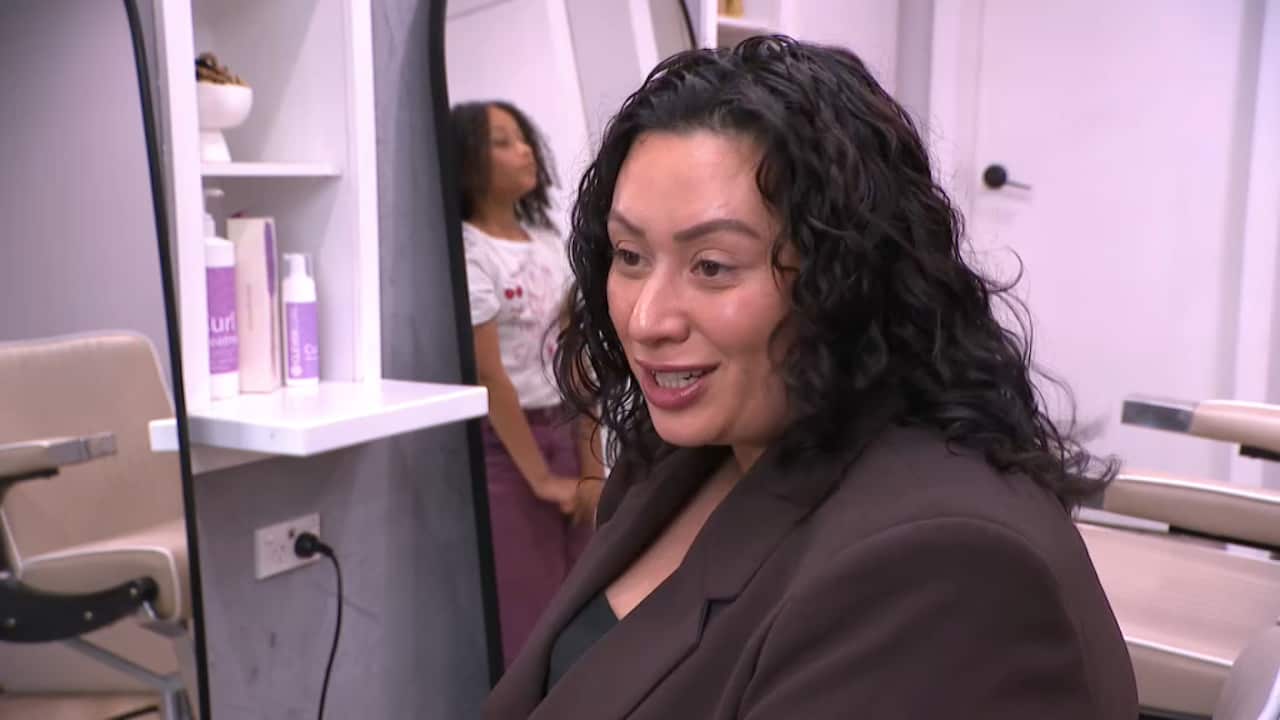
"I just have to embrace, educate and show her all the beautiful styles that are possible with curly hair."
For many Australians with curly, coily and afro-textured hair, finding a hairdresser with the right skills remains a challenge. Stylists say the problem starts in the classroom, where training has long failed to keep pace with the needs of textured hair.
Finding a stylist who understands curls
A horror haircut is a common experience within the curly hair community.
Unlike straight hair, curly, coily, afro or textured hair has a different structure that requires specialised cutting techniques. Experienced stylists often cut textured hair while it is dry to better understand how the curls fall and frame the face.
Vazquez and her daughter travel nearly two hours to Curl Lab in Sydney, a salon specialising in curly hair cuts and education, but she says it took years of trial and error to find the right place.
"We went to one salon, and they straightened Ivory's hair and cut it. Unfortunately, her hair is never straight, so by the time we've gone home, showered, the curls bounced up and it was just chopped everywhere," she says.
It's really no fault of the stylist; they're just not educated in how to cut curly hair.
Curl Lab owner Natasha Thandekafountas says the current hair education system teaches students the same cutting techniques for clients with both straight and textured or afro hair, rather than providing training tailored to different hair types.
"If you're cutting curly hair when it's straightened or wet, it's going to look good until the curls bounce up," Thandekafountas tells SBS News.
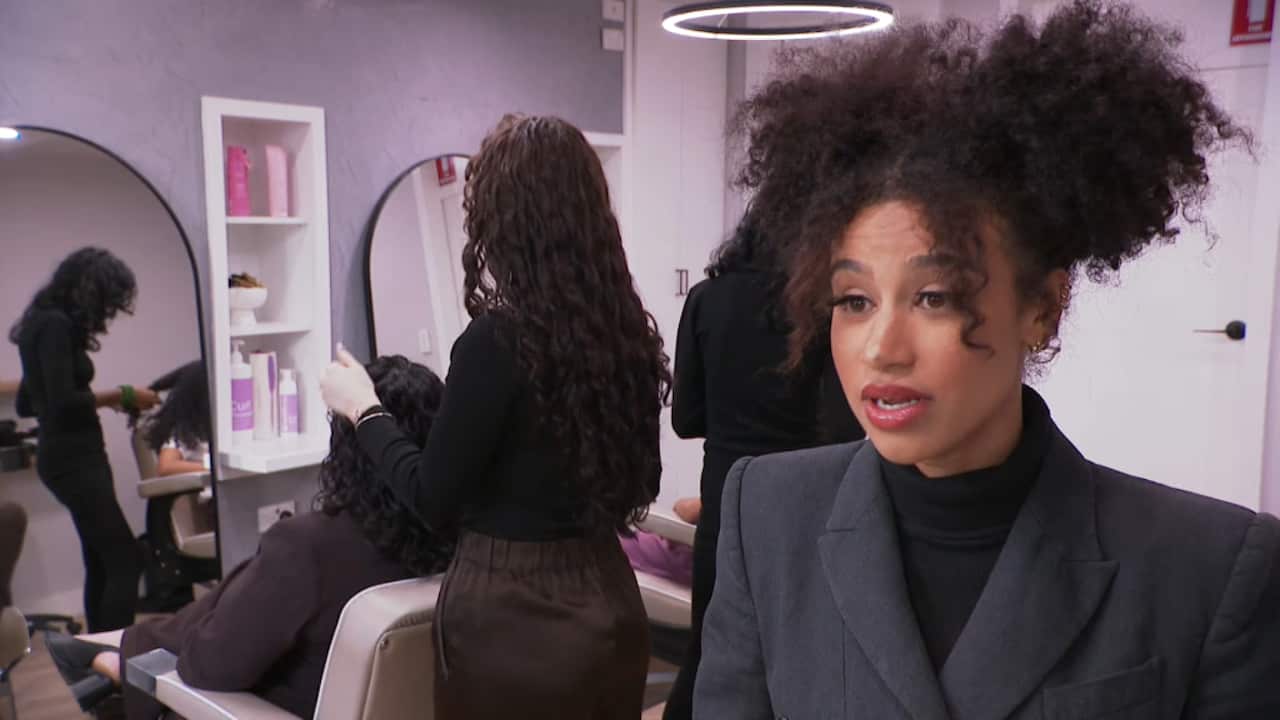
"We like to call it the 'Lord Farquaad' bob, so many clients come in for us to fix that," referring to the character from the film Shrek, who has a pageboy bob haircut.
How history shaped hair standards
The challenges faced by many people with curly and afro-textured hair are rooted in decades of beauty standards that experts say favoured straight hair.
Early anthropologists and naturalists once used the colour and texture of hair as markers of social hierarchy.
Farida Fozdar, a sociologist and professor of anthropology at Curtin University, says hair texture, much like race, was historically used to reinforce ideas about status, with so-called 'Caucasian hair' — blonde, light coloured or straight hair — often viewed as the ideal.
"There was a bit of a tendency to assume kinky, or curly hair was somehow abnormal or a lesser quality of hair," she tells SBS News.
"There were a number of researchers who described it as 'woolly' hair, suggesting it was more like animals."
Fozdar says those attitudes began to shift as Australia became more culturally diverse following the end of the White Australia policy and the increase in migration from the 1960s onwards.
"People who migrated in the 60s, 70s and 80s found it very difficult to find hair salons, but there is a growing awareness about the need to cater to populations who are different," she says.
While specialist salons are now becoming more common, many stylists say education and training have struggled to keep pace with Australia's diverse population.
Why hairdressing education is falling short
More than a decade ago, afro and curly hair education became part of the national training curriculum developed by Service and Creative Skills Australia (SaCSA), the Jobs and Skills Council for personal services.
However, the content is delivered as optional training in some qualifications, meaning many apprentice hairdressers can complete their studies with little or no practical experience working with textured hair.
In some states, including NSW, there's an elective unit on using a protein treatment to relax curly hair that teaches professionals to analyse hair, select products, apply heat, and smooth curls.
Amelia Canet, a curl stylist based in Sydney, says the standard hairdressing training qualification doesn't adequately cover the basics.
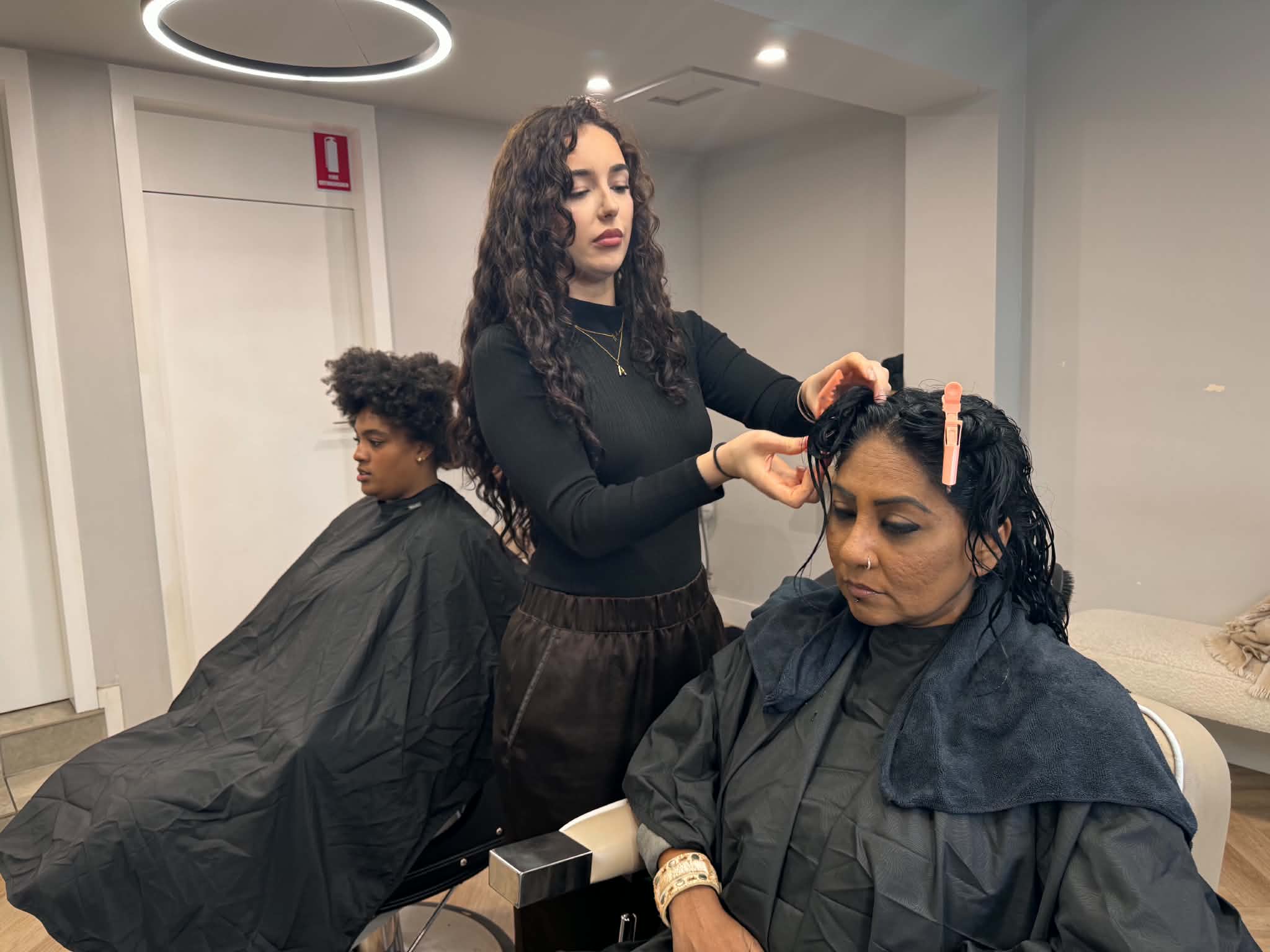
"There wasn't any curl education at all. If we did have any textured clients, we were told just blow-dry them," she tells SBS News.
Other curly stylists, like Tulsi Prasad, say they had to take matters into their own hands and teach themselves to cut and style textured hair.
"I just had to learn on my own, watch my own videos, do my own private course, but go through TAFE to learn the proper ways to do everything else," she tells SBS News.
Salon owner Thandekafountas says she invests heavily in training because graduates often arrive without the skills needed to confidently work with textured hair. She sets aside a portion of the business budget to train new staff.
"We need to catch up. Close that gap and really have things mainstreamed," she says.
"How come we're not being serviced in the same way someone with straight hair is?"
It's not just hair; it's our identity, it's our culture, and for so long we've been told that it's too big, it's too busy, it's not professional. So we really want to change that image.
The push for curriculum reform
In March 2025, SaCSA began reviewing and updating its standards for some of the hairdressing and barbering qualifications to ensure they align with current industry practice and workforce needs.
Part of its proposal includes recommendations for three new units focusing on cutting and colouring curly and coily hair.
Natalie Turmine, CEO of SaCSA, says learners will also gain knowledge of the history and culture of curly and coily hair, but adds there isn't enough demand in the industry for the units to become compulsory parts of the curriculum.
"As demand and industry become more aware and more customers are coming in and that demand builds, then we'll be able to look at potentially building in skill sets and building it in as a mandatory part of the qualification," she tells SBS News.
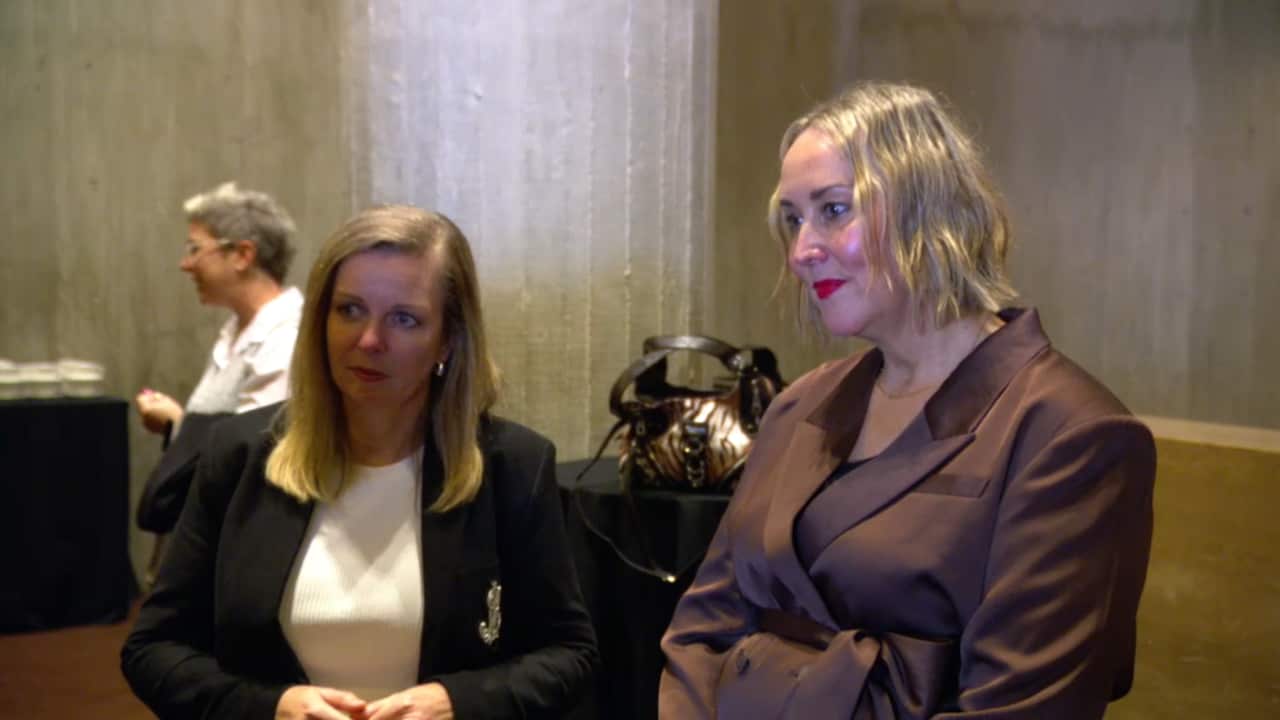
For the hairdressing industry, the recommendations represent more than just new training units — they signal growing recognition of the need for textured hair education.
Fiona Beamish, CEO of the Australian Hairdressing Council, says the proposed reforms are a significant first step and hopes the units will eventually become compulsory.
"Data tells us that we are ready for this training package to include these units and I'd like to think in the future we could have this as a mandatory training package," she tells SBS News.
Driving change from within the industry
The push for better training comes as the hairdressing industry continues to grapple with a shortage of skilled workers.
According to Jobs and Skills Australia, only 45 per cent of advertised hairdressing roles were filled in 2022-23, with 85 per cent of applicants deemed unsuitable.
A 2026 SaCSA report examining the drivers behind the hairdressing workforce shortage found the sustainability issue is largely linked to "outdated course content and insufficient workforce preparation", raising broader questions about whether current training is meeting the industry's needs.
Sydney hairstylist and educator Chrissy Zemura has spent years delivering private courses and professional education, and creating products for customers with textured hair.
In 2020, she started an online petition calling for a mandatory module on curly and afro-textured hair, which attracted more than 42,000 signatures.
"While the curriculum is the mountain peak, a lot has changed over the past six years, including people's mindsets," Zemura tells SBS News.
SaCSA says the updated training recommendations are in the final stages of review with state and federal departments. They will then be assessed by the Assurance Body before the new training package is published early next year.
For the latest from SBS News, download our app and subscribe to our newsletter.







