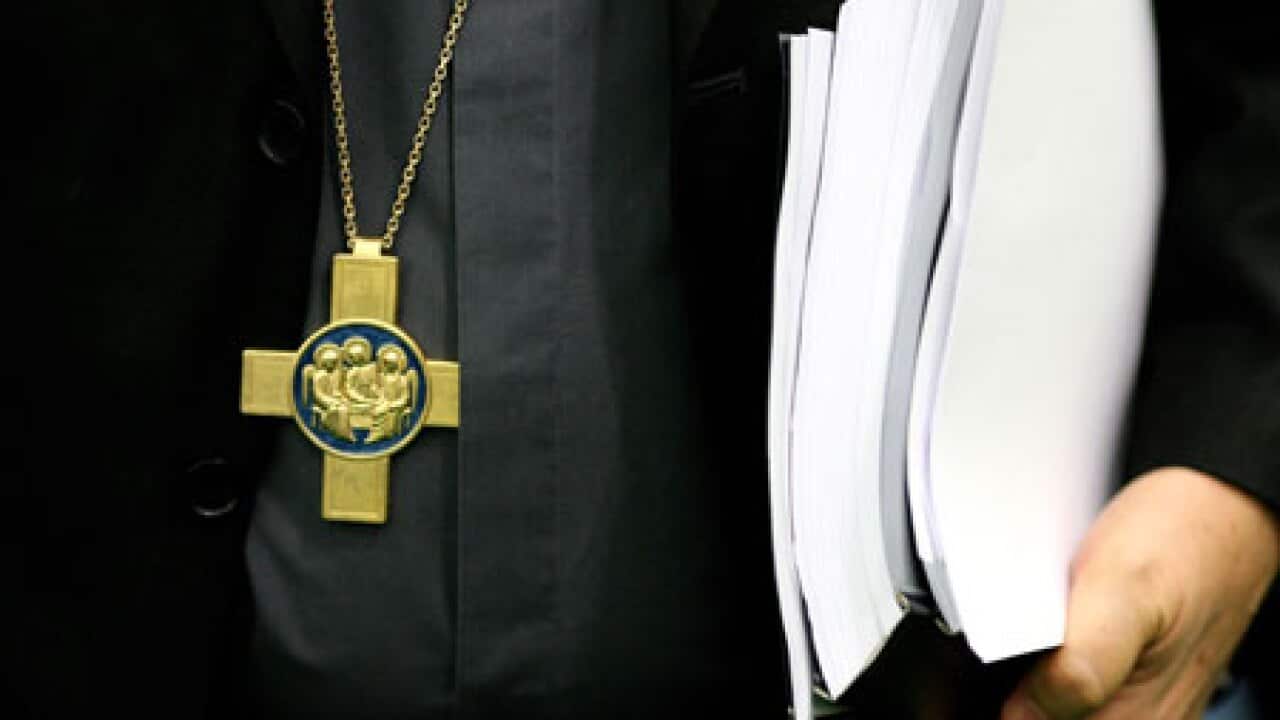
The child abuse scandals rocking Belgium's powerful Catholic Church are also shaking the faith of followers, with more and more people asking to be struck off baptism registers -- a global movement known as "de-baptism".
"When you don't agree with an organisation that you never chose to join in the first place, the healthiest thing to do is to leave," Damien Spleeters told AFP.
In this mainly Catholic country of 10 million people, the 24-year-old is among a growing crowd exasperated by church policy on issues such as AIDS, and angered by revelations last year of massive child abuse by priests and lay workers.
News that makes sense
Your trusted source for staying up-to-date with the world around you. Get free daily news updates and analysis, straight to your inbox.
After reports in April that the Bishop of Bruges had sexually abused his own nephew for 13 years, starting when the boy was five, a church-backed commission in September issued graphic testimony of nearly 500 cases of child abuse by priests and lay workers, including 13 victims who committed suicide.
Spleeters last year wrote to the bishop overseeing the parish where his parents had him christened as a baby to announce he no longer wanted the church "to speak in his name" so was requesting to be struck off the baptism register.
"Whilst we deplore your decision," replied Abbot Jean-Pierre Lorette, "the Catholic Church respects each individual's freedom and will not hold back against their will those who wish to leave it."
Spleeters, the priest added, was in consequence "logically" excommunicated.
In an interview, the young Brussels resident said "I don't consider myself an atheist" but explained he turned to de-baptism due to growing irritation with the Catholic hierarchy.
The move was not uncommon, said Daniel Leclerq of the group "Friends of Secular Morality".
"Pope Benedict XVI's statements against condoms, the appointment of a conservative -- Andre-Joseph Leonard -- to head the Belgian church in early 2010, and the child abuse revelations have led to a hike in de-baptisms," Leclerq said.
While national statistics are unavailable on the number of people seeking to quit the church, Friends of Secular Morality, which is active in four of Belgium's 10 provinces, said it has been helping increasing numbers to de-baptise.
"In 2010, we worked on 1,700 cases compared to 380 in 2009 and only 66 in 2008", Leclerq said.
The church itself played down the phenomenon.
"The percentage is tiny compared to the size of Belgium's Catholic community," said Tommy Scholtes, spokesman for the country's bishops. "It's only understandable that people will come into conflict with an institution, but one incident can't topple the entire institution."
The church says a large proportion of Belgians remain faithful: in 2008, 64 percent of the population was baptised, 26 percent held church weddings and 65 percent had religious funerals. The figures show little change from previous years.
But an opinion poll last week showed only eight percent of Belgians had confidence in the institution compared to 28 percent in October 2009.
In practise, de-baptism consists in writing to the church where the christening took place. The name is not actually struck off but noted on the baptismal registry, meaning that those who decide to leave cannot be married in the church or expect a Catholic funeral.
The trend has gained a substantial following worldwide with atheist groups and secular societies backing online de-baptism for people who see churches as being increasingly out of tune with modern life.
But in Belgium the chord struck hard amid last year's child abuse scandals, the latest country after the United States, Ireland and Germany to face fallout over paedophilia priests.
While the church has apologised for the abuses and admitted "inadequate" handling of the cases, victims complain it has not proposed compensation.
Last month, Archbishop Leonard, the Catholic primate who is a conservative close to Pope Benedict XVI, drew further fire on telling a parliamentary inquiry that compensation was a decision for the courts to take.
Civil authorities should decide whether an institution must pay damages when its leaders "are not personally implicated in the crimes," he said.
"They have become masters in sweeping the dirt under the carpet," said Spleeters.







