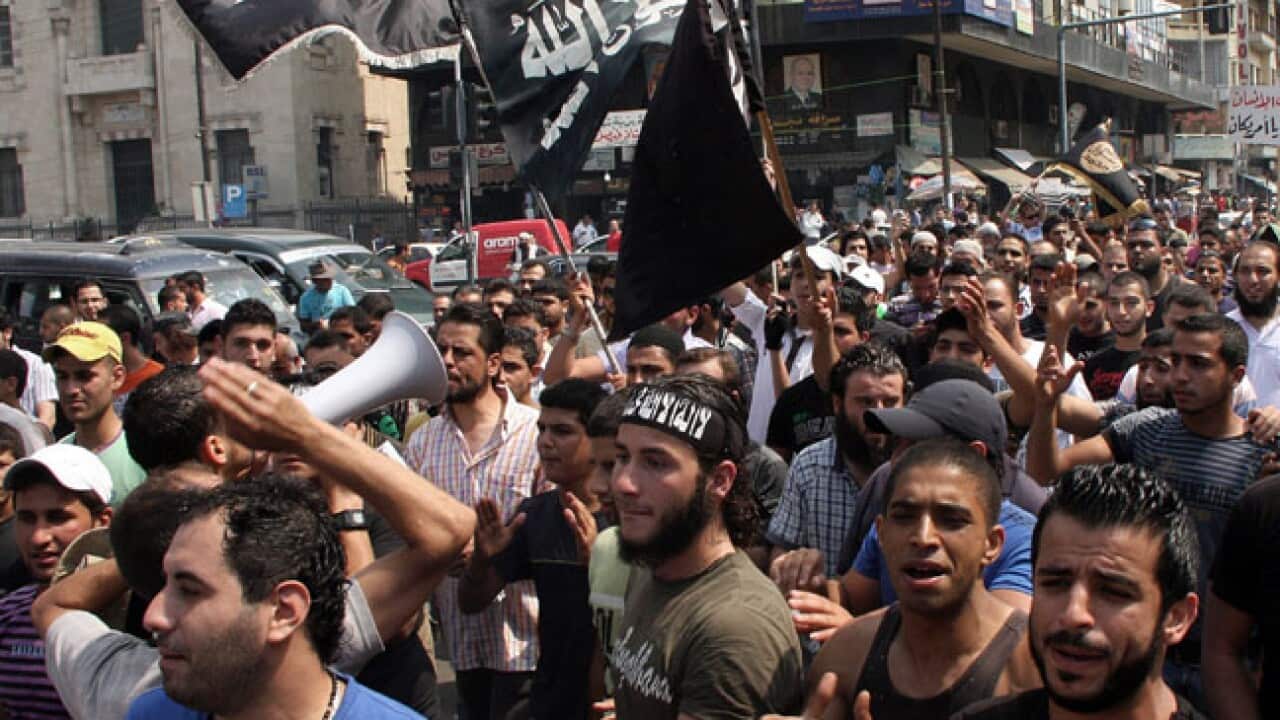
Three people were killed in the central city of Homs, one of them a teenager, and another two in the northeastern province of Deir Ezzor, the activists said, citing residents, as both the pro- and anti-Assad camps took to the streets.
After relatives buried the 14-year-old in Homs, security forces fired on mourners leaving the cemetery, causing casualties, an activist who was present said.
News that makes sense
Your trusted source for staying up-to-date with the world around you. Get free daily news updates and analysis, straight to your inbox.
On the humanitarian front, International Committee of the Red Cross president Jakob Kellenberger said after talks with Syrian authorities that the ICRC has been granted access to areas and people affected by the unrest.
Meanwhile, the UN High Commissioner for Refugees, which took part in a mission organised by the government to Jisr al-Shughur near the border with Turkey, said that villages in the flashpoint area were mostly deserted.
"A UNHCR staff member reported that villages were increasingly empty from around 40 kilometres (25 miles) from Jisr al-Shughur," said UNHCR spokesman Adrian Edwards. "There was no evidence of people working in the fields."
At the forefront of criticism of the Syrian authorities, France called for UN Security Council intervention.
"The UN Security Council cannot remain silent for much longer," French Prime Minister Francois Fillon said at a joint press conference in Paris with his Russian counterpart Vladimir Putin.
But Putin said: "We believe that interference in the sovereign matters of independent states shows little promise."
Western governments have been circulating a draft Security Council resolution that would condemn Assad's crackdown but Russia has warned it would veto any such move.
UN Secretary General Ban Ki-moon urged Assad to make credible reforms "without delay."
"He urges the president to carry on these reforms without delay and in a way that is both genuine and credible," Ban's spokesman Martin Nesirky said.
The reforms, he said, "should be part of a broad and inclusive process of change and democratisation."
Following up on a keynote speech he delivered on Monday, the state news agency SANA said Assad had "issued a decree granting a general amnesty for crimes committed before the date of June 20, 2011."
The president had already ordered a general amnesty on May 31 for all political prisoners, including Muslim Brotherhood members. Hundreds of detainees were released, according to human rights groups.
"I sensed that that amnesty was not satisfactory so we are going to extend it to include others, without endangering the security of the state," Assad said in his televised speech.
Tens of thousands of people, meanwhile, rallied in central Damascus.
Omeyyades Square was turned into a sea of pro-Assad demonstrators, waving Syrian flags and the president's portrait, chanting: "We will sacrifice ourselves for you, Bashar!"
State television said a huge pro-Assad demonstration was also held in Homs, a flashpoint city north of Damascus. "Millions of Syrians" flocked to squares around the country to hail his speech, it said.
In the address, three months into anti-regime protests and a crackdown by security forces that has cost hundreds of lives, Assad said a national dialogue could lead to a new constitution but refused to reform Syria under "chaos."
Pro-democracy activists condemned the speech and vowed the "revolution" -- now in its fourth month -- would carry on, while the US State Department called for "action, not words."
Witnesses and opposition activists said Assad's speech was followed by protests in many parts of Syria, including the northern city of Aleppo, the central regions of Homs and Hama, and in Damascus suburbs.
"The protesters condemned the speech which branded them as saboteurs, extremists," the head of the London-based Syrian Observatory for Human Rights, Rami Abdel Rahman, told AFP by telephone.
Sixty demonstrators were arrested in Aleppo in 24 hours, said Abdel Rahman, whose group says the violence has so far killed 1,310 civilians and 341 security force members since the protests erupted in mid-March.
Opposition activists said Assad's speech failed to specify concrete steps such as the pullout of troops from besieged cities and only deepened the crisis.







