

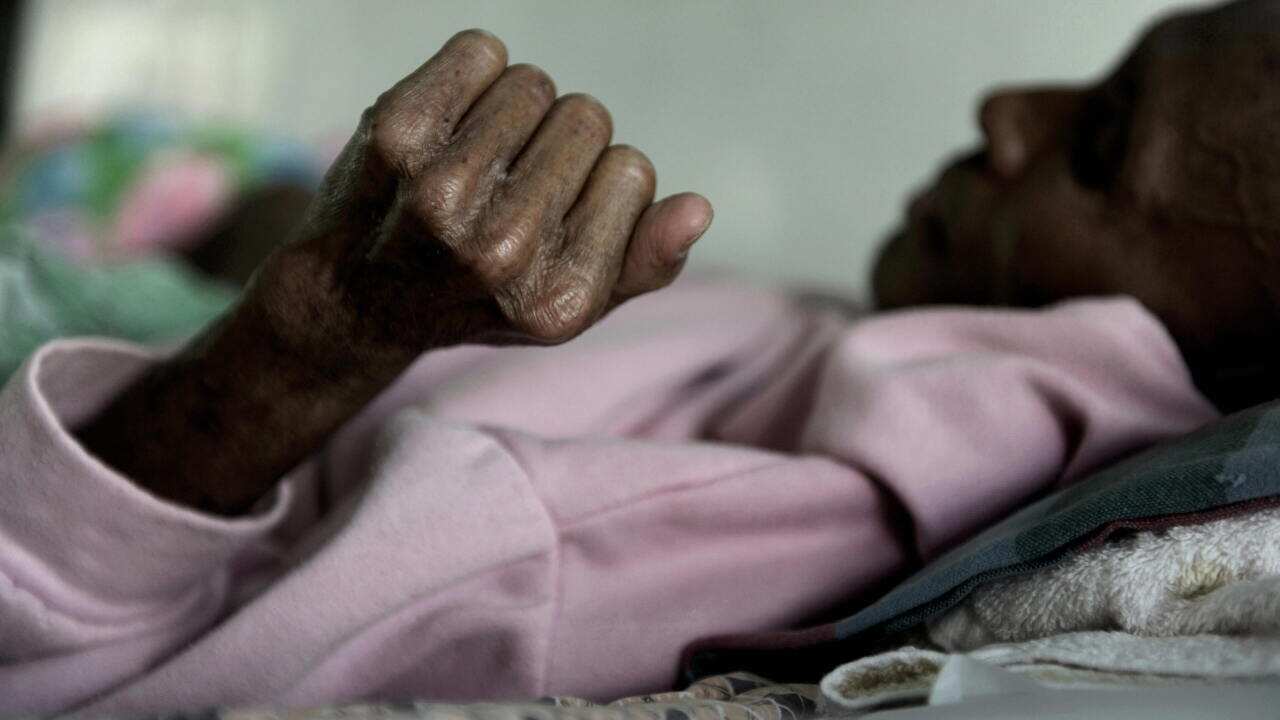
Researchers in Australia and other parts of the world are coming up with some novel ways to ease the process of dying for individuals and those who love them.
And as a new federal government takes over, lobby group Palliative Care Australia is urging the Coalition to improve access to end-of-life care.
Peggy Giakoumelos has the details.
News that makes sense
Your trusted source for staying up-to-date with the world around you. Get free daily news updates and analysis, straight to your inbox.
"I am a Ngangkari and my work is as a traditional healer. In a camp where someone is passing away, a family member will come and speak to me and ask me to go and help. So I go and see this person who is very sick, dying and I will put my hands on them and give them a gentle healing treatment."
That's traditional healer Ilawanti Ken speaking through interpreter Linda Rive in Pitjantjatjara, one of the languages from the Central Western Desert region of Australia.
Also known as ngangkari, traditional Aboriginal healers play a pivotal role in the end of life care of many Aboriginal people in Central Australia.
As employees of the NPY Women's Council in Alice Springs, for Ilawanti Ken and Maringka Burton, taking care of the dying in their communities is a full-time job.
They believe in the power of combining both Western and traditional approaches in palliative care.
Maringka Burton explains what they do.
"Our work is very busy. 24/7 we work very hard looking after our own people, in our homes and camps but also in our clinic. So we work cooperatively with the clinic on men, women and children, making sure everyone's comfortable and safe and our main job, is to reposition people's spirits, so that they experience comfort and harmony and balance within their own bodies. That's our work and it's really important."
The work done by ngangkari highlights one of the ways palliative care is provided in Indigenous communities in Australia.
But in a country where over a quarter of the population were born overseas, there are also many other practices among different ethnic communities.
Palliative Care Australia says 60 per cent of people who die every year would benefit from palliative care but only around 25 per cent will get this type of care.
The organisation says access to palliative care in Australia is a lottery, based on factors such as location, diagnosis, age and cultural background, all dramatically affecting the level of care one is likely to get.
The Federation of Ethnic Communities of Australia says there's a distinct lack of data and research into the palliative care needs of different cultural groups in Australia and they say many people are going through unneccesary pain.
Mary Heidenreich is a clinical nurse specialist in palliative care and she's also completing research through the University of Sydney looking at the palliative care needs of Chinese Australians in Sydney.
She was inspired to do the research after visiting a young family from mainland China living in Sydney and realising that it was only by chance that they had access to palliative care services.
"They were from mainland China and they were living with her husband's parents. The young woman with young children, she had very poor English language skills. He had better language skills. She had very complex disease and very complex symptoms and it brought home to me the dilemma of these people not being able to communicate, being in such dire straits. And that we really weren't reaching them. We were able to help this family but I wondered how many other people there were out there under similar circumstances."
Mary Heidenreich says cultural beliefs around death and dying continue to influence how many Australians spend their final moments.
"In palliative care there's no Chinese interpretation of that and there's huge cultural taboos about talking about death and dying and mainly the focus is on cure. We look after a lot of cancer patients, so it's usually cancer. There are blended beliefs of Confucianism, Buddhism and Daoism and you're looking at people who think that perhaps somebody in their past, in their family has done something bad and it's bad karma. Or they've done something wrong in their life and they're having to repay for that wrong. There's a strong Confucius culture that's it's a family issue to care for their own people. So if they access a service they are showing their own community that they're not coping. So it's a stigma associated with that."
Mary Heidenreich is in the process of developing a tool that will give health workers guidelines on how to make palliative care services more accessible to the Chinese-Australian community.
The resource will be targeted at those working in the palliative care sector, especially oncologists and nurses.
In Melbourne, Philippa Sweeney is an Assistant Nurse Unit Manager at a palliative care unit in the suburb of Broadmeadows.
It's a job that she loves.
"As challenging as it is, you go home knowing that you've provided really good care for people that are dying and you know I've obviously seen really good deaths, and I've seen really bad deaths. But people's perception of death is often like the movies, where we close our eyes and go to sleep - and it's not often like that. And so being able to care for someone in their last days and their last hours and caring for the family is very affirming. Apart from getting paid for it, you go home feeling like you really have made a difference."
Philippa Sweeney has noticed a spike in the number of patients from different cultural backgrounds coming into her unit.
In the process, she's realised that some of the unit's services, such as its bereavement program, were no longer relevant.
She instituted some changes to try and make the remembrance service more appealing to a broader cross-section of people.
"What we did was we changed the invitation we sent them out in multiple languages and we got good feedback from carers and families saying it was good to read it in my own language. I could read it to my mum, she understood. So we were getting some really good positive feedback about that one thing."
The service is held every six months and while it was non-denominational, the unit was noticing it was failing to attract families from non-English speaking backgrounds.
Since putting in place changes at the beginning of this year, Philippa Sweeney says the changes have been influencing other parts of the unit as well, a pattern she hopes will continue.
"We changed the service from a memorial service to remembrance evening. We've had one service since we made the changes and we're having them every six months, and we're sort of expecting that there will be a change. But also we're immersing the staff in more ongoing training around cultural differences and practices, that's an ongoing positive too."
Palliative Care Australia wants the federal government to make palliative care a priority issue by responding within its first 100 days in office to the recommendations made by a Senate Inquiry into Palliative Care.
Rcommendations made by the inquiry in late 2012 included training and education about cultural perspectives relating to palliative and end-of-life care issues in the core curricula for all health workers and health practitioners.
The inquiry also recommended that service delivery models include a greater emphasis on community-based care, dying at home - and a reduction in unnecessary hospital admissions.
Feature by Peggy Giakoumelosin