In brief
- Last week, US President Donald Trump barred CNN, Politico and MS NOW from the White House.
- Other media outlets have now suspended pool operations to oppose the ban.
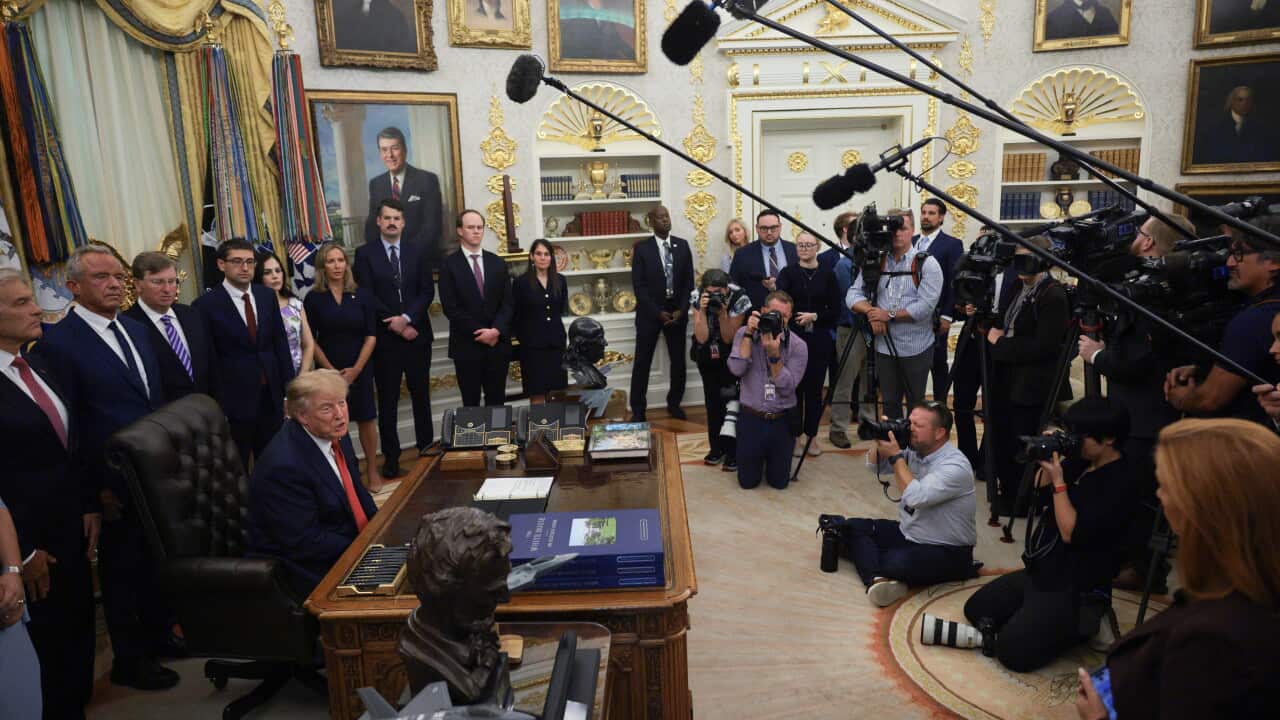
Major United States media outlets from across the political divide have come together in rare solidarity to oppose US President Donald Trump's unprecedented ban on several organisations, including CNN, from the White House.
Trump last week announced he was barring CNN, Politico and MS NOW (formerly MSNBC) from the White House, accusing them of spreading "fake news".
The outlets have since filed a legal challenge, arguing the ban violated the First Amendment of the US constitution, which protects free speech and press freedom.
Other major outlets have now suspended pool coverage — an arrangement in which media share footage from events — of Trump in solidarity with the banned outlets.
The decision could affect Australian media organisations, including SBS, that have share arrangements with US outlets.
News that makes sense
Your trusted source for staying up-to-date with the world around you. Get free daily news updates and analysis, straight to your inbox.
What happened?
On Friday, Trump announced that he was banning the three outlets from the White House grounds.
"The White House is not instituting an assault on the Free Press, something which I cherish. It is instituting an assault on the FAKE NEWS. It is a threat to our National Security, and must be stopped, NOW!" Trump said on social media on Monday, without providing evidence of a national security threat.
Trump, who has long had a contentious relationship with the media, said there was no specific incident that had prompted the ban, but warned others would follow.
"It's really just cumulative stories over the past few years," he told reporters.
"I don't have to let them into my, into the people's house."
Within 10 minutes of Trump's announcement, CNN contacted MS NOW and Politico to discuss joint legal action, Reuters reported, citing confidential sources.
On Monday, they announced a joint lawsuit against Trump and other administration officials, arguing that the move violated press freedom and free speech rights protected under the US constitution's First Amendment.
"Left unchallenged, this threatens press freedom and the public's right to independent journalism free from government interference," they said in a joint statement.
"The government does not decide what the press reports or publishes."
However, vice president JD Vance rejected the suggestion they'd been banned, saying they had instead lost what he called "special access".
A hearing is scheduled in federal court in Washington, DC, on Wednesday, with the outlets seeking a temporary restraining order that would overturn the ban.
While the ban prohibits the outlets from the White House grounds, it does not restrict them from reporting on Trump.
How have other outlets responded?
CNN was among the five outlets that make up the primary White House television pool, along with ABC, CBS, Fox News and NBC.
They share the costs of covering the president, take turns organising coverage and share the footage with outlets both domestically and internationally.
The others now say they will suspend presidential pool arrangements in solidarity with CNN.
"The public has a vital interest in receiving accurate, independent information about its government. No administration should restrict a news organisation because it objects to its reporting," ABC, CBS, CNN, Fox and NBC said in a statement.
The move gives the outlet some leverage by removing the most widely used video source for White House.
It comes during a busy week for Trump, who is attending the United Nations General Assembly in New York and has a meeting planned with Chinese President Xi Jinping at the White House.
Footage emerged on Monday of a ribbon-cutting ceremony for the new South Lawn helipad at the White House.
While Trump was seen cutting a ribbon at the walkway to the new helipad and speaking with construction workers, his remarks could not be heard.
A host on the conservative outlet Newsmax said there was no microphone because the pool cameras were not present for the event.
It's not the first time Trump has banned media from covering his administration, but he has stepped up his targeting of the press during his second term.
Last year, Trump banned the Associated Press from the pool of reporters that cover his movements because the news agency did not adopt his preferred name for the Gulf of Mexico. His administration has also limited many journalists' access to the Pentagon.
Why does it matter?
Australian journalist and press freedom advocate Peter Greste said the decision pressured banned news outlets to change their coverage, but it also sent a clear signal to other organisations that they could lose access at any moment.
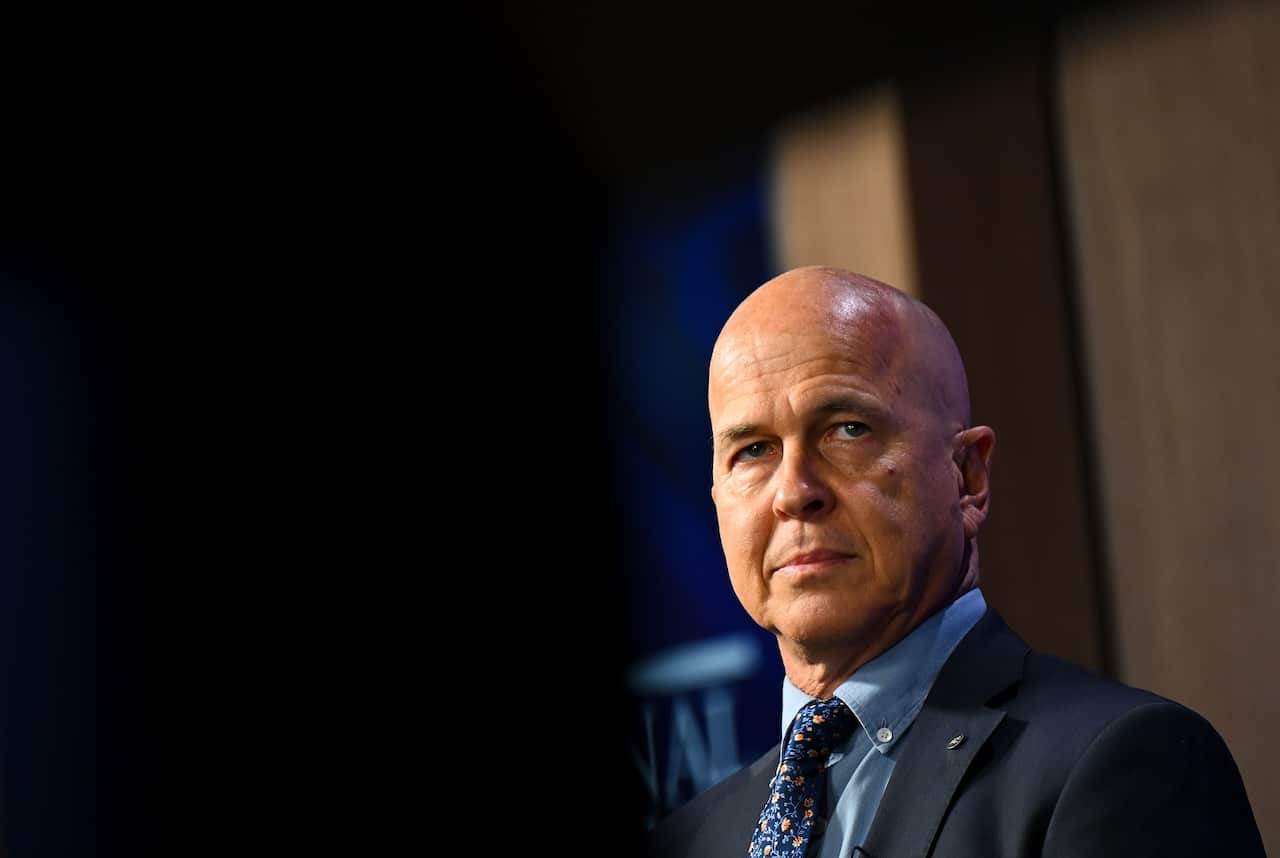
"Another critical point is that it sullies or taints the way that people read the stories of those that remain, because they will be seen as people that the White House hasn't rejected," he told SBS News.
He said he wasn't surprised they had decided on an effective boycott because it was in all of their interests to overturn the decision.
Greste pointed out that, unlike in the US, freedom of the press was not enshrined in the Australian constitution.
"This case is a powerful reminder of two things. First of all, that we cannot ever take these principles for granted, particularly when they're grounded in democratic norms rather than solid law, and secondly, you need the law as a backstop," he said.
"In Australia, we don't have that, and I think that puts us in a very precarious position."
One Nation has recently banned the ABC, the Guardian and Nine newspapers from press conferences and official events, claiming their reporting was unfair.
What does this mean for Australia?
Many Australian news outlets have share arrangements with US networks, including SBS News with CNN, meaning news coverage of the White House is likely to be limited.
Network 10 is a subsidiary of Paramount, which also owns CBS and is taking part in the boycott.
News24 is affiliated with Fox News through shared ownership by the Murdoch family, though they are owned by separate entities (News Corporation and Fox Corporation respectively).
SBS News contacted Australian networks about how the ban and boycott will affect news coverage.
For the latest from SBS News, download our app and subscribe to our newsletter.







