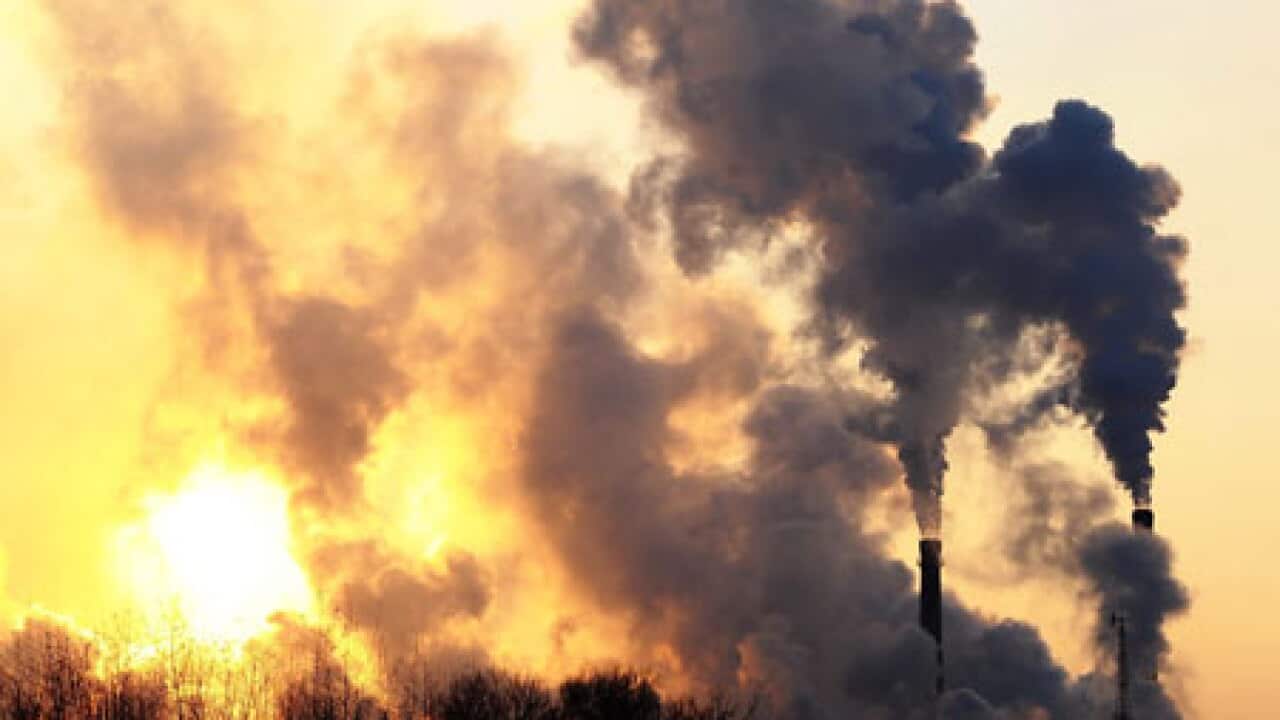
Greenhouse gas emissions from energy use across the eastern states have declined substantially over the past year, new data shows.
International non-governmental organisation, The Climate Group, tracked the 2009 weekly energy consumption in Victoria, NSW, Queensland and South Australia.
Overall, emissions were down by 5.3 million tonnes on the previous year, a cut of 1.8 per cent, the data found.
The main factor was cuts to electricity from coal, down 3.1 per cent.
Electricity generation from all sources fell 1.9 per cent and emissions from petroleum also fell by 0.8 per cent. While emission reduction happened in all states, the cuts weren't uniform.
News that makes sense
Your trusted source for staying up-to-date with the world around you. Get free daily news updates and analysis, straight to your inbox.
Victoria and Queensland made the least progress, with a decline of just 0.5 per cent and 1.1 per cent respectively.
Victorians used less gas-fired electricity and petrol, but increased emissions from coal. Queenslanders used less coal but increased gas-fired generation by more than 20 per cent because of new power stations.
NSW and South Australia made cuts of 3.1 per cent and 4.2 per cent respectively, with NSW reducing its reliance on coal by 6.3 per cent. South Australia's result was mainly due to cuts to gas-fired generation.
The states' combined emission reductions comes on the back of a 1.3 per cent increase the previous year. But the numbers still represent a jump of 9.6 per cent on 2000 levels.
Despite this, The Climate Group says the 2009 cuts are "substantial".
"If we were to continue to cut by this much each year, emissions from energy would be almost 20 per cent lower by 2020," Australian director Rupert Posner said in a statement.
But that's an unlikely scenario because the economy is due to bounce back from the financial crisis, he said.
"Continued reductions will be much harder to achieve unless we start to change the way we produce and use energy in a much more meaningful way."







