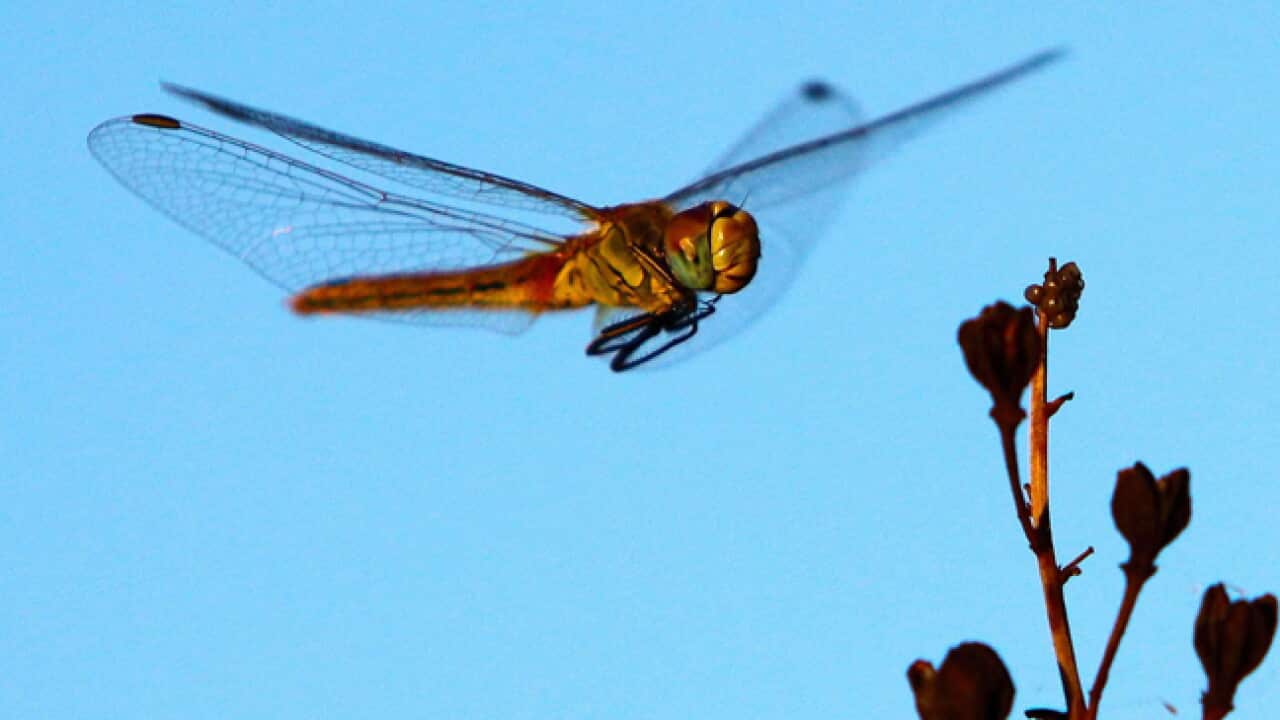
Microchips attached to dragonflies are being used to unravel the mysteries of the insects' flight pattern and may help make advances in robotic flight technology.
Dragonflies capture their prey mid-flight, requiring precise control of horizontal and vertical movement to line up their meal with their mouths.
"Dragonfly wings almost swim through the air," says electrical engineer Matt Reynolds from Duke University. "They have many more degrees of freedom than an airplane's wing."
News that makes sense
Your trusted source for staying up-to-date with the world around you. Get free daily news updates and analysis, straight to your inbox.
The microchip attached to the dragonfly is 38 milligrams, weighing just one-tenth of what a dragonfly does, and doesn't interfere with its ability to fly and hunt. It's so light because it's powered wirelessly and can transmit data at the rate of five megabits per second - about the speed of a typical home internet connection.
Reynolds is working with a team at the Howard Hughes Medical Institute to determine how dragonflies manoeuvre through the air, and what we can learn that may lead to advances in robotic flying vehicles of the future.
Electrodes connected to 16 neurons in the dragonfly's nerve cord will transmit information that travels from the dragonfly's eyes as they spy their prey to their motor control system.
High-speed video will be correlated with neural signals as the micro-chipped dragonflies capture fruit flies, giving researchers insight into flight-control laws that govern these winged wonders.







