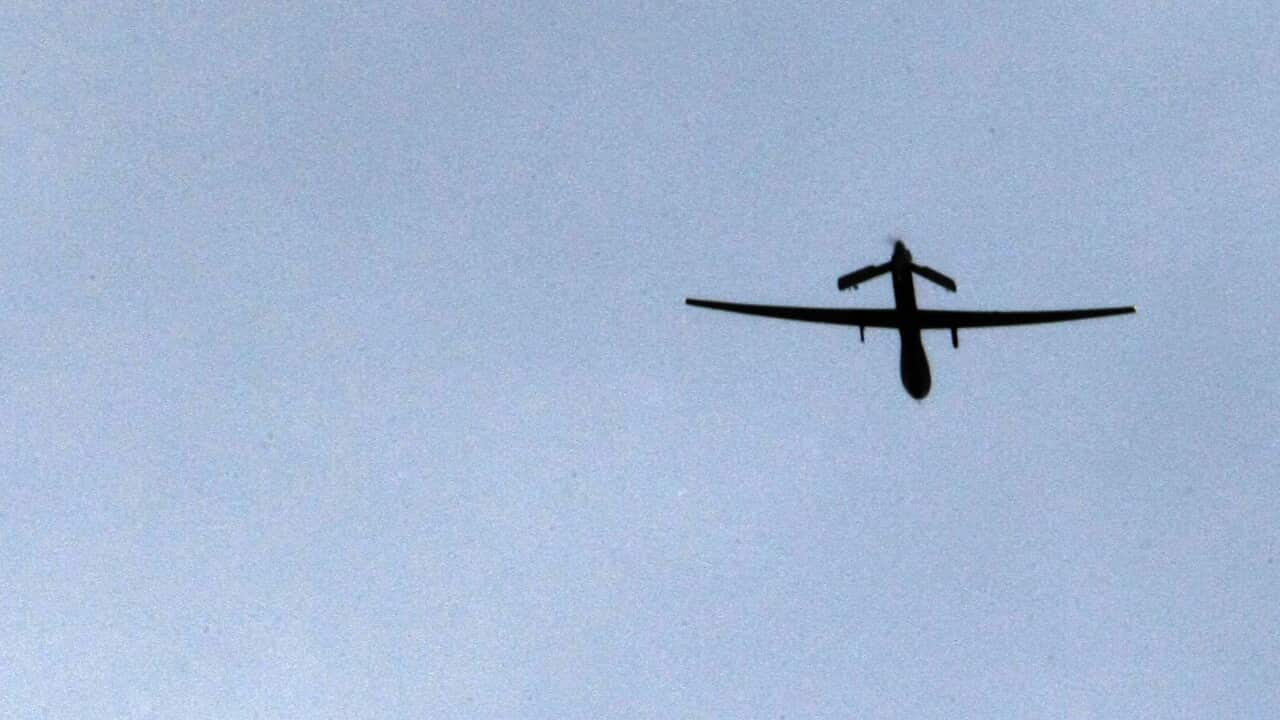
Used in the war on terror, unmanned flying drones will now be deployed in Queensland's war on weeds.
The hi-tech ground-controlled aircraft will carry a deadly payload of weedkiller to tackle so-called Weeds of National Significance, guided in by satellite mapping.
The government says that prickly acacia, mesquite, parkinsonia and rubber vine are all on its axis of evil in agricultural areas of west Queensland.
"The highly effective drones are able to cover one hectare for every eight minutes in the air and can deliver their payloads to within one metre of the target," Minister for Natural Resources and Mines Andrew Cripps said.
The drones will be used to tackle infestations that would be hard to deal with by conventional means because of the density of the vegetation or difficult access.
News that makes sense
Your trusted source for staying up-to-date with the world around you. Get free daily news updates and analysis, straight to your inbox.
The scheme is part of the government's second Area Management Plan (AMP) to improve agricultural land.
Aviation company PBE Services will supply a pilot and Desert Channels Queensland (DCQ) will provide a navigator and logistical support.
They will use satellite mapping techniques developed by the Department of Science, Information Technology, Innovation and the Arts.
DCQ CEO Leanne Kohler says it would develop five-year plans with landowners to ensure long term control in as much as 250,000 hectares of land.
"Reducing these weed infestations will improve the biodiversity of regional ecosystems, promote suitable conditions for growing native species and improve the water quality and habitat of waterways and wetlands," she said.







