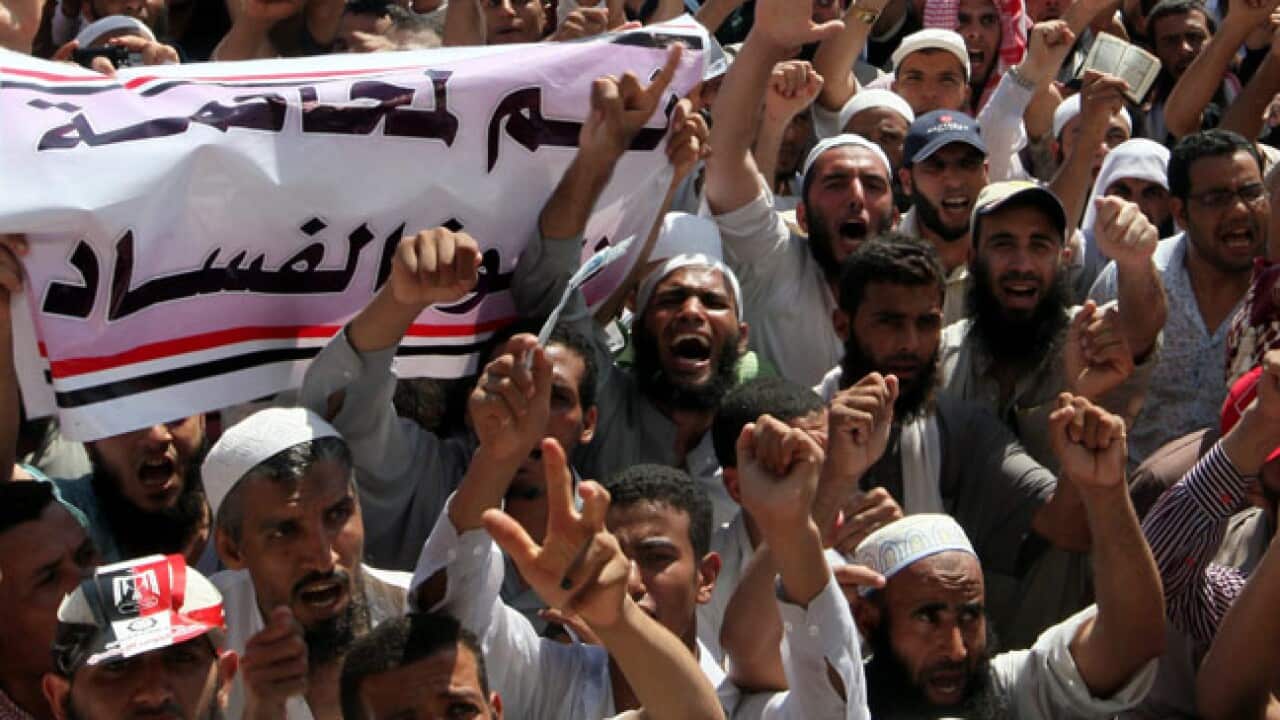
The country's military ruler, Field Marshal Hussein Tantawi, said the election would be held "over three rounds starting on November 28," the official MENA news agency reported.
The second round would be held on December 14, the third on January 3 and the new assembly would convene on March 17, MENA reported.
A three-round senate election will be held from January 29 to March 11.
News that makes sense
Your trusted source for staying up-to-date with the world around you. Get free daily news updates and analysis, straight to your inbox.
The military also announced an amended election law under which two-thirds of parliament will be elected through a party list proportional representation system and the rest through a simple majority.
Only independent candidates are eligible to run for the simple majority seats, according to the law published by MENA, and each party will have to include at least one woman one its list.
NEW LAW REJECTED
More than two dozen political parties have rejected the electoral law, saying it could help return old regime figures to parliament.
They demand a pure proportional representation system and the activation of a law that would ban corrupt politicians from running for office.
Essam al-Erian, the vice president of the influential Muslim Brotherhood's Freedom and Justice Party, said barring paries from a third of parliament would weaken the house.
"It's astonishing, and unprecedented. It's as though they are punishing the parties who demanded a list system. Having one-third of parliament unaffiliated with any party will weaken parliament," he said.
Mohammed Hamed, an official with the liberal Free Egyptians party, said a coalition of like-minded parties rejected the law, but there was no plan to boycott the election.
"It opens the way for old regime figures," he said. "Their justification is that party life in Egypt is still new; pre-revolution parties were weak and after the revolt they are still forming."
"But it is clear they want a percentage of (old regime members)," he said.
PARLIAMENT SUSPENDED
The military, which took charge of the country after former president Hosni Mubarak's ouster, suspended the last parliament in February.
The house, which will be reduced from 508 to 498 seats, was dominated by members of Mubarak's now dissolved National Democratic Party after a controversial election in November that saw opposition candidates trounced.
The NDP used to court candidates who would win votes because of family connections or money. Hundreds had run as independents in previous elections if they did not make it on NDP lists, only to join the party after winning seats.
The Freedom and Justice Party will contest roughly half of parliament's seats in the coming election.
It has warned against any delay in the election, which secular groups have advocated because they fear the better-organised Islamist parties will snap up the seats.
Dozens of parties, ranging from hardline Islamist to liberal, have sprung up after Mubarak's resignation on February 11.
One of the parties granted official status by a government committee was founded by Hossam Badrawi, the last secretary general of Mubarak's National Democratic Party. Badrawi resigned a day before Mubarak stepped down.
Following the parliamentary and senate election, a committee will draft a new constitution to replace Mubarak's and then presidential elections will be held.
The committee has up to six months to finish its work, meaning the presidential election might not be held until the end of August.
STATE OF EMERGENCY
The military had promised that it would not conduct the election under a state of emergency, which was widened in scope this month after protesters ransacked the Israeli embassy in Cairo and clashed with police.
But a military official told state media later that the emergency law could stay in place until mid-2012, although the military wanted to end the state of emergency as soon as possible.
The interior ministry, which was accused of intervening in past elections in favour of the ruling party, has pledged it would work only to secure polling stations from the outside in the coming elections.







