He's been reshuffling his cabinet to appease protesters demanding he get rid of anyone linked to ousted president Hosni Mubarak's regime.
It's the prime minister's second trip to hospital since he was appointed in March.
News that makes sense
Your trusted source for staying up-to-date with the world around you. Get free daily news updates and analysis, straight to your inbox.
He's said to be stable after reportedly suffering a drop in blood circulation.
ATTEMPTS TO DEFLECT ANGER
Sharaf on Monday postponed the swearing-in of a new cabinet intended to deflect anger over the pace of reform as protesters said the shakeup did not go far enough.
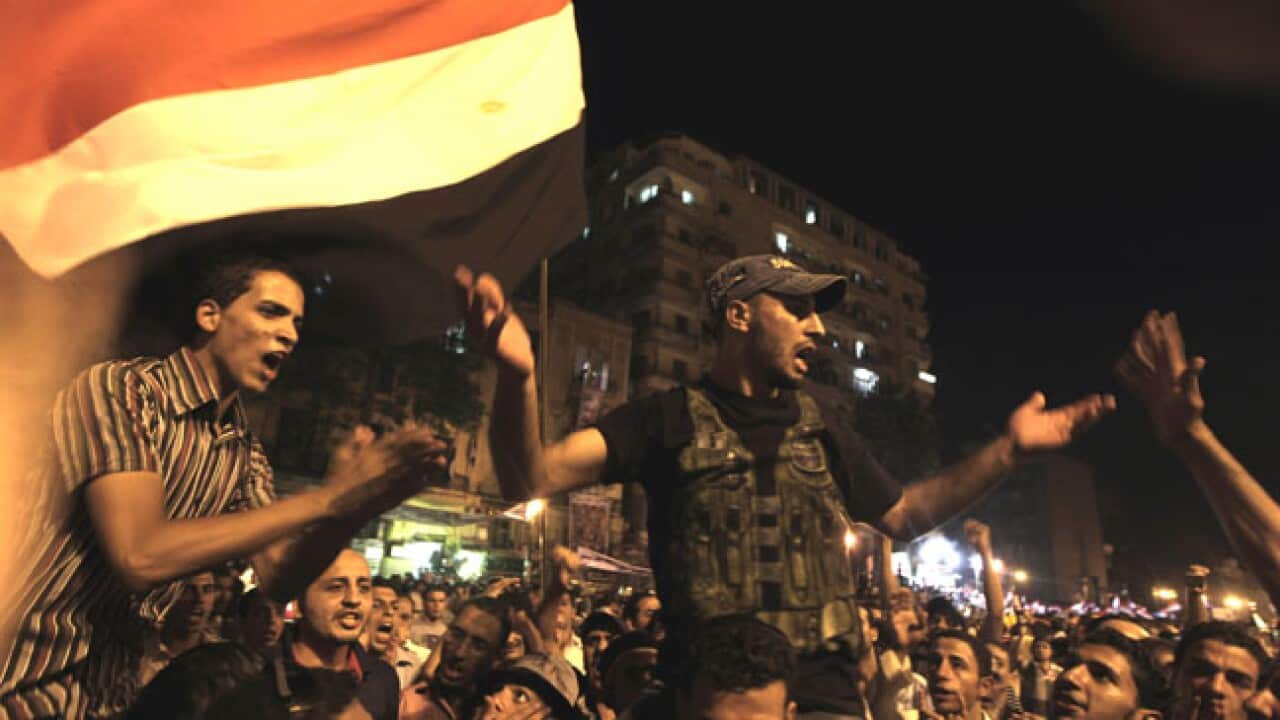
Sharaf, who heads a caretaker government after a revolt toppled strongman Hosni Mubarak in February, had hoped the sweeping reshuffle would persuade the protesters to end a 10-day-old sit-in at Cairo's iconic Tahrir Square.
But the protesters complained that the new cabinet retains ministers they wanted sacked, including Justice Minister Abdel Aziz al-Gindi, whom they accuse of delaying trials of former regime officials including Mubarak.
Mubarak, who was forced to resign as president after a nationwide revolt, was said by his lawyer on Sunday to have slipped into a coma in a Red Sea resort hospital where he has been under arrest since April.
But hospital officials in Sharm el-Sheikh denied the 83-year-old, who is receiving treatment for a heart condition, was in a coma.
Mubarak and his two sons face murder and corruption charges in a trial set to start on August 3.
A hospital official told the state-run MENA news agency on Monday that Mubarak's health was "stable."
BEST MADE PLANS
Fourteen new ministers and a deputy premier had been expected to take the oath of office before Field Marshal Hussein Tantawi, who heads the ruling military council, but state television said the ceremony had been postponed.
"The government of Sharaf will take the constitutional oath tomorrow (Tuesday) to allow for the completion of negotiations," state-run Nile Television reported.
MENA's English service said the ceremony's date had yet to be decided and is "still unknown."
The new cabinet will include former World Bank official Mohammed Kamel Amr as foreign minister and veteran economist Hazem Beblawi as finance minister and deputy premier for economic affairs.
The shakeup removed controversial and powerful antiquities minister Zahi Hawass, who was credited abroad with reviving interest in ancient Egypt but criticised at home for his close ties to the Mubaraks.
His announced replacement, Abdel Fatah Banna, has already come under fire from antiquities officials and resigned on Monday as Sharaf was considering other candidates, MENA reported.
Sharaf also appointed a leading member of the liberal Wafd Party, Ali al-Silmi, as his second deputy on political affairs.
Thirteen ministers from the previous cabinet, appointed in March after mass protests to replace Mubarak's last government, retained their posts, including Interior Minister Mansur Essawy, whose resignation the protesters had demanded.
"We want a change of all the government," said Sharif Ali, from the April 6 youth group that helped organise the 18-day revolt that ended Mubarak's three-decade rule.
Ali, who said he and other protesters in Tahrir Square had no intention of leaving, insisted that other demands such as the speedy trials of Mubarak and police implicated in protester killings during the revolt had yet to be met.
In Alexandria, protesters staging a sit-in in Saed Zaghlul square rejected the ministerial changes and called for a mass demonstration for Friday, MENA reported.
Dozens of protesters in the canal city of Suez also refused to end their sit-in, an AFP correspondent reported.
While some new ministers were known to activists, with several said to have joined protesters in Tahrir during the revolt, others had little recognition before their appointment.
"Nobody knows some of these names," said another activist, Bola Abdu.
The latest sit-in at the square, epicentre of the revolt that overthrew Mubarak, began after tens of thousands of people protested on July 8 calling for speedier reforms.
The protesters risk the enmity of other Egyptians who want the square vacated, accusing them of slowing the country's economic recovery.
Fundamentalist Islamist groups have called for a large demonstration on Friday to demand "stability," newspapers reported, but leading Islamist movement the Muslim Brotherhood said it would not take part.
Egypt has seen a sharp decline in tourism and increased unemployment since the revolt, and investors remain jittery over sporadic and at times deadly unrest in the Arab world's most populous country.







