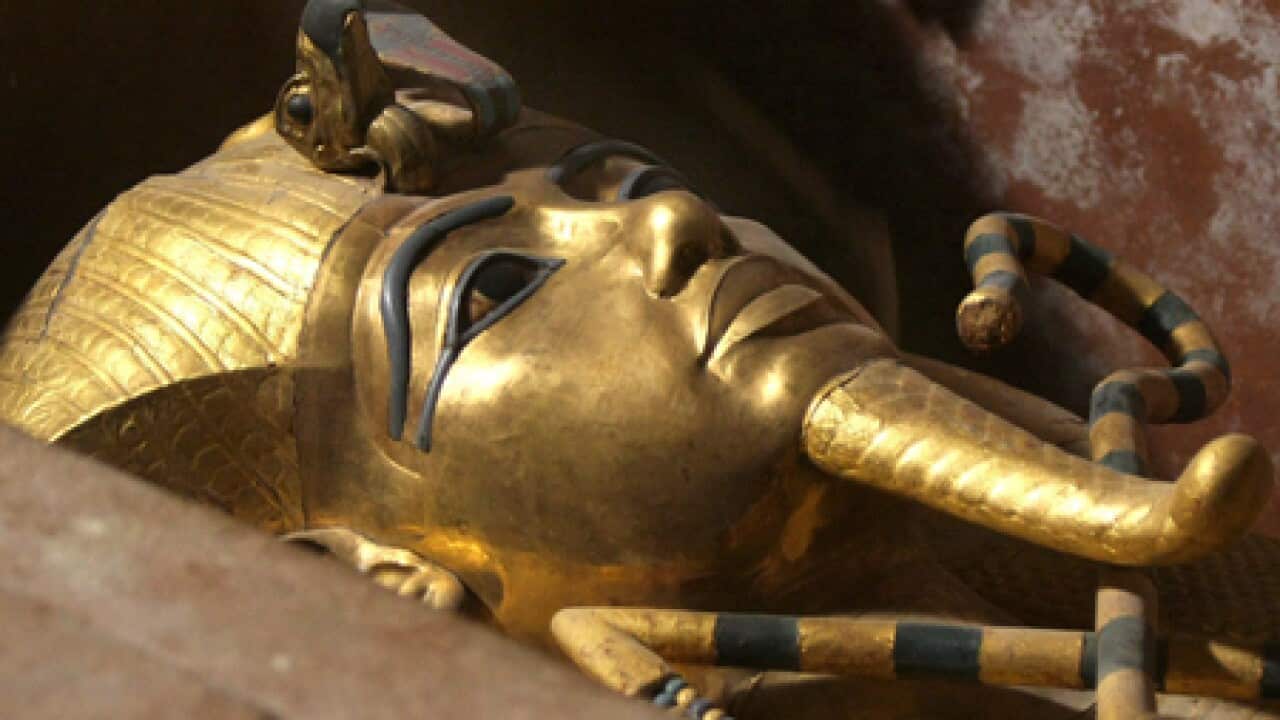
One of the great remaining mysteries of ancient Egypt, the lineage of the boy-pharaoh Tutankhamun, may soon be solved, the country's antiquities supremo hinted.
Zahi Hawass told AFP he has scheduled a news conference for February 17 in the Cairo Museum to unveil the findings from DNA samples taken from the world's most famous pharaoh.
The announcement will be "about the secrets of the family and the affiliation of Tutankhamun, based on the results of the scientific examination of the Tutankhamun mummy following DNA analysis," Hawass said.
News that makes sense
Your trusted source for staying up-to-date with the world around you. Get free daily news updates and analysis, straight to your inbox.
The tomb of the boy king, who reigned from the age of nine and died under as yet unknown circumstances at about 19, was unearthed by British archaeologists in the Valley of the Kings in 1922, causing an international sensation.
DNA to reveal lineage, possible offspring
In August 2008, Egypt's antiquities authorities said they had taken DNA samples from Tutankhamun's mummy and from two foetuses found in his tomb to determine whether the still-born children had been fathered by the boy king.
Hawass said then the DNA tests also would determine Tutankhamun's lineage, and whether the foetuses were the offspring of Tutankhamun and Ankhesenpamon, the daughter of Nefertiti who is renowned as one of history's great beauties.
He had said the results of the studies would also help in identifying the mummy of queen Nefertiti.
Mystery has surrounded the identities of Tutankhamun's own parents: while his father was the Pharaoh Akhenaton, his mother remains unknown.
The boy king's death more than 3,000 years ago remains the subject of dispute among historians, with some believing he died when a leg injury turned gangrenous, and others saying he was murdered by a blow to the head.
In 2007, the reconstructed face of Tutankhamun was revealed to the public for the first time since he died as the 12th and last pharaoh of the 18th dynasty. He is believed to have reigned from around 1333 BC to 1324 BC.
Tutankhamun achieved worldwide fame because of the stunning funerary treasure found in his tomb, including an 11-kilo (24.2-pound) solid gold death mask encrusted with lapis lazuli and semi-precious stones.







