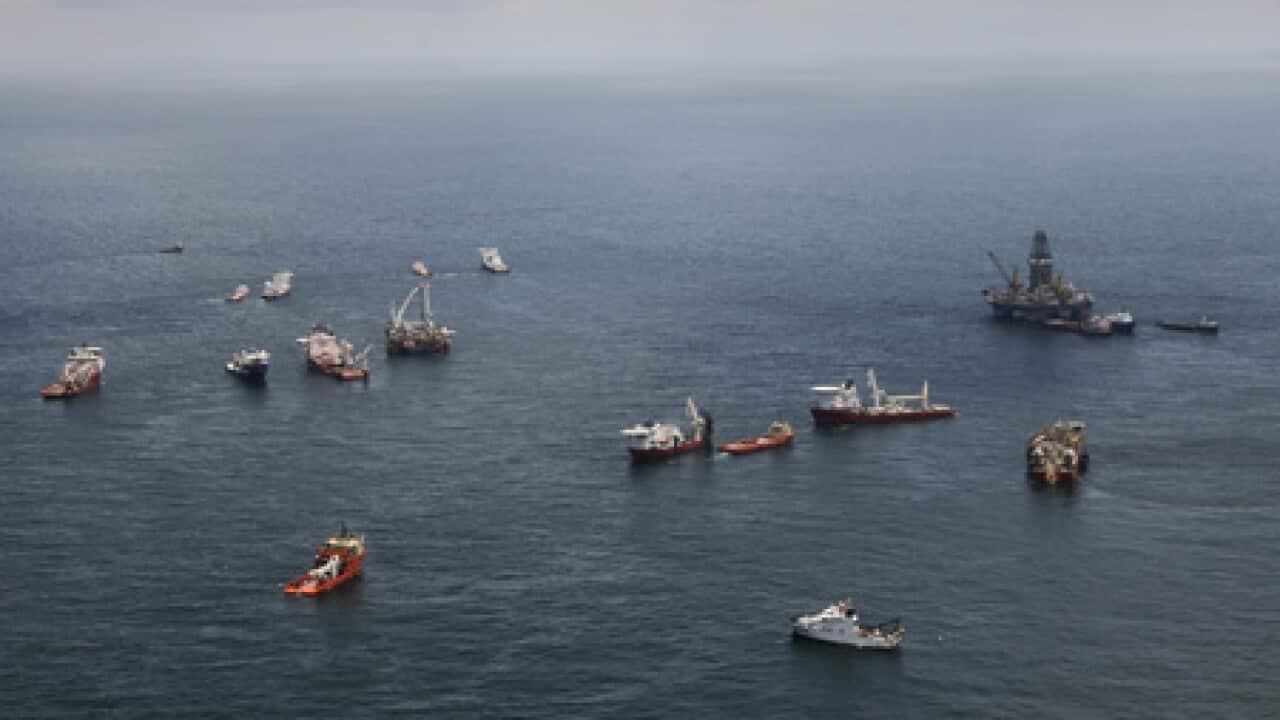
Research vessels were conducting seismic and acoustic tests at the site of the now-capped well "in order to ensure the integrity of the wellhead and search for and respond to anomalies," British energy giant BP said.
It said the pressure in the wellhead "continues to rise demonstrating that it has integrity."
News that makes sense
Your trusted source for staying up-to-date with the world around you. Get free daily news updates and analysis, straight to your inbox.
BP hopes to drown the well in the coming week in an operation dubbed a "static kill," in which mud and cement will be injected down into the ruptured wellhead via a cap installed on July 15.
As the work continued, incoming BP boss Bob Dudley vowed that the oil giant would not abandon residents affected by the spill after the well is finally sealed.
Operation delayed
Dudley on Friday said the operation had been pushed back a day, saying "we are hopeful by Tuesday the static kill will have been performed."
The US pointman on the crisis, Coast Guard Admiral Thad Allen, said Friday the delay was needed to allow engineers to clear debris from the damaged wellhead caused by Tropical Storm Bonnie, which briefly halted spill operations.
But BP senior vice president Kent Wells said the company was confident the static kill would proceed successfully.
So far so good for leak cap
A cap in place for two weeks has shown no sign of leaks, "giving us more confidence that this well has integrity," which is a positive sign for the operation, Wells said at a technical briefing Friday.
Wells said BP hopes the static kill will be able to overcome the flow of oil, but that a second sealing method -- via an intercept through a relief well -- would go ahead afterward regardless.
BP said the relief well is likely to intersect the existing well deep below the gulf floor within eight to 10 days, allowing the second sealing process -- a bottom kill -- by the end of August.
Making his first trip to the region since being named to replace outgoing BP CEO Tony Hayward, Dudley said Friday the firm's focus would shift to long-term recovery for the region now that spill is being contained.
More work to do
"We've had some good news on the oil... but that doesn't mean we're done," Dudley told reporters in Mississippi, one of the five states hit by the massive oil spill.
"We'll be here for years," he said, as BP announced a 100-million-dollar charitable fund to aid unemployed rig workers who are experiencing economic hardship due to the US government's ongoing moratorium on deepwater drilling.
Dudley will take over as BP's chief executive on October 1, when Hayward, who was widely criticized for his handling of the crisis, hands over the reins.
With the focus now moving towards mitigating the long-term impact of the worst-ever US oil spill, Dudley said there would be signs that the operation was changing.
Miles of protective boom will be withdrawn from coastlines, and fewer clean-up crews in hazmat suits would be seen on beaches as oil stopped washing ashore.
"So you'll probably see that kind of a pullback. But commitment, absolutely no pullback," he pledged.
'The oil is out there'
Plaquemines Parish president Billy Nungesser told CNN meanwhile that it was "absolutely" no time for any kind of pullback.
"The oil is out there," Nungesser insisted, lamenting how BP was trying to remove clean-up materials such as absorbent boom from his area, saying that he had his parish sheriff pull over 12 trucks carrying boom from leaving the area.
It remains unknown just how much oil has spilled into the Gulf since the BP-leased Deepwater Horizon rig exploded and sank in April, killing 11 workers. Best estimates put the amount at between three to 5.3 million barrels.
Allen said a team of experts was carrying out an "oil budget" to calculate how much was released, how much was captured and how much has evaporated, adding he hoped the report would be released in the coming days.







