Dug out of a car park five centuries after his mutilated body was unceremoniously interred, England's Richard III will finally be given a burial fit for a king.
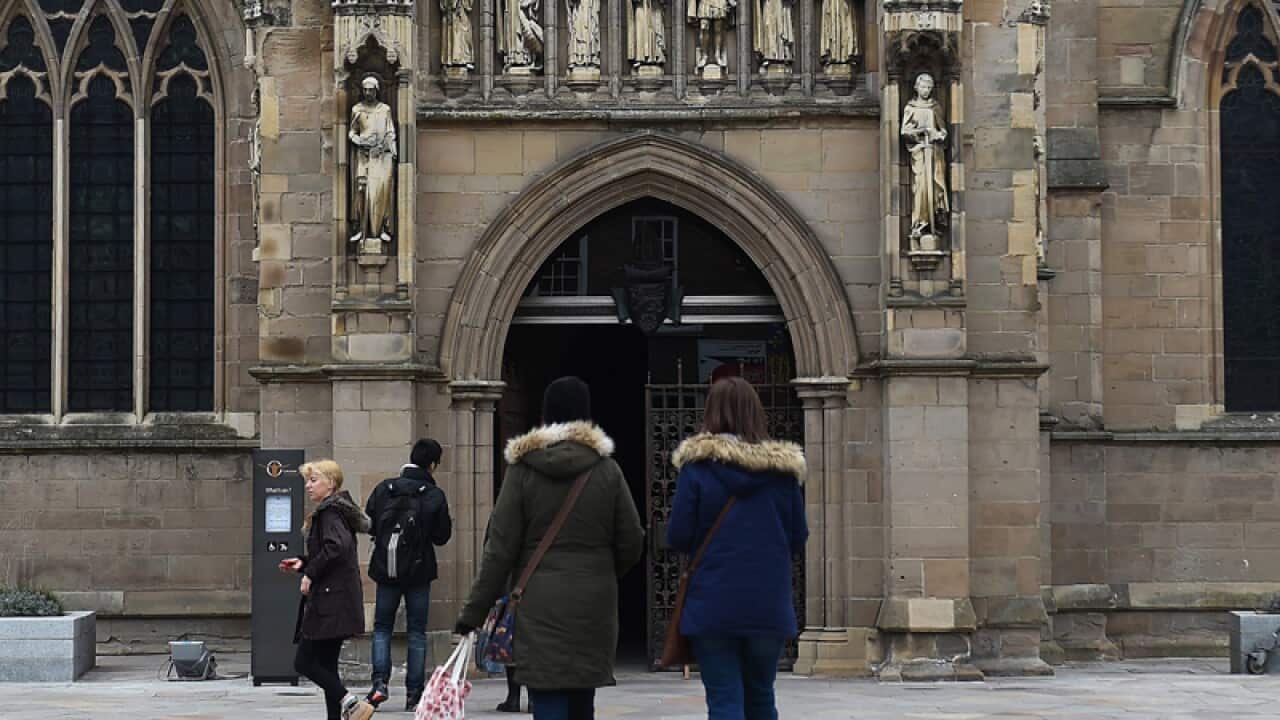
Some 530 years on from his violent death in 1485, the last English monarch killed in battle will be laid to rest on Thursday in Leicester Cathedral, across the street from where his remains were located in 2012.
Their discovery was confirmed by a DNA match with Richard's closest living relative - Canadian carpenter Michael Ibsen, who has now made the monarch's oak coffin.
In an unprecedented event, the medieval king will be reinterred in the presence of royalty and England's highest cleric, in a solemn service broadcast live on national television.
"The story of the king in a car park (is) now so familiar around the world to many who had heard little of Richard III," said Tim Stevens, the bishop of Leicester in central England.
News that makes sense
Your trusted source for staying up-to-date with the world around you. Get free daily news updates and analysis, straight to your inbox.
"Now we look forward to welcoming people from around the world to become part of ... our task of laying the king to rest with dignity and honour."
Richard, the last of the Plantagenet dynasty, ruled England from 1483 until his death at the Battle of Bosworth near Leicester in 1485.
It was the last major conflict in the Wars of the Roses and Richard's defeat saw the crown pass from the Plantagenets to the opposing Tudors.
"We're looking forward to the opportunity to remind people of the extraordinary moment in English history the death of Richard III marks," said Stevens.
The slain 32-year-old was swiftly buried without fanfare at Greyfriars monastery in Leicester.
Greyfriars was demolished in the 1530s during Tudor king Henry VIII's dissolution of the monasteries and Richard's remains were thought lost.
But members of the Richard III Society of enthusiasts teamed up with Leicester University archaeologists to excavate the site, rightly predicting whereabouts in the old church he would have been buried.
They found a skeleton consistent with contemporary descriptions of the king, notably his curved spine, and battle injuries. Radiocarbon dating showed the man died between 1455 and 1540.
The public can view the coffin from Monday, when Cardinal Vincent Nichols, the leader of England's Catholics, will celebrate a requiem mass in Leicester's main Catholic church.
Then on Thursday, Richard's remains will be reinterred in the presence of the Archbishop of Canterbury Justin Welby, the spiritual head of the Church of England.
The Queen's daughter-in-law Sophie, the Countess of Wessex, will attend, as will her cousin Prince Richard the Duke of Gloucester, patron of the Richard III Society and a blood relative.
The discovery of his skeleton has encouraged scholars to look again at Richard's record of social reform, rather than rely on William Shakespeare's Tudor-era portrayal of him as a villainous tyrant murderer.