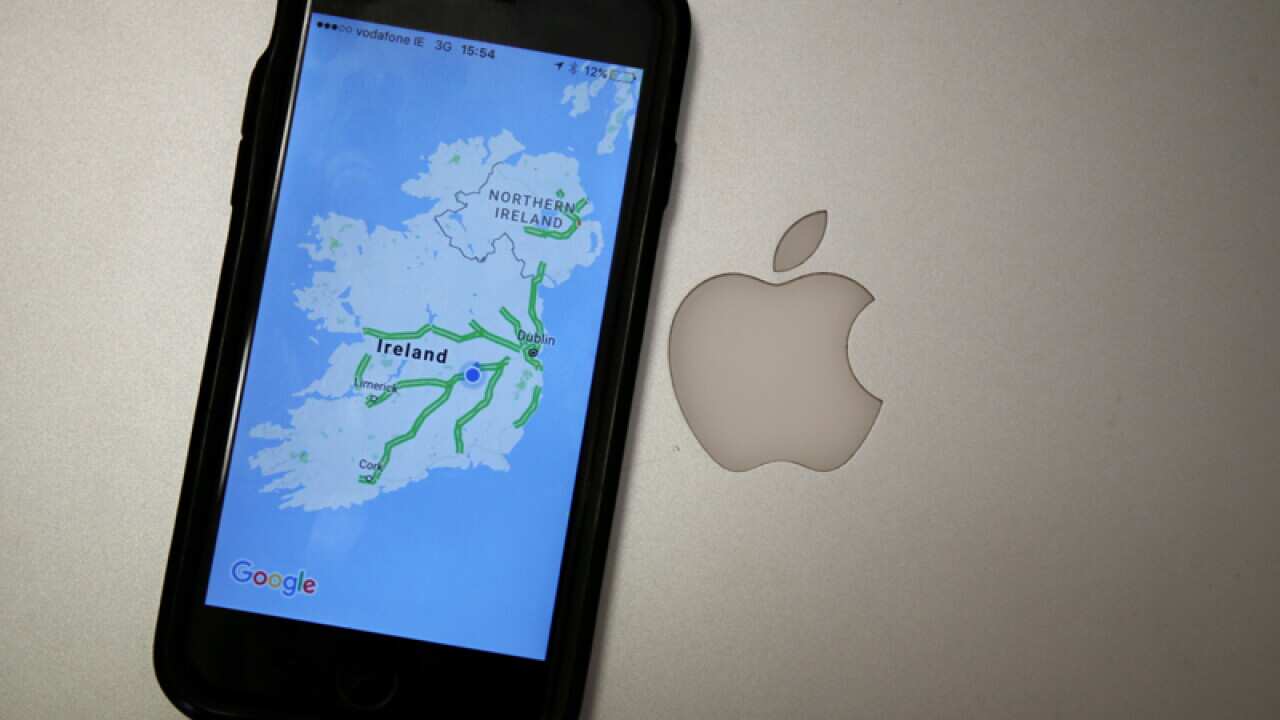
The European Commission is ordering Apple Inc to pay Ireland unpaid taxes of up to13 billion euros ($A19.15 billion), after ruling the firm had received illegal state aid.
Apple and Dublin said on Tuesday the US company's tax treatment was in line with Irish and European Union law and they would appeal the ruling, which is part of a drive against what the EU says are sweetheart tax deals that usually smaller states in the bloc offer multinational companies to lure jobs and investment.
The US feels its firms are being targeted by the EU and a US Treasury spokesperson warned the move threatens to undermine US investment in Europe and "the important spirit of economic partnership between the US and the EU".
Starbucks Corp has been ordered to pay up to 30 million euros to the Dutch state, while Amazon.com Inc and McDonald's Corp are also under investigation by the Commission, the EU's executive arm.
EU Competition Commissioner Margrethe Vestager questioned how anyone might think an arrangement that allowed Apple to pay a tax rate of 0.005 per cent, as Apple's main Irish unit did in 2014, was fair.
News that makes sense
Your trusted source for staying up-to-date with the world around you. Get free daily news updates and analysis, straight to your inbox.
"Tax rulings granted by Ireland have artificially reduced Apple's tax burden for over two decades, in breach of the EU state aid rules. Apple now has to repay the benefits," Vestager told a news conference.
Analysts said the size of the claim underlined the Commission's aggressive stance, but since each case involves different circumstances and tax rules, lawyers said it was hard to see if further big claims were any more or less likely.
Apple, which had more than $US200 billion ($A266 billion) in cash and readily marketable securities at the end of June, is likely to see the case drag out for years in EU and possibly Irish courts.
The EU's ruling challenges the way that Ireland agreed to tax the profits of Irish registered Apple subsidiaries, through which most of its non-US profits flowed.
Apple Inc licences the rights to technology designed in the United States to Irish subsidiaries.
These then hire contract manufacturers to make devices which they sell to Apple retail subsidiaries around Europe and Asia.
Since the manufacturing cost is a small portion of device sales prices and retail subsidiaries are allocated a small operating margin, Apple Ireland is very profitable.
In 2011, it earned $US22 billion after paying $US2 billion to its US parent in relation to the rights to Apple intellectual property.
However, the Irish tax authority agreed only 50 million euros of this was taxable in Ireland, the European Commission said.
Under the terms of Apple's tax deal, first agreed in 1991 and renewed in 2007, Apple could allocate most of the profits earned by its Irish operating units to a "head office" that did not have any employees or own any premises.
The Commission said this agreement had no basis in tax law and was not available to others, and so represented state aid.
Irish Finance Minister Michael Noonan said he profoundly disagreed with the decision and in order to preserve Ireland's attractiveness for investment he would appeal.
Ireland's low corporate tax rate has been a cornerstone of the country's economic policy for decades, drawing investors from multinational companies whose staff account for almost one in 10 of the country's workers.
For many technology firms like Google and Facebook, a key attraction is that Ireland allows companies to adopt tax structures which see them pay much less than the 12.5 per cent headline rate. The companies say they follow all tax rules.
Apple said it was confident of winning an appeal.







