Hours ahead of the close of nominations for managing director of the International Monetary Fund, dark horses Grigory Marchenko of Kazakhstan and Trevor Manuel of South Africa said they would not stand for the job.
"It's more or less obvious that Christine Lagarde is going to be elected," the Kazakh central bank chief told CNN.
"Quite a few people do have credentials... But again, it's not about a fair competition, it's about politics. And I think there, a political decision has been taken already."
News that makes sense
Your trusted source for staying up-to-date with the world around you. Get free daily news updates and analysis, straight to your inbox.
Earlier, South African planning minister Manuel also declined to stand, praising Lagarde as "very competent" but criticizing Europe's 65-year hold on the position.
"A lot more should have been done to persuade Europeans that this birthright is not a birthright that should find a resonance in an institution as important as the International Monetary Fund," he said.
Lagarde, the French finance minister, and her remaining challenger, Mexico's central bank chief Agustin Carstens, were both wooing potential supporters - Carstens in India and Lagarde in Lisbon, where the African Development Bank was meeting.
Barring unlikely last-minute submissions, they were likely to be the only candidates when official nominations to lead the world's crucial crisis lender close at midnight Friday, Washington time (0400 GMT Saturday).
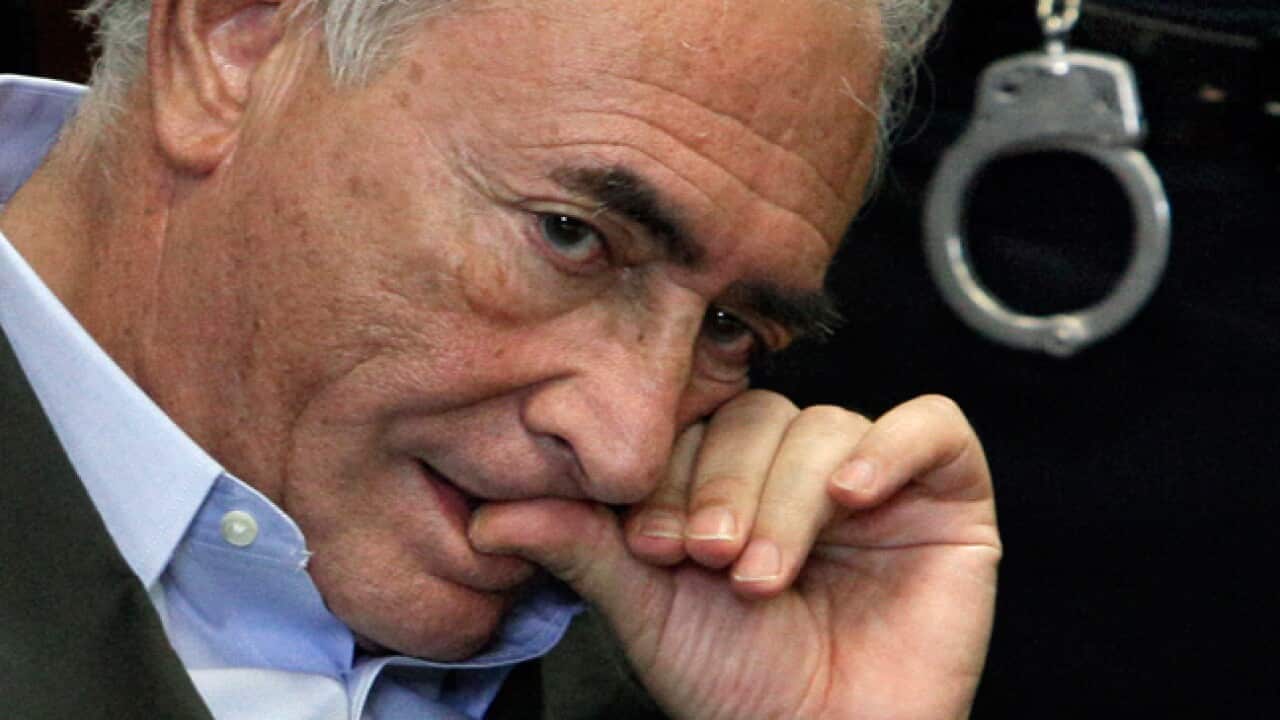
The managing director job opened unexpectedly after French IMF head Dominique Strauss-Kahn resigned on May 18 to fight sexual assault charges in New York.
Lagarde enjoys the the solid backing of Europe, which is struggling to keep the IMF-backed bailout of Greece on the rails.
Carstens, who was formerly the IMF deputy managing director, has strained to gather support from emerging economies.
The United States and Japan, the IMF's other power brokers, remain publicly uncommitted.
"Carstens is someone seen as conservative" by developing countries, said Claudio Loser, former Western Hemisphere Director at the IMF.
Moreover, he added, "the Europeans have a unified vision, while the emerging countries still have a nationalist vision."
The race has put into play Europe's hold on the managing director's slot since the end of World War II against global nervousness about the delicate financial situation in Europe's peripheral countries -- especially Greece -- also featured.
Europe wants Lagarde because she is already involved in dealing with the eurozone crisis.
But Carstens and his supporters have questioned why an outsider might not be better equipped to deal toughly with the players in Europe.
"I presented my credentials, the international community knows me and I think I have the capacity to be the head of the fund," Carstens told reporters in New Delhi.
Both candidates have wooed the huge emerging economies Brazil, Russia, India and China -- the so-called BRICs -- which could expand their shareholding in the Fund under the next director.
After starting in Brazil, Lagarde was in Beijing and then New Delhi this week. Carstens also launched his campaign in Brazil, and was disappointed when he failed to get the endorsement of a fellow Latin American power.
On Friday, he was in New Delhi, with plans to follow that with a stop in Washington on Monday before heading to Beijing.
The BRICs haven't tipped their hands, but "in private they have already conceded that they are mostly likely to back Lagarde," said Brookings Institution analyst Domenico Lombardi.
They see her "as an important backstop to the European crisis," he said.
The inability of developing countries to join hands has surprised some. Lagarde picked up support from a number of African countries at the meeting of the African Development Bank in Lisbon.
"At this stage, they don't care enough about this position... to expend the political capital to want to change the status quo," explained Arvind Subramanian of the Peterson Institute for International Economics.
Despite its strength, Lagarde's candidacy is clouded by a pending investigation in France into her alleged abuse of authority, in a multi-million-euro business dispute.
The court will not rule on whether the investigation would go ahead until June 9, after the IMF executive board is to make its decision.
Lagarde has repeatedly denied any wrongdoing.







