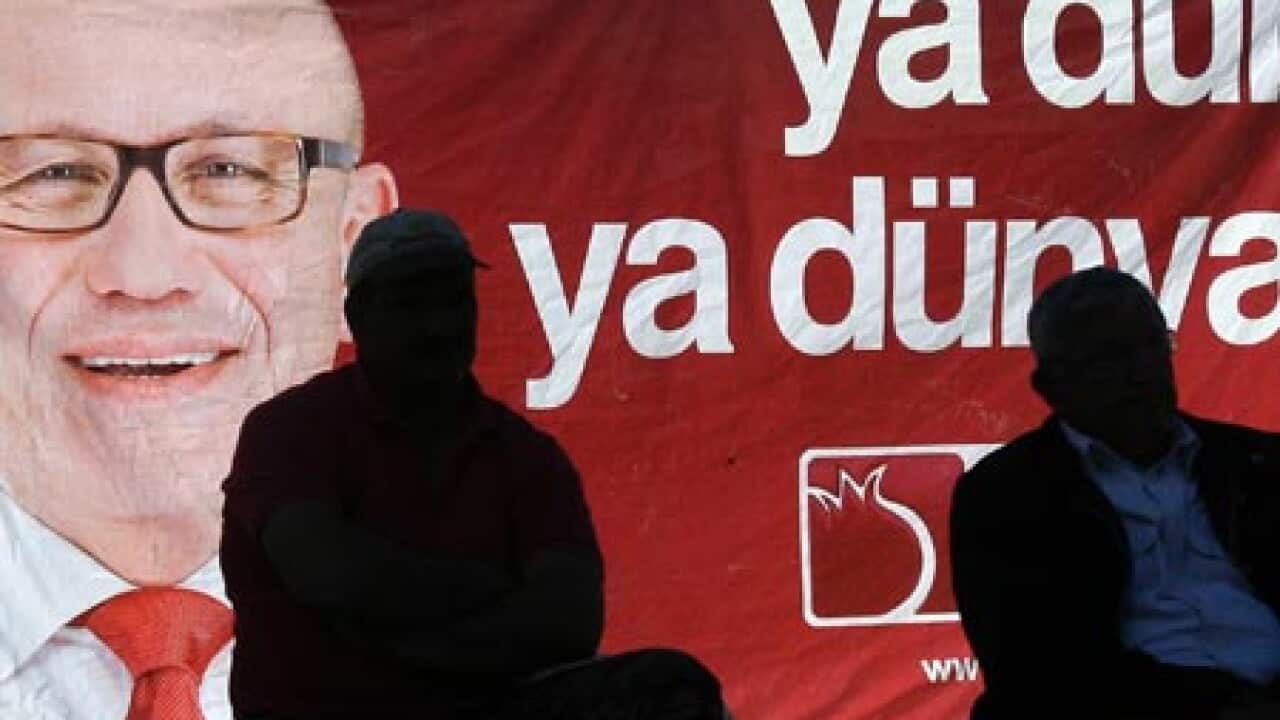
With UN-led Cyprus peace talks at a critical juncture, the outcome of Sunday elections in the breakaway Turkish north is more relevant to Greek Cypriots than ever before, analysts say.
"I think these elections are the most significant for the south than in the past because this is the most serious attempt at a solution that we've had," veteran political commentator Sofronis Sofroniou told AFP.
He believes a vote for hardliner Dervis Eroglu over "pro-solution" incumbent Mehmet Ali Talat could see 19 months of delicate reunification talks go up in smoke.
News that makes sense
Your trusted source for staying up-to-date with the world around you. Get free daily news updates and analysis, straight to your inbox.
"I doubt if anybody in the south prefers Eroglu with his extremist views. He is completely unreasonable on the Cyprus problem by basically advocating partition."
However, Sofroniou thinks Eroglu will get the nod, triggering an uncertain future for peace negotiations and reducing the likelihood of ending 36 years of division.
Breakdown in talks possible
Greek Cypriot leader Demetris Christofias said on Monday he is not willing to resume talks from scratch if Eroglu wins with a platform based on launching a new process.
"I will not even discuss starting again from the beginning. The person who requests this must pay the price in Europe as well as internationally," he told reporters.
Christofias has made no secret of the fact that he prefers his "comrade" Talat to be re-elected, even though opinion polls put Eroglu, the current prime minister, ahead.
"I've taken a stance. I consider that the person who should be elected is the person who will continue the talks where we left off, not the person who wants to start from zero."
Even so, Christofias says he is ready to negotiate with whoever is elected, but will not deviate from the agreed target of a bi-communal federal republic.
Greeks view elections as 'illegal'
Christofias has been criticised for backing Talat in what Greek Cypriots deem "illegal elections," as the Turkish Republic of Northern Cyprus is recognised only by Ankara.
Former government coalition partner socialists Edek said that openly supporting a candidate in the north only gives credence to an occupation regime that contravenes UN resolutions.
"Instead of highlighting this position the official Cypriot side (government) rushes to get involved in this illegal process by declaring in favour of a specific candidate," Edek leader Yiannakis Omirou said on Friday.
The socialists pulled out of the government over the president's handling of the Cyprus issue, claiming he was too willing to make unnecessary compromises.
Hubert Faustmann, associate professor of political science at the University of Nicosia, said Greek Cypriots who do not want a solution view an Eroglu victory as getting them out of a tight spot.
"I believe the largest percentage of Greek Cypriots don't want a solution, or not one within the current framework," Faustmann told AFP.
"For them it would be better for Eroglu to win so they can take the moral high ground. A hardliner getting in makes your side look better if there's a negative outcome."
Greek Cypriots were in the international dog house in 2004 when they rejected a UN reunification blueprint at a referendum while Turkish Cypriots approved it.
It took the elections of Talat and then Christofias for the current talks process to be launched under much international optimism in September 2008.
Christofias and Talat have vowed to reach a comprehensive settlement after announcing important progress in the sluggish UN-led peace talks that have now been suspended until after the Turkish Cypriot elections.
On March 30, the two leaders issued an upbeat progress report that many saw as a bid to help Talat defeat Eroglu. It was their last meeting before the vote, and a date for a resumption of the talks has yet to be set.
UN chief Ban Ki-moon has also gone out of his way to praise both leaders for showing "courage and vision" in a bid to keep their peace partnership intact.
Cyprus has been divided since 1974 when Turkish troops occupied its northern third in response to a Greek Cypriot coup aimed at uniting the island with Greece.







