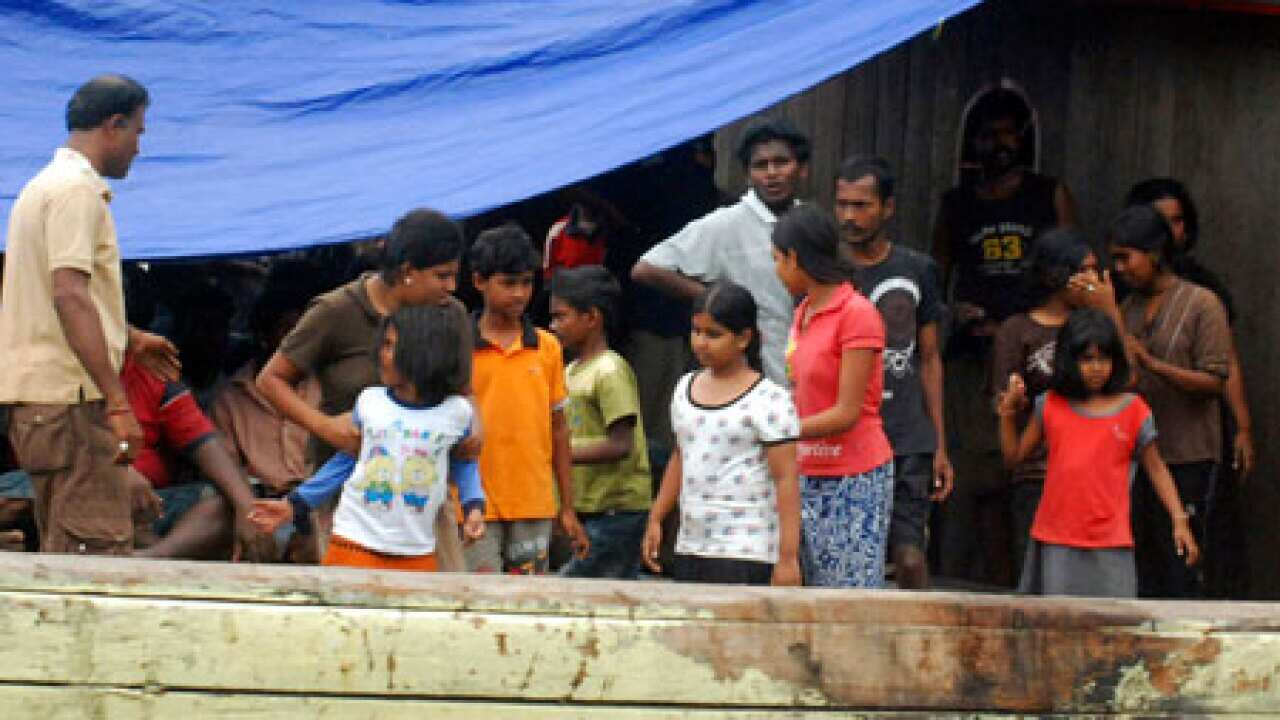
Immigration Minister Chris Evans has defended the government's decision to suspend processing of asylum applications from Sri Lankans and Afghans for up to six months, saying it is a balanced one, and in the national interest.
Evans rejects the suggestion that anyone coming from a troubled country should automatically be considered a refugee.
He says Canberra's approach upholds Australia's international commitments and preserves the Australian people's interest.
News that makes sense
Your trusted source for staying up-to-date with the world around you. Get free daily news updates and analysis, straight to your inbox.
Approach 'non discriminatory'
The government defended its decision to temporarily stop processing asylum-seekers from Afghanistan and Sri Lanka, saying its approach was legal and non-discriminatory.
The human rights watchdog and refugee supporters had questioned Canberra's move to immediately stop taking new applications from asylum-seekers from those two countries, saying it could be unfair to Afghans and Sri Lankans.
"We have very strong legal advice that the suspension is within all the legal requirements in this country," Chris Evans said.
Evans said the new policy - which means asylum-seekers arriving from Sri Lanka will be unable to apply for a visa for three months and those from Afghanistan for six months - was not discriminatory.
"They are not losing any rights, they will still have their rights... honoured," he told reporters.
Evans: Situation improving in Afghanistan and Sri Lanka
The government has said the changes have been introduced because of the improving situations in Afghanistan and Sri Lanka, and comply with Australia's international obligations to refugees.
The minister said the new policy, which comes as the number of boats carrying asylum-seekers being intercepted by Australian border control officers is rising, was in the country's best interests.
"There's some criticism been made that somehow because conditions in Sri Lanka and Afghanistan may be difficult, therefore people will be found to be refugees. That is a nonsense," Evans said.
"The requirements of the refugees convention are that people face a real fear of persecution, not that they come from a country where circumstances are difficult.
"We do not accept that... everyone who comes here is a refugee."
Canberra also wants to crack down on people-smugglers who bring asylum-seekers into Australian waters, often on ill-equipped wooden boats.
Concerns over nationality-based discrimination
The announcement created concern among rights and refugee groups, with Australia's Human Rights Commission saying there was a risk the policy would discriminate against people based on their nationality.
"The Australian Human Rights Commission is fearful that it will lead to breaches of Australia's international human rights obligation, in particular our obligation under the refugees convention not to treat groups of people differently based on their country of origin," president Cathy Branson said.
The Greens also attacked the plan as contravening the rights of refugees while the Australian Lawyers Alliance said the policy could face a legal challenge on discrimination grounds.
"It would be no surprise if the decision is challenged on the basis of it being offensive to our principles of administrative law such as fairness and natural justice," the alliance's Greg Barns said in a statement.
Richard Towle, UNHCR Regional Representative for Australia, New Zealand and the Pacific, said his organisation would closely monitor the impact of the policy change on asylum-seekers.
"UNHCR believes that all asylum-seekers and refugees should be treated humanely and given the opportunity to have any claims for protection fairly assessed," he said in a statement late Friday.
More than 1,800 people have arrived in Australia via boat since the beginning of the year, the majority from Sri Lanka and Afghanistan - countries which have endured years of conflict.
So far they have been held in mandatory detention on Christmas Island until they could be processed, but Evans said some may be sent to Darwin if Christmas Island becomes overcrowded.







