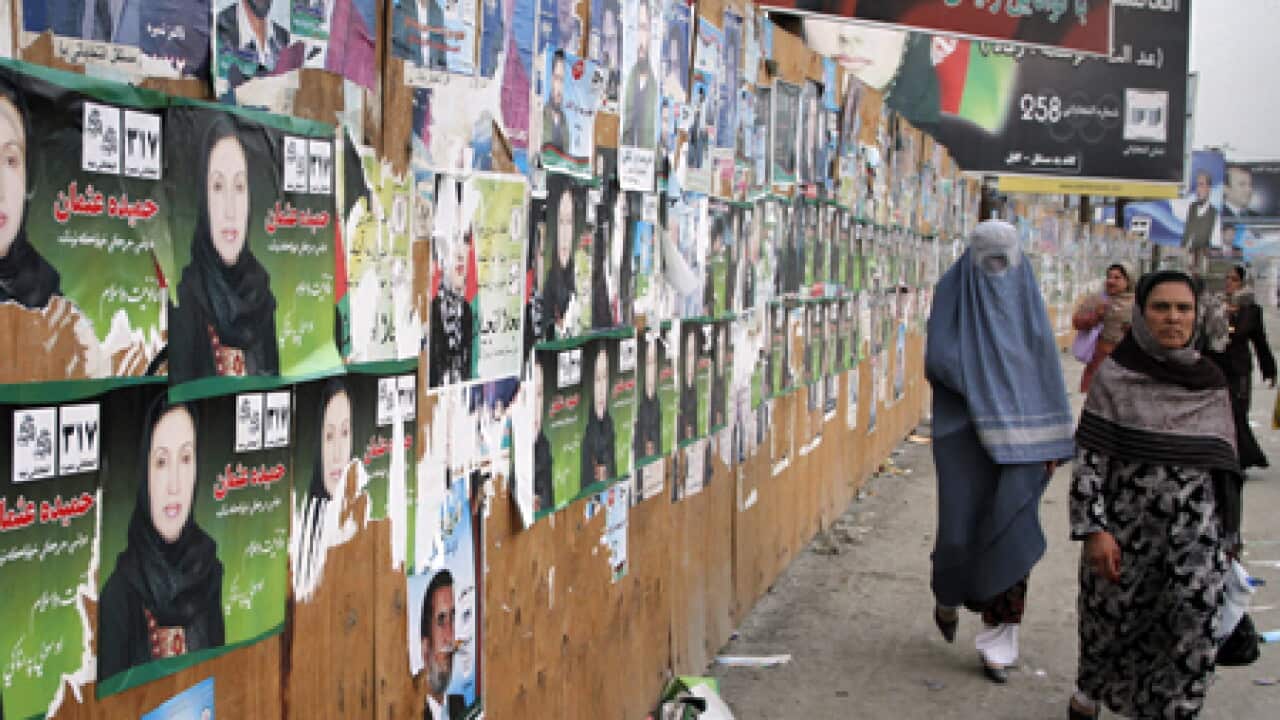
Afghanistan is going to the polls for parliamentary elections this Saturday, where candidates are vying for seats as an MP in the Wolesi Jirga, or lower house.
The bicameral Afghan National Assembly – or Parliament – consists of two houses. The Upper House, known as the 'House of Elders', or Meshrano Jirga, as well as the Wolesi Jirga.
Afghans aren't voting in a new government this weekend, but MPs in the lower house have responsibility for making and ratifying laws – as well as approving the President's actions. Those elected in the only the second lower-house elections since the 2001 invasion will serve a five-year term.
News that makes sense
Your trusted source for staying up-to-date with the world around you. Get free daily news updates and analysis, straight to your inbox.
Earlier in the year, the elections were postponed to September after the election commission said there was a lack of funds, on top of security concerns. At the time, the US and other Western nations said another fraud-marred election could undermine their strategy in the country. There are already reports of fake voter cards being printed.
Notable candidates
There are around two and a half thousand people vying for a spot in the parliament – but some notables feature on the list.
Ramazan Bashar Dost – Came third in last year's disputed Presidential poll, behind President Hamid Karzai and Abdullah Abdullah.
Former Olympic sprinter Robina Jalali, one of 406 female candidates
Younus Qanooni – Inaugral Wolesi Jirga speaker, leader of the New Afghanistan Party, and a 2004 Presidential candidate.
Mullah Abdul Salaam 'Rocketi' - the incumbent Mullah is so called due to his former life fighting the Soviets.
Shukria Barakzai, a prominent feminist and journalist, running for reelection in Kabul.
Quick Facts
- There are 249 lower house seats up for grabs, distributed according to provincial population, with at least two per province - all the way up to 33.
- 2,556 candidates were placed on candidate lists.
- 406 female candidates are standing – a record number.
- 64 seats are reserved for women under the constitution, guaranteeing them 25 per cent.
- 1500 'civic educators' have been hired to disseminate education material across the country.
- Single Non-Transferable Voting is used (SNTV)– This means that with dozens of candidates on a list, a candidate can be elected with a relatively minuscule proportion of the vote.
- Most candidates are independents.
- Candidates cannot have been 'convicted of any crimes against humanity, or any other crime, or have been deprived of rights by a court' (Afghanistan Electoral Commission).
Dozens have been disqualified, although concerns remain amongst human rights activists about remaining candidates.
- A full candidate list can be found with Afghanistan's independent electoral commission.
- 1000 of 6000 polling stations have already reportedly been deemed to unsafe to open - the Taliban have asked Afghans to boycott the elections.
“We are against it and will try with the best of our ability to block it. Our first targets will be the foreign forces and next the Afghan ones," Taliban spokesman Zabihullah Mujahid told Reuters in early September.
- At least four candidates and, according to reports, as many as 15 campaign workers and supporters have been killed in recent weeks. Female candidates are often most likely to face such discrimination.







