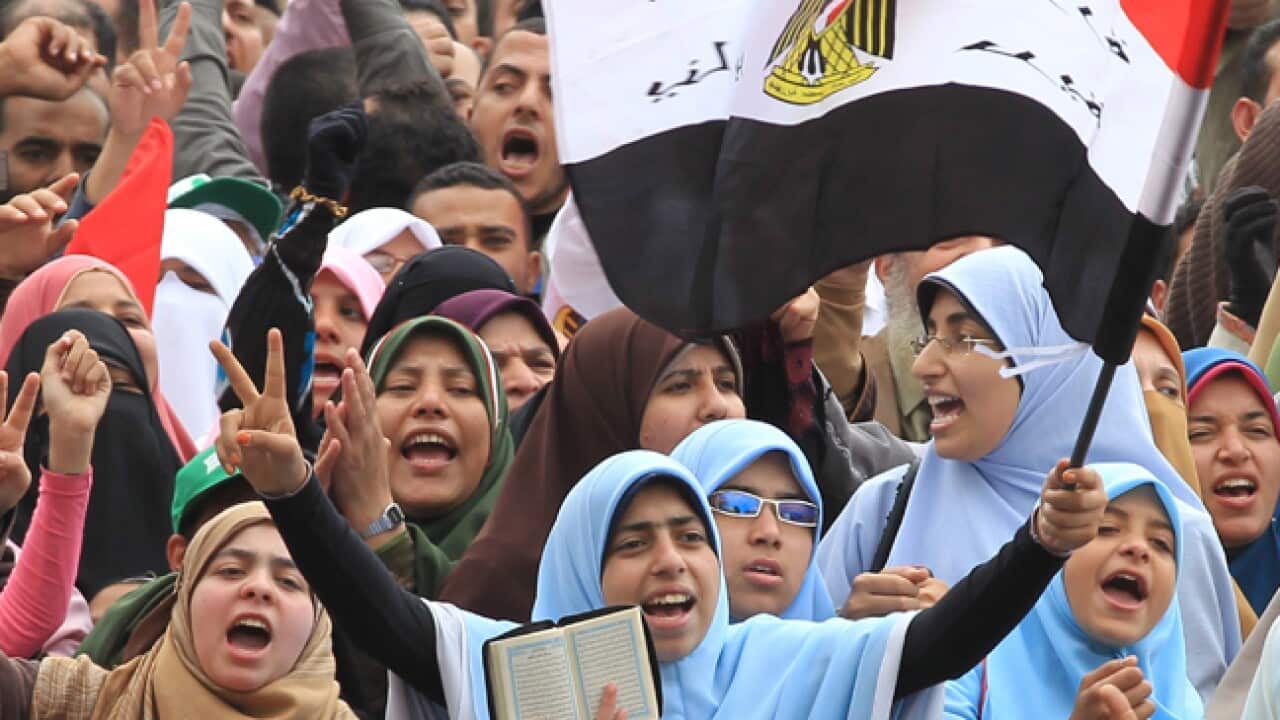
Egyptian voters will cast their ballots in the first parliamentary elections since a popular uprising toppled Hosni Mubarak in February.
THREE ELECTION ROUNDS
Egypt's 27 provinces will initially go to the polls in three separate rounds to elect a lower house of parliament in a long process that has been criticised for its complexity.
A run-off vote is scheduled one week after each round.
News that makes sense
Your trusted source for staying up-to-date with the world around you. Get free daily news updates and analysis, straight to your inbox.
On Monday and Tuesday, ballots will be cast in the main cities of Cairo and Alexandria, as well as Fayyum, Luxor, Port Said, Damietta, Kafr el-Sheikh and the Red Sea province.
A run-off is scheduled for December 5.
The second stage will see voters come out on December 14 in Giza, Beni Sueif, Menufia, Sharqiya, Beheira, Suez, Ismailiya, Sohag and Aswan, with a run-off scheduled for December 21.
The third and final round will take place on January 3 in Minya, Qaliubiya, Gharbia, Daqahliya, North Sinai, South Sinai, New Valley, Matruh and Qena. The last run-off will be held on January 10.
Voters will be asked to elect 498 members of the People's Assembly -- the lower house of parliament -- while 10 members will be appointed by the country's interim military leader, Field Marshal Hussein Tantawi.
The ballot sheet will ask each voter to pass three votes: two for individual candidates split into professional and farmer/worker categories and one for a political grouping.
FINAL RESULTS IN JANUARY
The final results of the parliamentary elections are expected on January 13.
Voters will be called to the ballot boxes again on January 29 for the elections of the Shura Council, the upper house of parliament, which has a mainly consultative role.
The parliament will then be tasked with drawing up a constitution before presidential elections which are to be held before the end of June 2012 under the new timetable announced by the military leaders last week.
The powerful Muslim Brotherhood, banned under Mubarak, will field candidates through its Freedom and Justice Party and is expected to become the biggest parliamentary group but without an outright majority.
The moderate Islamist movement, intermittently banned since its foundation as a charitable group in 1928, is the most organised political party in the country.
The "Al Thawra Mustamirra" (The Revolution Continues) coalition, founded in October after the January 25 uprising, brings together a group of leftist parties.
The "Kotla Masreya" (Egyptian Bloc) represents the largest liberal coalition, grouping around 15 parties including the Free Egyptians Party founded by Coptic telecoms tycoon Naguib Sawiris.
Earlier this month, a high court ruling allowed members of Mubarak's now-dissolved National Democratic Party to run for public office, overturning a lower court decision.
It is unclear how long the parliamentary term will be, which is to be decided by the new constitution.







