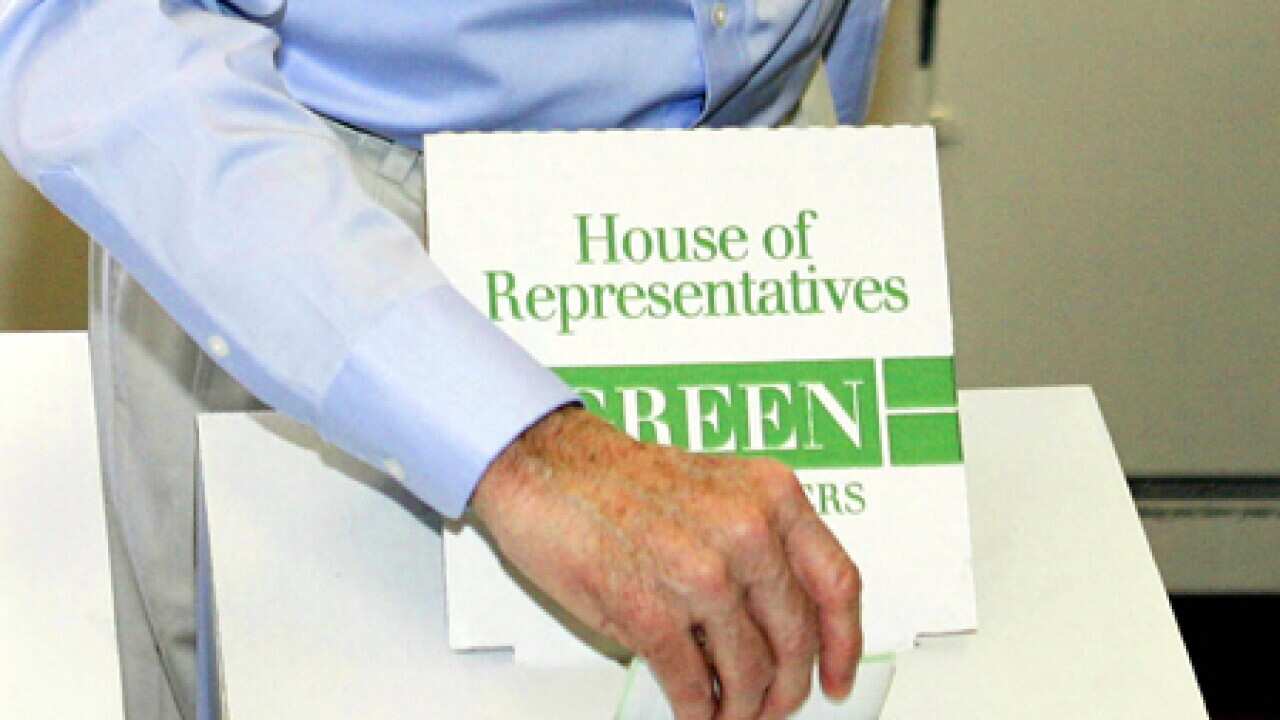
There are several different ways of casting your ballot, apart from simply showing up at your local polling station on election day.
Though the Australian Electoral Commission (AEC) estimates about 84 per cent of federal ballots are cast the 'ordinary' way, the remaining 16 per cent can have a big impact on elections, and may even change the outcome.
Voters who are away from their electorate but within their states or territories on polling day can cast absent votes. Many polling stations will carry ballot papers for neighbouring electorates.
News that makes sense
Your trusted source for staying up-to-date with the world around you. Get free daily news updates and analysis, straight to your inbox.
The AEC says just over six per cent of voters cast their ballots this way. In large electorates, additional travel time is needed to gather such votes.
If voters are interstate on election day, they must cast their ballots at special interstate voting stations, as most polling stations will not carry ballots for other states and territories.
Alternatively, interstate voters may choose to cast an early, or pre-poll vote. Early voting centres are set up a fortnight before polling day. At the last federal election more than 610,000 votes were cast early or from interstate.
Voters who are seriously ill or infirm, unable to leave work or for religious reasons are unable to visit a polling station on election day can apply for postal votes. After an election is called, voters who wish to cast their ballot in this way must apply to the AEC for an application. Ballot papers are then sent to to the elector.
Overseas voters may also apply for postal votes. Alternatively, if they are close to an Australian embassy or mission, they can vote in person there. Overseas electors must register as such shortly after an election is called.
If election results are contested, or too close to call, victory may not be declared until postal votes have been counted. In the 2007 federal election, there were less than 80 votes separating former Howard Minister Fran Bailey and her Labor rival in the Victorian seat of McEwen. Bailey could not claim victory until the several hundred postal votes were counted and alloted.
For more information on voting, visit the Australian Electoral Commission's website.







