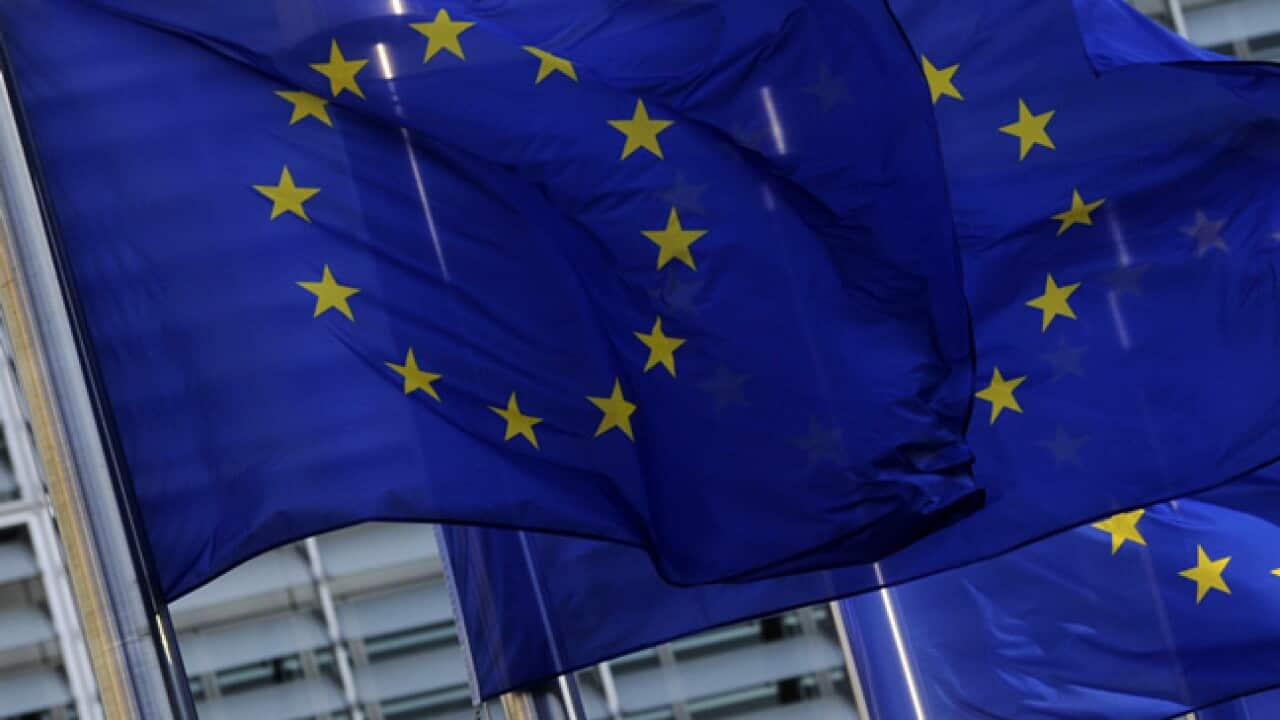
A collapse of the euro, or financial spillover that could spook US markets, could move closer after Greece's election on Sunday, and has the potential to further weaken the tepid US recovery before Obama seeks reelection in November.
Washington does not expect Europe to use the talks in Mexico to finalize measures it will take to quell the raging crisis, partly because only eurozone leaders from France, Germany, Italy and top EU officials will attend.
News that makes sense
Your trusted source for staying up-to-date with the world around you. Get free daily news updates and analysis, straight to your inbox.
But they do expect a clear signal at the Mexican resort on the tip of the Baja peninsula about the approach Europe will adopt at what is shaping up as a fateful summit of the 17-member eurozone at the end of the month.
"Los Cabos provides a timely opportunity for European leaders to update on their progress and to serve as a catalyst for future action," said Lael Brainard, Treasury under secretary for international affairs.
Deputy National Security Adviser for International Economics Mike Froman said the G20 wanted to hear more about how Europe planned to stabilize its banking system and move toward fiscal and financial union.
"That being said, Los Cabos will not be the final word on the eurozone," he added.
"That is a continuing conversation with some important milestones, including a meeting of all EU leaders coming up in Brussels at the end of the month."
Obama will not focus exclusively on economics and finance at Los Cabos.
On Monday, the president will hold his crucial first meeting with Vladimir Putin since the Russian president returned to the Kremlin.
Obama will hope to salvage his "reset" of relations with Russia and ease sharp differences over Syria, which have boiled into Cold War-style rhetoric.
The US leader will also have the latest of his regular meetings on Tuesday with Chinese President Hu Jintao.
But Europe will top his agenda.
Obama and top aides, including Treasury Secretary Timothy Geithner, have burned up trans Atlantic phone lines for months as Europe slipped deeper into the mire and Greece, Spain and Italy slumped from crisis to crisis.
The president enters the G20 summit, which could conceivably be his last, in a perilous political position, amid a neck-and-neck reelection tussle with Republican Mitt Romney dominated by the lagging economic recovery.
His reelection prospects darkened this month when official data showed the economy only produced 69,000 jobs in May, and the unemployment rate rose to 8.2 percent, showing the economy was in no shape to absorb a shock from Europe.
Despite deep concern, senior US officials now privately say Europe's leaders are serious about rescuing the single currency and containing the damage.
They say movement is likely on three significant yet politically treacherous steps: banking union and a common deposit insurance, lowering the cost of borrowing for reeling Spain and Italy, and specific measures to promote growth.
In an administration that has paid a heavy political price for the measures Obama took to stave off a second Great Depression in 2009, there is also sympathy for the predicament of European leaders.
Criticism that Europe had not taken serious steps to address the turmoil was deeply unfair, a senior official said, noting that fundamental questions over future national and federal sovereignty were now at stake.
German Chancellor Angela Merkel, often portrayed as a roadblock to swift action to end the crisis, is likely to be at the center of attention at the G20.
Aides say Obama respects and admires the German leader, who shares his penchant for intellectual and technical political solutions.
He even went as far as to award her the Presidential Medal of Freedom amid the pageantry of a state dinner in the White House Rose Garden.
But despite their meeting of minds, Merkel has yet to back strong pro-growth measures that Obama believes are necessary for Europe to reverse a recession in the number one export market for US manufacturing goods.
Merkel, like Obama, has her own political problems at home that have led the two leaders to an odd political spot.
The US president's tenuous electoral position means he has an incentive to press Merkel for more action to stabilize vulnerable nations and to spark growth.
Merkel's vulnerability, borne of the reluctance of thrifty Germans to bail out profligate southern Europeans, constrains her room for maneuver on the issues that concern Obama most.
While Europe is the dominant issue in Los Cabos, it is not the only one. Washington also hopes that states such as China and Russia will stimulate economies in which rocketing growth is slowing.







