In brief
- FIFA controversially suspended a one-match ban for star USA forward Folarin Balogun.
- United States President Donald Trump confirmed he asked for a review, with experts saying the decision could set a new precedent.
FIFA's decision to suspend a one-match ban handed to USA forward Folarin Balogun after intervention by United States President Donald Trump has sparked uproar across the football world, with warnings the move could set a "dangerous precedent".
Balogun started in the USA's 1-4 loss to Belgium on Tuesday, which saw them eliminated from the World Cup, in a match overshadowed by the controversy.
Balogun, the USA's leading goalscorer at this year's World Cup, was due to miss the Round of 16 clash after receiving a red card against Bosnia and Herzegovina, triggering an automatic one-match suspension.
On Monday, FIFA announced the ban had been suspended for a year under Article 27 of its disciplinary code.
The little-known rule allows a disciplinary sanction to be suspended for between one and four years, meaning if Balogun committed another infringement of a "similar nature and gravity" during his probationary period, he would have to serve the ban.
News that makes sense
Your trusted source for staying up-to-date with the world around you. Get free daily news updates and analysis, straight to your inbox.
Article 27 does not require FIFA to explain its decision, and it did not provide one for Balogun.
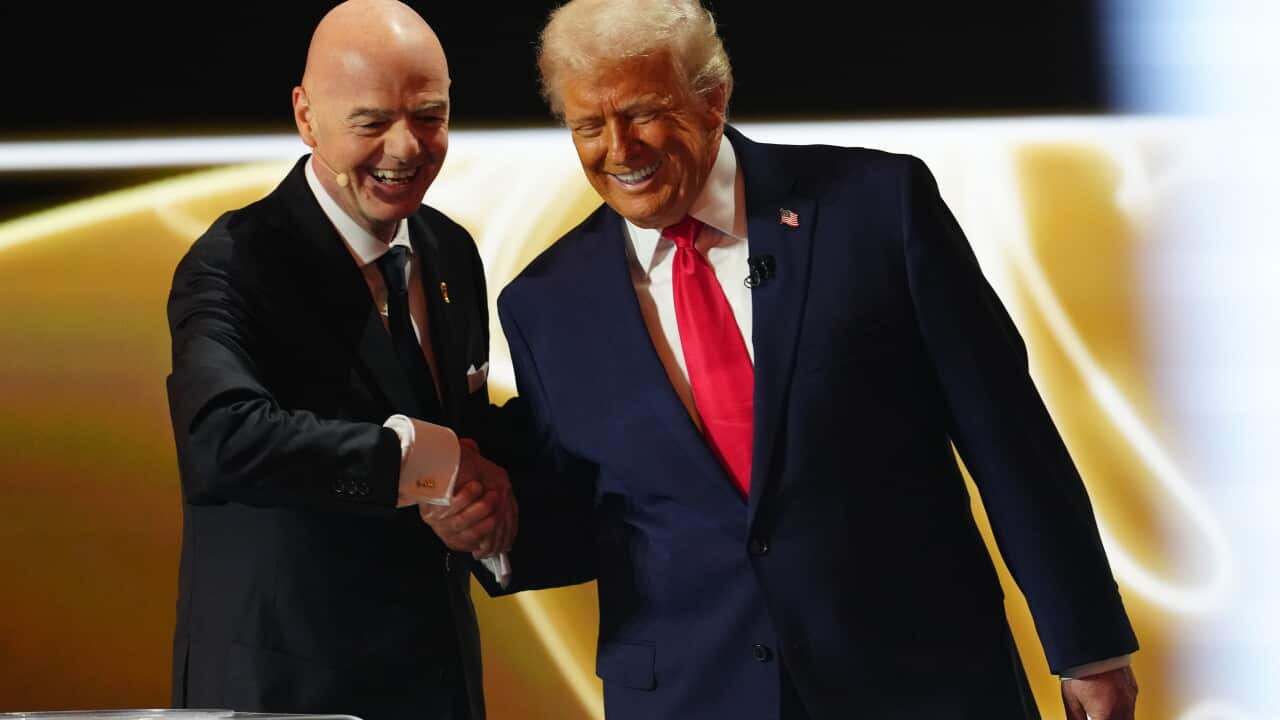
Trump confirmed he had asked FIFA president Gianni Infantino to review the red card decision because he "didn't think it was a foul".
"[Balogun] didn't do anything wrong and he is our best player," he earlier told reporters.
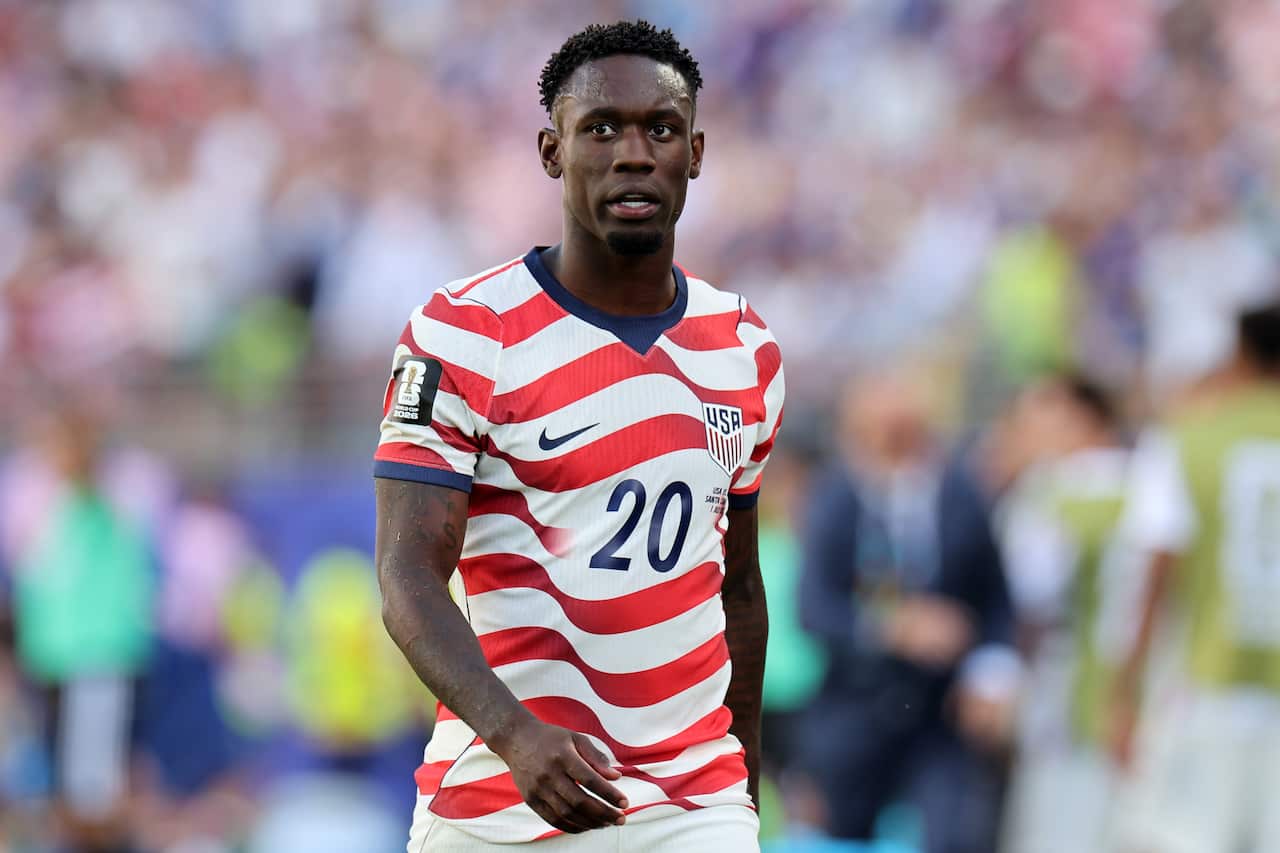
"I think they made a really brilliant decision [to suspend the ban]."
But the move to suspend the sanction, which many had argued was too harsh, has become one of the biggest controversies of the tournament amid accusations of political interference and favouritism.
Infantino defended the decision, saying it was made by an independent judicial panel and his conversation with Trump, who has been notably absent from the World Cup, had not influenced the process.
"During our conversation, I explained that there was an ongoing legal process involving FIFA’s independent judicial bodies and that the case would be decided in due course by the competent bodies," Infantino said in a statement.
"That is how FIFA's system works, and it is a principle that I will always uphold."
FIFA separately said reviewing the "legal consequences of red cards in football is nothing new in the modern game" and emphasised that Balogun's red card ban decision had not been overturned, but rather suspended.
'FIFA bent to that will'
Professor Antoine Duval, a sports law expert at the Asser Institute based in the Netherlands, said it was an extraordinary decision without precedent.
"FIFA has made an exception to its own practice at least," he told SBS News.
"For the purpose of pleasing Donald Trump, and this is a problem in the context of an organisation that is supposed to regulate fairly and without any privileges being allocated to host countries or otherwise, global football."
Under FIFA's rules, teams cannot appeal a red-card decision at a World Cup, but Duval said the decision could set a new precedent for how Article 27 is applied.
"That would mean that basically any red card would be subject to a second review by the FIFA disciplinary committee, who could then, in principle, decide whether this red card is to be applied and have a consequence in the following game, or whether any sanction is to be suspended for a certain amount of time," he said.
In light of the Balogun decision, ESPN reported France had appealed a yellow card issued to midfielder Michael Olise, while Reuters reported England was weighing a challenge against defender Jarell Quansah's one-match suspension.
Catherine Ordway and James Connor, experts in sports integrity at the University of New South Wales, said the Balogun decision raised broader questions about FIFA's integrity and freedom from political interference.
"Sport has always been deeply political, but this normally occurs off the field of play," they wrote in a piece for The Conversation published on Monday.
"If true, reports Trump has used political power to change on-field decisions signal a dangerous precedent and the risk of changing the entire system from a fair game into an exercise of raw influence."
Eric Windholz, an associate law professor at Monash University, said it was naive to think sports and politics were separate, but it was usually hidden from public view.
"In this instance, the politics played out in full view of the public, and that made us all uncomfortable," he told SBS News.
He took most issue with FIFA, rather than Trump.
"The idea that a head of state would be trying to get the best results for their nation is not totally unusual or unexpected, but FIFA bent to that will," he said.
"I think that is the most surprising and dangerous precedent."
Has this happened before?
Article 27 has been used before, most recently when Portugal's Cristiano Ronaldo's three-match ban was reduced to a single game with a one-year probationary period after he was sent off against the Republic of Ireland in a World Cup qualifier last year.
Ronaldo served a single-match ban in another qualifier, paving the way for him to play at this year's World Cup.
At the 1962 World Cup in Chile, Brazilian player Garrincha received a red card during his team's 4-2 semifinal win over the hosts.
At the time, a red card did not automatically result in suspension from the next game. Instead, a disciplinary committee reviewed the decision and imposed a punishment, letting Garrincha off with a warning.
What has the reaction been?
The Balogun decision sent shockwaves through the football world and drew widespread condemnation from players, commentators and football governing bodies.
The Royal Belgian Football Association (RBFA) accused FIFA of breaking its own rules and attempted to appeal the decision. FIFA rejected the appeal just hours before the match, declaring it "inadmissible".
In response, the RBFA said it still had not received any reasons for the decision, which it argued breached FIFA regulations, and was leaving open "all further actions".
The Union of European Football Associations (UEFA), Europe's governing body of football, issued a scathing response, saying FIFA had "crossed a red line".
"When the certainty of rules is no longer guaranteed by its guardians, the integrity of the game is at stake and the credibility of a competition is undermined," UEFA said in a statement.
"Equally, such decision creates a precedent in the ongoing tournament, where similar situations will now require an equal treatment, to the detriment of the competition.
"We express our disbelief at such an unprecedented, incomprehensible and unjustifiable decision."
England legend Wayne Rooney said the decision was an "absolute disgrace", while former Liverpool manager Jürgen Klopp said it called "everything into question" if the reversal was due to Trump and Infantino.
The head of the German football association said the "integrity of the competition and the credibility of FIFA are at stake".
Even former FIFA president Sepp Blatter, who resigned in disgrace amid a corruption scandal in 2015, criticised the decision.
"Red cards are not overturned by political phone calls. They are overturned by rules, evidence and independent bodies," he said in a post on X.
"If a US President intervenes with the FIFA President — and a player is suddenly cleared before a World Cup knockout match — the question is unavoidable: Quo vadis, FIFA?"
— With additional reporting by Haylena Krishnamoorthy
For the latest from SBS News, download our app and subscribe to our newsletter.







