In brief
- FIFA has increased the financial distributions to a record $1.25 billion for this year's World Cup.
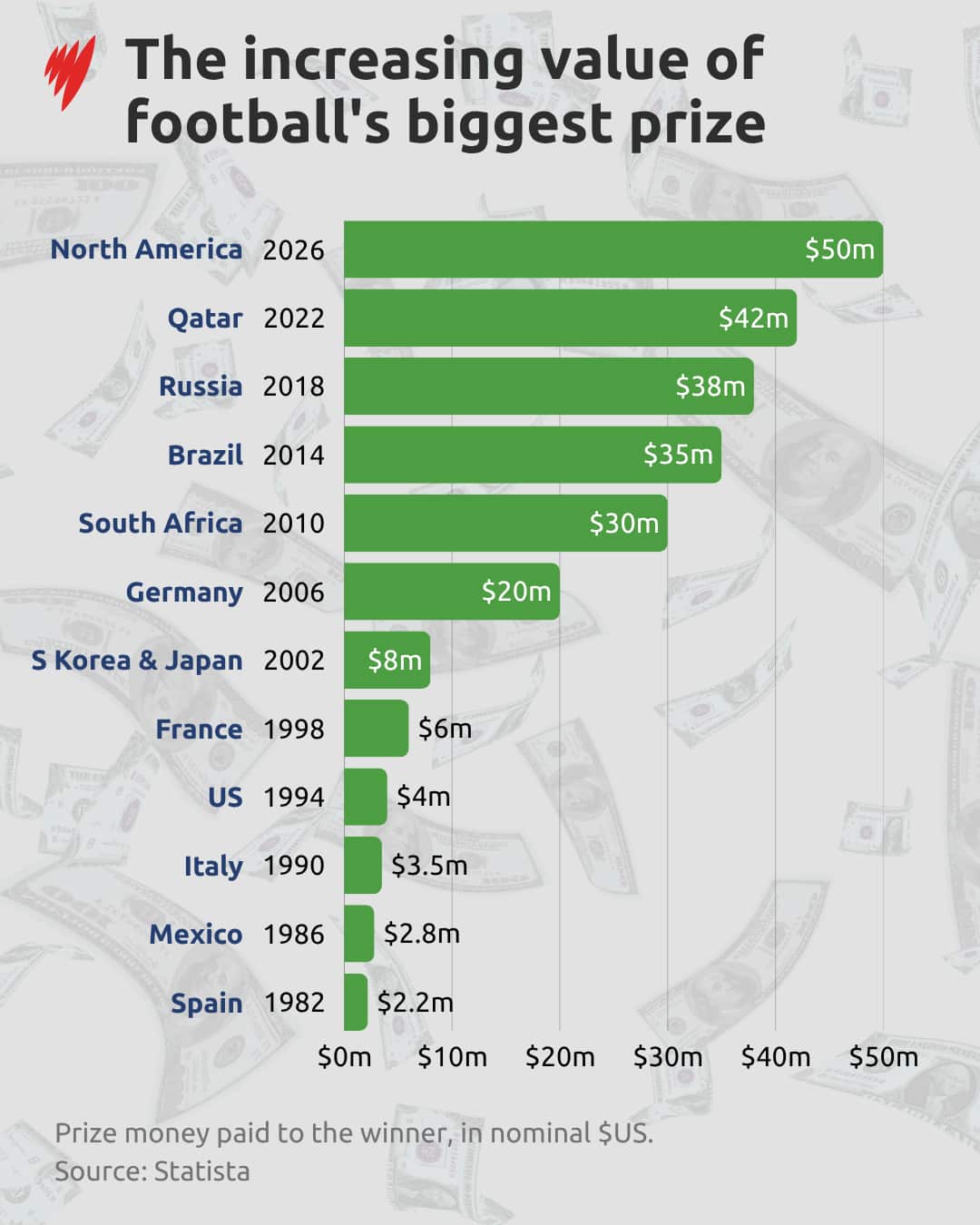
- The winner will take home US$50 million, while the runner-up will receive US$33 million.
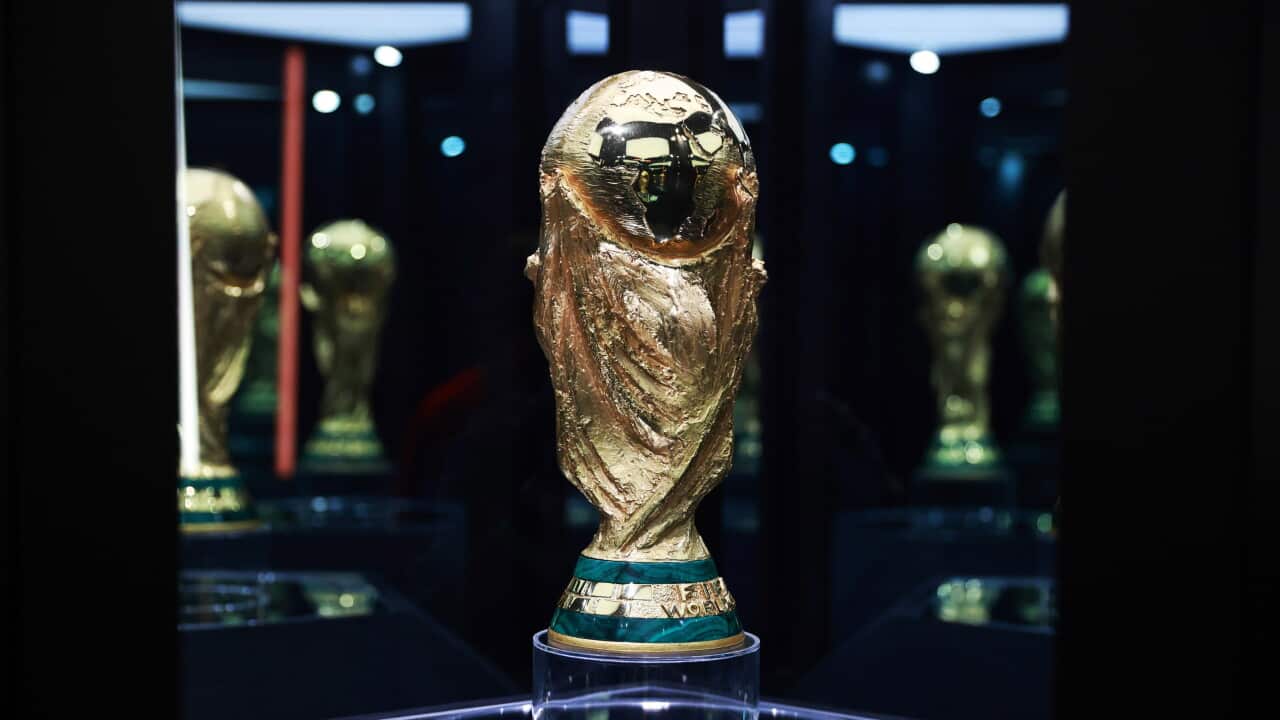
The team that lifts the World Cup trophy next week won't just have their name etched into football history — they'll be flush with cash.
FIFA increased the financial distributions at this year's World Cup to a record $1.25 billion, making it the largest prize pool in the competition's history.
About $938 million will be paid out as performance-based prize money, nearly 50 per cent more than the $630 million offered at Qatar in 2022.
The further a team progresses in the tournament, the bigger the payday.
This year's champions, which will be either Spain, England or Argentina, will take home US$50 million ($71.7 million). The runner-up will receive US$33 million ($47.3 million).
News that makes sense
Your trusted source for staying up-to-date with the world around you. Get free daily news updates and analysis, straight to your inbox.
Each of the 48 teams receives a guaranteed minimum payment of US$12.5 million ($17.9 million).
That comprises a US$10 million ($14.3 million) qualification payment and a US $2.5 million ($3.6 million) preparation allowance to help cover travel, accommodation and logistics.
The money is paid out regardless of a team's performance, with the performance-based prize money added on top.
Australia, which placed 22nd after being eliminated in the Round of 32, earned US $11 million ($15.8 million) in performance prize money, in addition to their minimum payment.
FIFA also compensates clubs that release their players for the World Cup through its separate $508 million Clubs Benefits Programme.
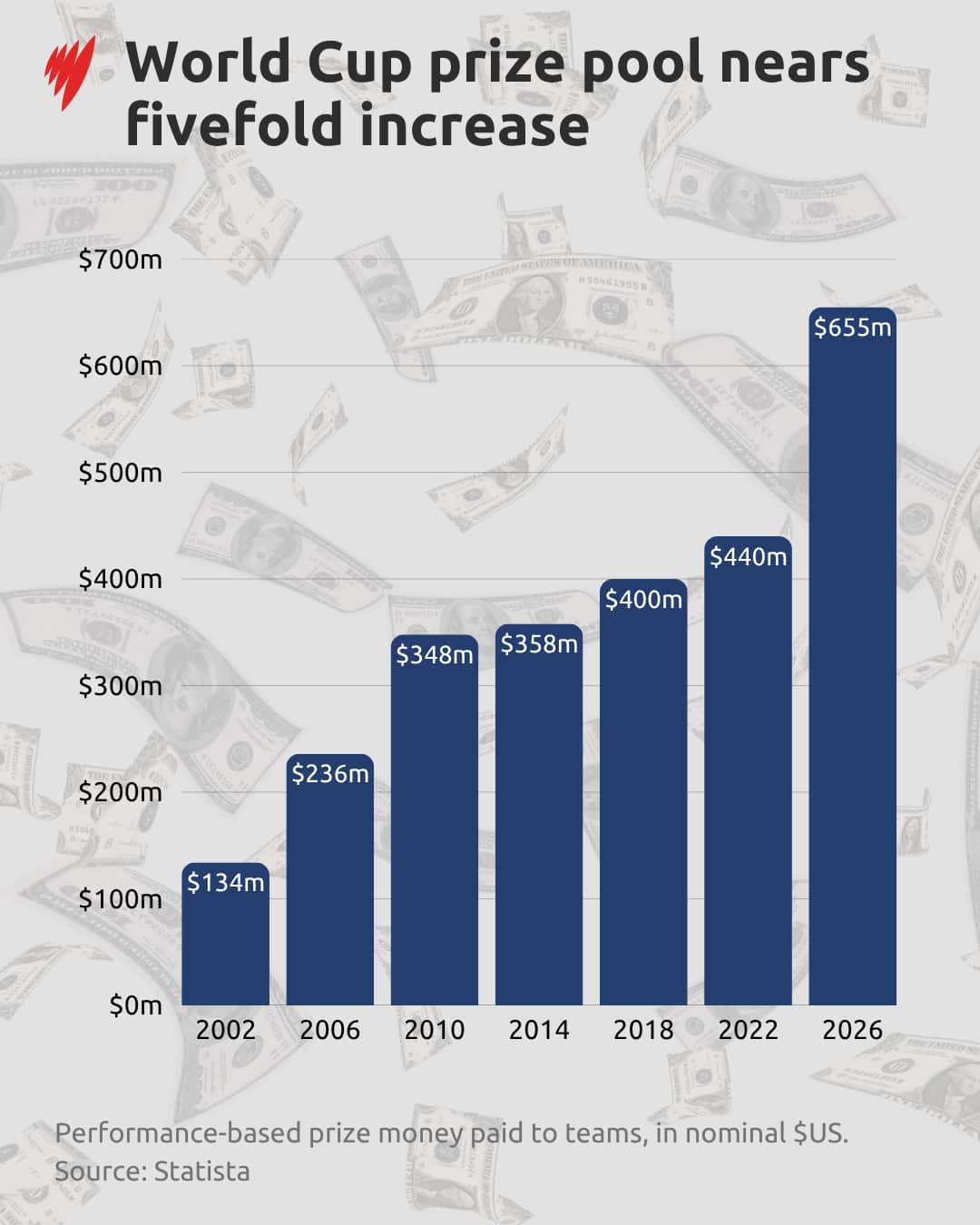
The prize pool has grown significantly over the years, increasing nearly fivefold since 2002.
Where does the money go?
While the sums are huge, FIFA isn't exactly tight for cash.
According to the Reuters news agency, the football governing body was projected to surpass $15.8 billion in revenue in the four-year cycle from 2023 to 2026.
In April, FIFA increased the financial distributions by 15 per cent due to the World Cup's commercial success.
"FIFA is proud to be in its most solid financial position ever, enabling us to help all our member associations in an unprecedented way," FIFA president Gianni Infantino said at the time.
"This is one more example of how FIFA's resources are reinvested back into the game."
FIFA pays the money to the national football federations of each country, which then determine how much players, coaches and support staff receive. Players typically receive between 20 and 30 per cent of the total.
While it is up to the federation how they spend their money, the funds can be invested in grassroots football, new facilities and development pathway programs.
You can watch all 104 matches of the FIFA World Cup 2026™ live, free and exclusive on SBS, SBS VICELAND and SBS On Demand.
For the latest from SBS News, download our app and subscribe to our newsletter.







