Key Points
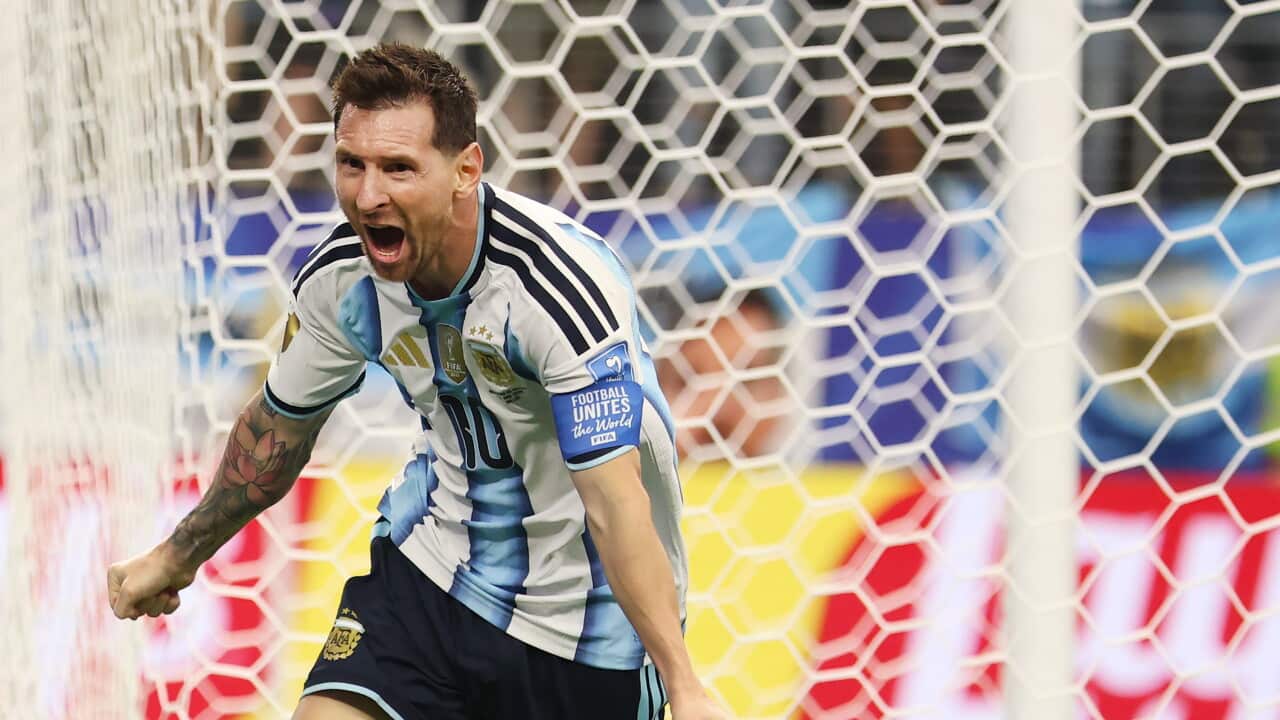
- Argentine captain Lionel Messi scored a double against Austria on Tuesday to become the World Cup's all-time leading goalscorer.
- He is still one of football's greatest at 38, attributed to his avoidance of injury, passion to play and advances in sport sciences.
Lionel Messi has added another chapter to his extraordinary career, becoming the FIFA World Cup's all-time leading goalscorer while proving, at 38, that he remains one of football's greats.
The Argentine captain followed up his hat-trick against Algeria last week with a brace against Austria on Tuesday morning (AEST), taking his World Cup tally to 18 goals. That moved him two clear of the previous men's record of 16, which he had shared with Germany's Miroslav Klose.
"Beyond anything, I'm so happy for the win," Messi said after the match.
"It was huge, tough and difficult. It would allow us to be relaxed to what's ahead. All matches in this World Cup are very even, very intense. I'm enjoying this moment and looking forward to enjoying with my teammates."
It is another remarkable achievement in a career that has produced eight Ballons d'Or and 46 trophies, including four Champions League titles and the 2022 World Cup.
News that makes sense
Your trusted source for staying up-to-date with the world around you. Get free daily news updates and analysis, straight to your inbox.
He also holds the record for the most World Cup appearances with 28 and became the first player to play in six World Cups.
If Messi scores against Jordan on Sunday, he will become the first player to score in seven consecutive World Cup matches. He shares the current record of six straight games with France's Just Fontaine in 1958 and Brazil's Jairzinho in 1970.
With Argentina expected to make another deep run in its title defence, Messi is among the favourites for the Golden Boot — awarded to the tournament's top goalscorer — a prize he has never won.
It would be an impressive feat given he celebrates his 39th birthday on Wednesday. His five goals in two matches leave him one ahead of Norway's Erling Haaland and France's Kylian Mbappé, who are both more than a decade younger.
Dr Steve Georgakis, a senior lecturer in sport at the University of Sydney, said Messi's influence on football was unmatched, arguing no other player had had a greater impact on the modern game.
"Non-Argentinian countries venerate this guy, this player, more than their own players," he told SBS News.
"It's quite extraordinary that we have a situation where the youth of the world see Messi as being their player."
Whether Messi is the greatest footballer of all time, or the GOAT as it's commonly referred to, remains a matter of opinion.
Georgakis gives that honour to Diego Maradona but believes Messi's "globalised phenomena" and longevity meant no other player has had a greater impact upon the sport.
German striker Miroslav Klose, who previously held the record for top scorer, described Messi as the GOAT after his Argentina performance.
Speaking on SBS Sport, former Socceroo Harry Kewell said Messi had settled any arguments as to whether he was the greatest.
"I’m baffled how he’s got five goals already in the tournament," Kewell said.
"Goals in the World Cup are so rare and special, and he’s already got five. It’s amazing, and credit where credit’s due.
"I know the debate about the best players and who’s the greatest, but I just don’t think you can argue against it anymore [that Messi is the GOAT]."
So how has Messi, now playing in his sixth World Cup, continued to perform on football's biggest stage? And where does he rank alongside Pelé, Maradona and long-time rival Cristiano Ronaldo?
'He's still got it'
Georgakis said Messi's longevity came down to several factors, including avoiding serious injury, benefiting from advances in sports science and changing perceptions about how long players can compete at an elite level.
"That quickness off the mark, the speedy feet, he's still got it," he told SBS News.
"Quite extraordinary at that age. That second goal that he scored [against Austria], it was like seeing a 21-year-old Olympic sprinter, everything was so quick."
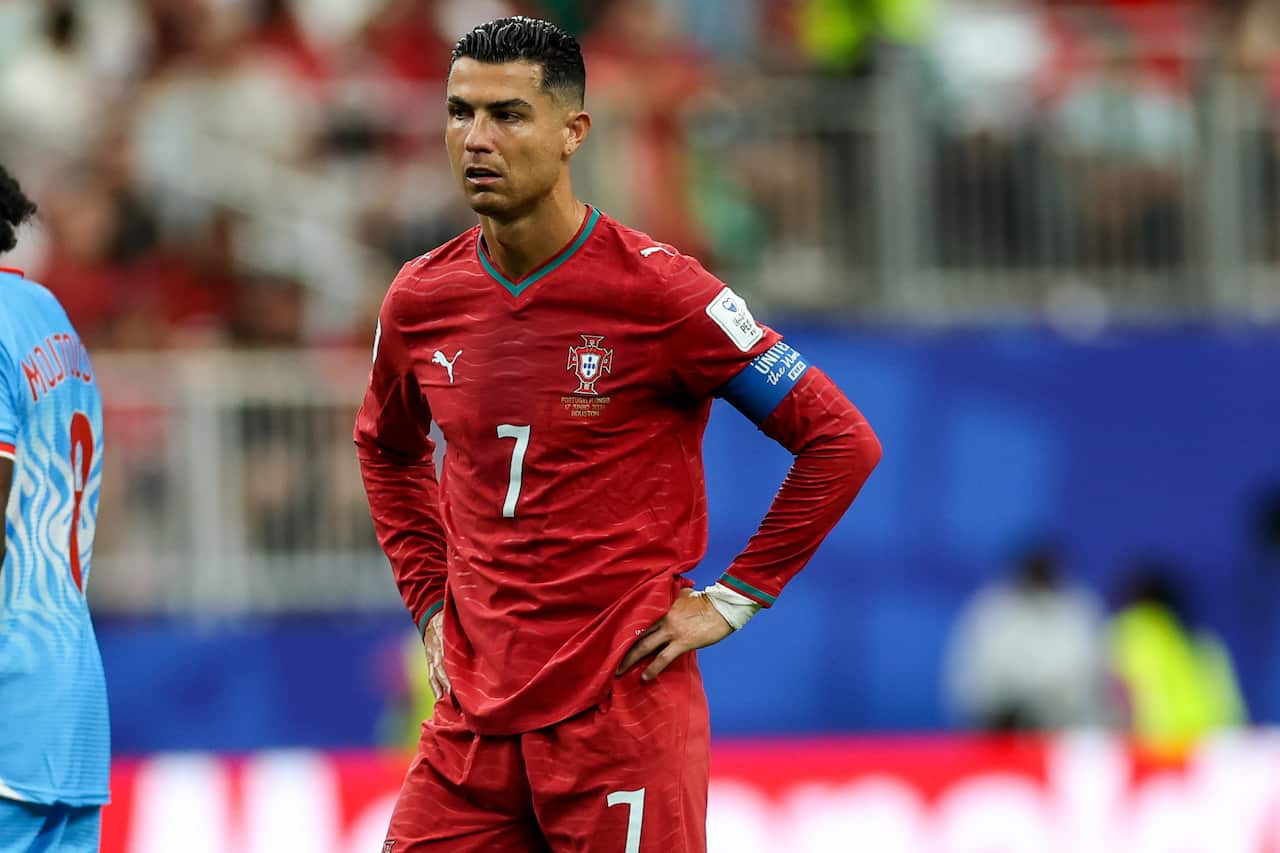
Comparing Messi with Ronaldo, now 41, Georgakis said the Argentine benefited from playing on one of the world's strongest national teams, which created more scoring opportunities. Argentina are the highest ranked in the world, eight places above Ronaldo's Portugal.
He added that both players had largely avoided serious injury throughout their 30s, a key factor in extending their careers.
"Once you get a serious injury in your 30s, it can mean the end of their career," he said.
Georgakis said Ronaldo, who looked lacklustre in Portugal's shock draw against the Democratic Republic of the Congo, had now reached the point where age had inevitably caught up with him.
"Unfortunately for Ronaldo, he's just reached that point, like that, there comes a time where once your body goes on you, it's gone on you," he said.
Advances in sports science, particularly nutrition, conditioning and recovery, have also helped elite footballers extend their careers well into their late 30s.
The BBC, citing FIFA data and research by Dr Joshua C Fjetsul from the University of Oslo, reported the number of players aged 35 or older at World Cups had risen from just 10 in 1954 to 72 in 2026.
Players have also become taller, faster and leaner. The average World Cup player was 181.5cm tall in 2023, up from 177.1cm in 1973.
French player Olivier Giroud was part of the squad that won the 2018 World Cup and is still playing in France's Ligue 1 at age 39. He told BBC Sport that an older player's belief in themselves was more important than anything else.
"It's clear just how passionate Messi still is for football and you can tell it's in his DNA to always be a competitor, and to try and outdo himself more than anyone else," he said.
"Playing at a high level at our age, you have to pay close attention to your life hygiene, how you sleep, your diet, and taking care of your body, because that's the thing you rely on for work.
"The key thing is still having the desire, the motivation, the passion, to keep going."
You can watch all 104 matches of the FIFA World Cup 2026™ live, free and exclusive on SBS, SBS VICELAND and SBS On Demand.
For the latest from SBS News, download our app and subscribe to our newsletter.







