


Here are five things to know about this autonomous territory located between the North Atlantic and Arctic oceans.
Ice-covered 'Green earth'
The name "Greenland" is puzzling as the two million square kilometre island, the second largest in the world after Australia, has three quarters bordering the Arctic Ocean and is 85 percent covered in ice.
Greenland was a Danish colony until 1953, when it became part of the Danish Realm.
News that makes sense
Your trusted source for staying up-to-date with the world around you. Get free daily news updates and analysis, straight to your inbox.
In 1979, it gained "autonomous territory" status. Today, the island's economy depends heavily on subsidies paid by Copenhagen.
Its 55,000 inhabitants -- of whom 15,000 reside in the capital Nuuk -- are more than 90 percent Inuit, an indigenous group from Central Asia.
At the heart of global warming
This massive territory is on the front line of melting Arctic ice in a region that is warming twice as fast as the rest of the planet.
According to the World Meteorological Organization, Greenland's ocean levels continue to rise by about 3.3 millimetres per year.
This phenomenon appears to be accelerating: sea levels have jumped by 25 to 30 percent faster between 2004 and 2015, compared with the 1993-2004 period.
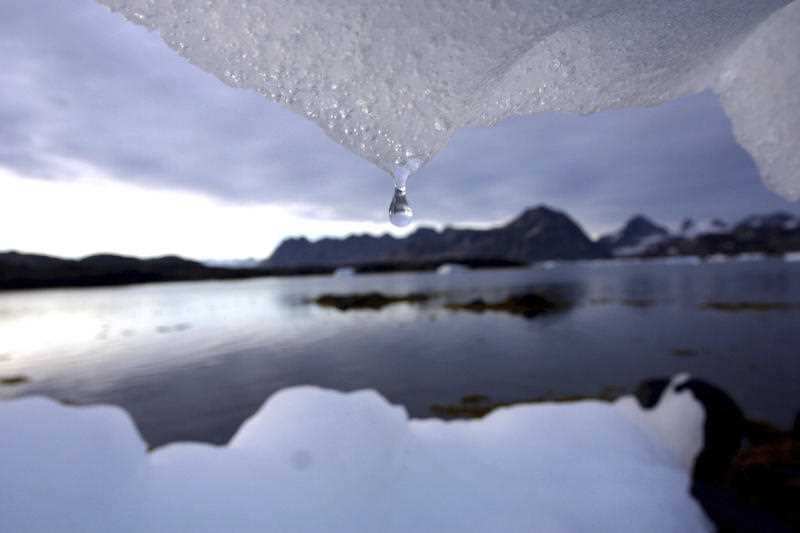
The melting of the Greenland Ice Sheet accounts for 25 percent of this rise, up from five percent 20 years ago. And this is likely to increase as glaciers and ice caps melt.
If Greenland's ice sheet was to disappear completely, it would raise the ocean level by seven metres.
Rich soil
Greenland's ice melt strangely has a silver lining.
Melting glaciers unveil mineral-rich rock flour that could be used, for example, as fertilisers for dry soils in Africa and South America.
However, this substance infuriates the Greenlanders has it shuts off access to the fjords.
Greenland's subsoil is also rich in rubies and uranium which could attract foreign investment.
Lack of roads
As roads stretch only about 150 kilometres (93 miles) on the island, the area barely counts 2,500 car registrations which are mainly in the capital.
Most trips are made by boat, planes or sled dogs.
And the use of trains is out of the question as the island does not have a railroad network or even waterways to help reach other sides of the territory.
These conditions make travelling difficult between cities in the least densely populated territory on Earth, which stretches around 2,000 kilometres from the northwestern US Thule airbase to the southernmost harbour of Qaqortoq.
400-year-old sharks
Greenland sharks are the Earth's longest-lived vertebrates -- or creatures with a spine -- with a lifespan that can last as long as 400 years and with an average lifespan of 272 years.
Their slow growth rate -- about one centimetre per year -- contributes to their exceptionally long lives, beating out other well-known centenarians of the animal world such as the bowhead whale and the Galapagos tortoise.
They also take a very long time to reach sexual maturity -- about 150 years.
Only one species of clam is known to live longer, the ocean quahog (Arctica islandica, 507 years), according to a study in the journal Science.
The two largest sharks studied, measuring around five metres (16 feet) in length, were estimated to be roughly 335 and 392 years old.







